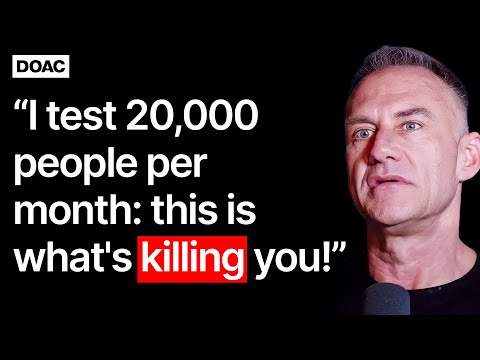
I Tested 100,000 People's DNA. This Diet Will Kill You - Gary Brecka
What this covers
Gary Brecka is the co-founder of 10X Health System and is one of the world’s leading experts in human biology and biohacking. He has worked with CEOs, models, to athletes from the UFC, NFL, and professional boxers. Gary is also the host of the ‘Ultimate Human’ podcast.
00:00 Intro 02:18 What We're Getting Wrong About Supplements & Deficiencies 09:20 Humans Aren't Functioning Optimally 11:49 The Biomarkers That Predict Your Health Outcomes 17:53 The Link Between Your Genes & Anxiety & Trauma 22:16 Common Deficiencies That Keep Us Away from Our Optimal Health 30:24 Working with High Profile People 32:00 How Your Life & Business Changed In The Last Year 34:43 Life Insurances Know When You're Going to Die 41:51 I Knew Thousands of People Would Die but They Wouldn't Let Me Help Them 43:18 Fixing Your Deficiencies Could Save Your Life 50:44 What I Learned Analysing Thousands of Medical Reports 51:57 Fix the Simple Things Before It's Too Late 54:52 The Importance of Grounding for Your Blood Cells 01:00:02 The Most Important Exercise to Oxygenate Your Blood Cells 01:04:26 The Incredibly Health Benefits of Red Light 01:12:15 How Hydrogen Gas Helps Your Body 01:15:23 The Issues with Ozempic 01:16:42 How Is Gary's Life and His Pain 01:18:18 Advice to His Kids 01:19:18 The Loneliness Epidemic 01:25:13 Unethical Insurance 01:42:10 Last Guest Question
You can listen to the ‘Ultimate Human’ podcast and purchase Gary’s products here: https://bit.ly/3w2m8mr
Follow Gary: Instagram - http://bit.ly/3IVf6Dw Twitter - http://bit.ly/41w492P YouTube - https://bit.ly/4aLbmA7
Join this channel to get access to perks: https://www.youtube.com/channel/UCGq-a57w-aPwyi3pW7XLiHw/join
Follow our Shorts channel for more content: https://www.youtube.com/@TheDiaryofaCEOShorts
My new book! 'The 33 Laws Of Business & Life' is out now - https://smarturl.it/DOACbook
Studies mentioned: 1. https://academic.oup.com/ajh/article/28/7/943/2743393 2.https://headachejournal.onlinelibrary.wiley.com/doi/full/10.1111/head.12792#:~:text=This%20study%20is%20the%20first,sodium%20concentrations%20and%20neuronal%20excitability
Steve's results: https://drive.google.com/file/d/1DYXS2PU06CcSSezL7CL8S_BQmLrP4LPc/view?usp=sharing
Follow me: https://beacons.ai/diaryofaceo
Sponsors: Zoe: http://joinzoe.com with an exclusive code CEO10 for 10% off
Source description (no synthesized summary yet).
Gary Brecka argues that most chronic diseases stem from correctable nutrient deficiencies and genetic metabolic dysfunctions rather than pathological disease processes, and that testing for these deficiencies and supplementing appropriately can reverse conditions conventionally treated with pharmaceuticals.
- The body operates like a plant system—fix the soil (nutrient status) not the leaf (symptoms); disease happens within us from deficiency, not to us from external pathology
- Genetic methylation tests reveal which raw materials your body cannot convert to usable forms, enabling targeted supplementation instead of trial-and-error biohacking
- Common conditions (anxiety, ADHD, hypertension, joint pain) are misdiagnosed as pathological when they're actually nutrient deficiencies that resolve when the missing raw materials are restored
This asset isn't compiled yet
You're seeing its claims, ranked. Compile it to build the argument threads, weight them, and check each claim against your library — the full view.
The human body is an interconnected processing system where one raw material enters a physiological process, its waste product feeds another process, and so on; for example, folate from leafy greens converts to methylfolate, which downregulates the inflammatory amino acid homocysteine, which becomes methionine and travels to the brain to quiet the mind and improve sleep—demonstrating that it's not the spinach leaf itself that helps sleep but what the spinach leaf becomes.
“We take one raw material, we put it into a physiological process, and then we take the waste product from that process and we feed another process and on and on. So, for example, we'll take um folate from green leafy vegetables. We'll convert that into methylfolate. Methylfolate becomes one of the most prevalent nutrients in the human body. It helps to downregulate an inflammatory amino acid called homocysteine, which then turns into something called methionine, which then goes up to the brain and helps to quiet the mind. So, you start with this green leafy vegetable and it winds its way all the way up to helping you sleep. And it's not that the spinach leaf is helping you sleep, it's what the spinach leaf has become that's helping you sleep.”
Mortality accelerates post-retirement, suggesting that loss of purpose and sense of contribution drive mortality risk; in blue zones and among centenarians, a common theme across different dietary patterns is mobility into older ages and a sense of purpose (e.g., grandpa making leather belts, grandma preparing vegetables), unlike assisted care living where purpose disappears.
“There is no question that mortality accelerates post-retirement...But you look at blue zones and and centenarians, you know, one of the one of the key themes even beyond the diet because you know, the diets were very different. You know, Singapore has one of the longest life expectancies on earth. They eat the highest amount of meat. Sardinia has very long life expectancies. They eat they high amounts of bread, pasta, and flour. Um you know, the the Mediterranean blue zones eat high amounts of of oils, fish, and fats. But what was a common theme between all of them was mobility into older ages and a sense of purpose. And there was no such thing as assisted care living facilities where you assisted care was when grandma and grandpa moved back in with their kids and live with the kids until the day that they died. And maybe her purpose was just to get vegetables that night for for dinner. Um and grandpa's purpose was maybe to continue to make belts for the a leather smith down the road, but they they had a sense of purpose.”
Nutrient deficiencies in basic amino acids, essential fatty acids, and trace minerals (boron, manganese, molybdenum, selenium) are clinically prevalent and often overlooked; all human beings should start by addressing deficiencies in these basic raw materials before seeking esoteric supplements, red light therapy, NAD boosters, or other advanced interventions.
“By raw material, I mean simple things. You know, I mean, depending on who you talk to, there's 72 minerals. I think 16 of those are essential minerals. There are there are two essential fatty acids. There are eight essential amino acids. It is astounding how many people are clinically deficient in some of those basics. And then they go searching in all of the esoteric super supplements and red light therapy and and NAD boosting supplements and they're actually just missing that one of those raw materials. Basic essential amino acids, basic fatty acids, and basic minerals. And that's where all human beings should start. And then from there, we should do some testing, biomarkers in the blood.”
Anemia treated with folic acid, B12, and iron may not resolve if the patient has a genetic variant preventing conversion of folic acid to methylfolate or B12 to methylcobalamin; providing methylfolate and methylcobalamin instead will correct the anemia where the standard form fails.
“Like the classic treatment for some anemias is folic acid, B12 and and iron. And they would give them folic acid, B12 and iron and it wouldn't correct. Then they give them folic acid, B12 and iron and it wouldn't correct. Folic acid, B12 and iron wouldn't correct. And they wouldn't realize that um that person can't process folic acid. If they gave them methylfolate methylcobalamin and iron bisglycinate the anemia would correct.”
Isolation cuts human life expectancy in half at any age; when spouses have been together for 40, 50, or 60 years and one dies, the other often dies shortly thereafter, a phenomenon called broken heart syndrome or caregiver syndrome where isolation from daily human connection and loss of sense of purpose causes physiological surrender.
“If you wanted to cut somebody's life expectancy in half at any age put them in isolation. So if you put a human being in isolation, you will cut their life expectancy in half. How could you see that in the data? Because you would there there was something we we call the broken heart syndrome or caregiver syndrome um and it's it's well documented in the elderly. Um you know, when you have a companion that you've been with for 40 or 50 or 60 years and that companion passes, very shortly thereafter the second companion goes.”
Cells exist in communities and behave differently in isolation; taking cells out of the body and studying them in vitro in Petri dishes produces misleading results about how they behave in vivo, because cells exchange with their environment, eliminate waste, repair, detoxify, and are highly active in community.
“Some of the worst science that we and research that we do is when we study components of the body or cells from the human body in isolation. You take a cell out and you put it in a Petri dish and you look how it behaves in vitro and then you assume when you put that cell back into the body that it's going to behave that way because cells exist in communities, too. They exchange with their outside environment.”
Among centenarians processed in Brecka's mortality database, he did not observe a single case where the individual at time of death did not have clinically elevated LDL cholesterol, raising the question of whether high LDL is a marker for longevity rather than cardiovascular disease requiring intervention.
“When really, if we go back to just studying the physiology of the human body, when we in in the mortality space, I don't think I saw a single centenarian once, and we processed hundreds of these death claims. I don't think I saw a single centenarian that at the time of death did not have clinically elevated levels of LDL cholesterol. So begs the question, is simply having high LDL cholesterol a marker for um longevity or is it a a marker for cardiovascular disease that needs to be intervened with a chemical or a synthetic?”
The COMT gene (catechol-O-methyltransferase) codes for an enzyme that breaks down catecholamines (dopamine, norepinephrine, epinephrine, and ephedrone); individuals with slow COMT variants accumulate these neurotransmitters, manifesting as chronic anxiety, overthinking, sleep disruption (mind awake while body is tired), tendency toward worst-case scenario thinking, and a heightened baseline state of alertness described as 'worrier' phenotype.
“If catecholamines rise very fast, you're a worrier. And the nickname for that gene is either a worrier or a warrior, because as those catecholamines, they call it fast COMT or slow COMT. So, just looking at this one gene mutation, if you're slow to break these catecholamines down and they rise, what are the consequences of that? Um I lay down to go to sleep at night and I'm body tired, but I'm mind awake. Right? My mind is just clicking through the day, thinking about the most innocuous little thoughts. Um I have a tendency when I consider scenarios to go straight to worst-case scenario. I'm an overthinker.”
Humans were evolved to spend 85% of time outdoors; we now spend 97% of time indoors, depriving us of three essential inputs from nature: magnetism from the earth (low Gauss current), oxygen from the air, and light from the sun—this deprivation is a root cause of modern disease.
“So we get three things from mother nature, right? We get magnetism from the earth, we get oxygen from the air, we get light from the sun. The further we get away from those things, the sicker we become. Really? Yes. So the magnetism piece of it sounds like like a spiritual kooky stuff. I you know, I mean probably 10,000 years ago they probably thought the same thing about gravity, you know, but um but the earth has a low Gauss current. Right? I mean we were meant to spend 85% of our time outside. We spend 97% of our time indoors now.”
Life insurance companies are among the most solvent financial institutions on earth because their mortality prediction science is extremely accurate; during the 2008-2009 financial crisis, 364 banks failed but not a single life insurance company failed, and valid death claims have never failed to be paid in US history.
“I get a lot of flak about it, but if you want to know how accurate life insurance companies are at predicting death, just look at what happened during the 2008-2009 financial services crisis. We had we had 364 banks fail. Not a single life insurance company failed. A valid death claim in the United States has never failed to have been paid. They are some of the most solvent institutions in the world. There's not another financial services enterprise anywhere on the planet that would take that level of risk on one variable. I mean, you have an investment fund. You wouldn't put that level of risk on a single variable. Right? How many more months does this person have left on Earth? And they have data that no other medical enterprise has.”
Photobiomodulation (red and near-infrared light therapy) increases microvascular circulation in the smallest capillaries, improves angiogenesis (new blood vessel formation), reduces inflammation, improves collagen and elastin, and has been observed to improve eyesight, including Joe Rogan no longer needing reading glasses after 4-5 weeks of use.
“different nanometers of of of light have different effects in the body. And um so they are um well researched and and publicized to reduce inflammation, um increase microvascular circulation...It also has a very positive effect on collagen, elastin, fibrin. Um it's known to improve angiogenesis...I was I was on the uh Joe Rogan's podcast a few months ago and um he ended up buying one of these red light um beds uh from me and we installed it in his house and he told me about four or five weeks ago that he's no longer in wearing readers anymore.”
Elevated insulin relative to blood glucose is an early warning sign of insulin resistance; as insulin rises, it triggers a cascade of downstream pathological events including blockade of fatty acid metabolism, elevated triglycerides, high blood fat, and elevated cholesterol—all markers for cardiovascular disease—making insulin sensitivity the upstream lever that influences multiple downstream risk factors.
“And the higher your insulin relative to your blood sugar, the more insulin resistant you are, right? So, the more insulin it takes to drop your blood sugar, the more resistant you are to insulin. This is an early warning sign of metabolic syndrome. But it's not just the metabolic syndrome, it's that when insulin rises, there's a whole downstream cascade of events, because insulin's not just responsible for helping us metabolize sugar, it's also responsible for blocking other forms of energy use in the body, one of which is fatty acid metabolism. And so, generally people that have very high insulin have very high blood triglycerides. They have high blood fat. And high blood fat and elevated cholesterol are other markers for cardiovascular disease.”
Life insurance companies and annuity providers have conflicting incentives: life insurers want policyholders to live longer (to collect premiums); annuity providers want annuitants to die sooner (to pay less on the income stream); some companies offer both products ('lilac' contracts) on the same life, creating perverse incentives.
“Annuities um need people to die. Life insurance wants people to to live a little bit longer. Okay. Oh, yeah. cuz the longer they live, the more they pay. But annuities. You've put down a deposit, basically. So, they want that deposit. They guarantee me an income stream for life. So, if you could kindly expire tomorrow, that would be good for me. And the same companies do both? Same companies do both. Okay. Um there's something called a life insurance life annuity contract, a lilac. Where you actually put an annuity and a life insurance policy on the same life and you can't lose.”
Getting sunlight in the first 45 minutes after waking (first light) contains no UVA or UVB rays and high amounts of healthy blue light; this resets the circadian rhythm, raises cortisol (a waking hormone), downregulates melatonin receptors, and sets up the body for sleep later that night; this is more powerful than almost any other single sleep habit.
“You probably heard that getting first light can actually reset your circadian cycle and do more for you to sleep that night than probably just about any other sleep habit. So, your sleep routine really starts with your morning routine and it has an an effect on cortisol receptors. It has effect on dopamine I mean, on on melatonin receptors. Remember, cortisol is a hormone that responds to light, right? I mean, um when our light when our eyes are closed and light is passing through our eyelids, it has a tendency to raise our cortisol levels, which is why they tell you not to use blue light at night, right? You're stimulating cortisol and you're stimulating a waking hormone when you actually are trying to go to sleep. So, by getting first light, you're you're you're telling the body that it's that it's morning.”
Semaglutide (Ozempic) and tirzepatide (Mounjaro/Wegovy) are GLP-1 and GLP-1/GIP inhibitors respectively that suppress appetite and blood sugar; while beneficial for type 2 diabetics and morbidly obese individuals, they cause gastric emptying slowdown, paralytic gut, facial fat loss (Ozempic/Wegovy face), and cause approximately one-third to one-half of weight loss to be lean body mass rather than fat.
“Ozempic is is um a peptide called semaglutide. Um it's GLP-1 inhibitor. There's a there's another one called tirzepatide, which actually did better in side-by-side clinical trials than semaglutide and that's the Wegovy version um or the Mounjaro version. Um semaglutide I think is Ozempic and Wegovy. But, these are great for for people that have um that are type 2 diabetics or that are morbidly obese and have issues with cravings um and that have that have either diabetes or or or significant obesity. I think that they become drugs for vanity and what people are realizing now is all of the issues with gastric emptying, paralytic gut, um the fact that when you start to Paralytic gut? Paralytic gut, which is where you actually get paralysis in in the gut. Because one of the things that they slow is gastric emptying.”
Breath work using techniques like Wim Hof breathing (three rounds of 30 breaths with extended breath hold) should be done within 30 minutes of waking, every single morning, to establish circadian consistency and signal to the body that it is morning; this consistency creates self-trust and body coherence.
“The one thing that is portable for me is the ability to get outside and ground and do breath work. And I never ever ever miss. I can't even tell you how many years I've gone without missing a single morning of breath work...human beings crave consistency. So if within 30 minutes of waking every day, no matter what time zone you're in, you're doing three rounds of 30 breaths, your body begins to zero in on that and it begins to understand that that's the morning. This is go time. And so simple to do.”
Vitamin D3 is arguably the most important nutrient in the human body: it is the only vitamin humans manufacture on their own, every cell has a receptor site for it, and deficiency leads to compromised immune system, osteopenia, osteoporosis, and other serious conditions; COVID mortality statistics showed D3 deficiency was the second leading cause of morbidity in COVID.
“It's one of the only vitamins that human beings make on our own. I have argued and and um people have counter-argued, but I take the position that it's arguably one of the most if not the most important nutrient in the human body. You need all You need a lot of essential nutrients, but if you really start isolating them, you know, vitamin D3 is the only vitamin that human beings make on our own. Um every cell in the body has a receptor site for vitamin D3. And when we're deficient in this vitamin, um this nutrient acts like a hormone sometimes, it acts like a vitamin other times. We make it from sunlight and cholesterol. When it's deficient, we have a compromised immune system. We know that it leads to osteopenia, osteoporosis. There are all kinds of consequences that you wouldn't think stem from a simple nutrient deficiency, but they do.”
Most people with anxiety do not have a specific external trigger they can point to; instead, they experience elevated catecholamines (fight-or-flight neurotransmitters) due to deficiency in methylated B vitamins (methylcobalamin and methylfolate) that normally downregulate these neurotransmitters.
“No one really tells people that have anxiety what it is. And this is why very often people don't have a specific trigger they can point to. So, they're trying to pin it on their outside environment, but the truth is that they are deficient...in a complex of B vitamins, um a very specific form of B12 called methylcobalamin, methylfolate, these methylated nutrients that that downregulate these catecholamines.”
44% of the world population carries the MTHFR gene mutation, which impairs the conversion of folic acid and its derivatives into methylfolate (the usable form), leading to clinical deficiency in methylfolate that is linked to neural tube defects, mental illness, ADHD, OCD, bipolar disorder, sleep disorders, and severe gut issues.
“The most common gene mutation in the world, which we talked about last time on your podcast, MTHFR, affectionately called the [ __ ] gene, um 44% of the population has this gene mutation. I talk about it all the time and it's a simple inability to to to to convert folic acid and its derivatives um folate into the usable form called methylfolate. Well, it's very easy to supplement with methylfolate and very inexpensive, I might add, to supplement with methylfolate. And deficiencies in methylfolate are are linked to all kinds of conditions, including neural tube defects, because it's not folic acid that prevents neural tube defects, it's methylfolate that prevents neural tube defects.”
Red light therapy (photobiomodulation) works by light wavelengths in the 600-1000 nanometer range penetrating mitochondrial membranes and displacing mitochondrial nitric oxide, forcing oxygen to dock with the electron transport chain, enabling the Krebs cycle to generate either 2 or 36 units of ATP depending on whether oxygen is present—meaning red light forces the body toward 16 times greater energy production.
“So if you actually went through the wall of a cell and into the cytoplasm and found the mitochondria and you went into the mitochondria, you'd see that there's a motor in there that's spinning around. It's called the Krebs cycle. And this motor, when it spits out energy called ATP, um it you know, essentially it has two choices every time it makes a revolution, right? It it can either create two units of energy or it creates 36 units of energy. It's either 16 times more efficient or 16 times less efficient. And what determines that is whether or not oxygen enters that cycle. So one of the things that red light does is it goes through the wall of the mitochondria and it kicks out a gas called mitochondrial nitric oxide and forces oxygen to dock.”
Clinical deficiency in vitamin D3 for prolonged periods eventually manifests as rheumatoid arthritis-like symptoms including joint aches, stiffness, sore ankles, and difficulty making a fist; physicians often misdiagnose this as true rheumatoid arthritis and prescribe corticosteroids, which initially reduce inflammation but then damage joints (like termites) and lead to predictable joint replacement in approximately 6 years.
“Clinical deficiencies in in vitamin D3 for prolonged periods of time eventually present as rheumatoid arthritis-like symptoms. People get joint aches and pains and and stiff and sore ankles and they have a hard time making a fist. And and you know, when you're speaking to the wrong physician, very often a doctor will diagnose you based on your medical history. Not before they do said rates in rheumatoid arthritis, you know, actual blood uh checks, they'll say, 'You know what, Stephen, you've got rheumatoid arthritis.' And they put you on on things like corticosteroids.”
Disease is not happening *to* us but *within* us; most chronic conditions result from nutrient deficiencies in the body, not from pathological disease processes, meaning the body's natural healing capacity can resolve these conditions if the missing raw materials are restored.
“The truth is that disease and pathology are happening to us, not something that happens within us. And if you go back to the tree analogy, you know, you could put it anything you wanted on that soil, right? You could supplement for the sake of supplementing. And I think a lot of people get lost in this realm where well, I heard NMN is good and resveratrol is good and CoQ10 and St. John's Wort and ashwagandha and vitamin C and I should take a multivitamin and you know, and pretty soon you have this paralysis of analysis because you're supplementing for the sake of supplementing.”
Breath work should engage auxiliary muscles of respiration (diaphragm, intercostal muscles) to get oxygen into lung lobes rather than apex; after age 35, 90% of people never sprint again and stop using auxiliary respiratory muscles; shallow breathing as posture collapses causes hyperventilation of CO2 and accelerates aging because oxygen presence is life and oxygen absence is disease.
“after age 35 90% of people will never sprint again...the vast majority of people stop engaging their auxiliary muscles of respiration...as our posture collapses and our CO2 rises...we're essentially hyperventilating carbon dioxide. Right? And which is accelerating aging. I mean, aging is the presence of oxygen is the absence of disease.”
ADD and ADHD are commonly mischaracterized as attention deficit disorders; they are actually attention *overload* disorders where the mind is processing too many things simultaneously rather than lacking attentional capacity, and the conventional treatment (amphetamines like Adderall) stimulates the central nervous system further rather than quieting an overactive mind.
“People that suffer from ADD and ADHD don't really realize that ADD and ADHD very often are not attention deficit disorders or attention deficit hyperactivity disorders. They're actually attention overload disorders. And we characterize people that have ADD as as not being able to pay attention, but the truth is they they don't lack the ability to pay attention. They lack the ability to pay attention to so many things. And if we understand that this is an overactive mind, not a mind that's trying to pay attention to too many uh too many things, then we can go about quieting the mind and not stimulating the central nervous system to match that pace of the mind, which is kind of what Adderall and Five-Ams and and um uh amphetamines do when you when you you when you take them for ADD and ADHD.”
Statins reduce LDL cholesterol by blocking synthesis of cholesterol, but this has concomitant negative consequences: cholesterol is the precursor for hormone production, cell wall and membrane synthesis, and vitamin D3 production, so lowering cholesterol via statin therapy reduces the body's ability to manufacture hormones and cell structures, creating downstream disease.
“So they knew the trajectory of of hormones and cell walls and cell membranes and um production of vitamin D3 when somebody took a statin and reduced cholesterol. And we looked at, you know, they the studies will look at cholesterol in a complete vacuum. So LDL cholesterol high, so that's bad. Let's bring LDL cholesterol down with a statin, so we decrease the risk of cardiovascular disease. But then you have a concomitant outcome where you you're reducing the ability for the body to make hormones and cell walls and cell membranes. And so you buy yourself a consequence downstream.”
Homocysteine is an amino acid whose elevation causes vascular constriction; in a fixed circulatory system, constricted vessels raise blood pressure without any pathology in the heart itself; 85% of hypertension diagnoses are idiopathic (of unknown origin) because physicians test the heart but fail to assess whether nutrient deficiency prevents the breakdown of homocysteine into methionine.
“When you have a certain amino acid in particular rise in the blood called homocysteine. As this amino acid rises, it has a tendency to cause the vascular system to constrict. And if we make the pipes smaller in a fixed system, pressure goes up. But there's nothing wrong with the heart. Right? And so think about the fact that 85% of all diagnosis of hypertension is idiopathic. It's of unknown origin. Well, of unknown origin means we can't find anything wrong with the heart. We've tested the heart, EKGs, EEGs, stress tests, dye contrast studies, cardiac cath, what have you. But we we haven't looked at the vascular system. We haven't looked to see was there a simple nutrient deficiency keeping this person from breaking down homocysteine, which caused the vascular system to constrict?”
Three biomarkers are essential for everyone to monitor: glycemic profile (glucose, hemoglobin A1C, insulin), which measures blood sugar regulation and insulin sensitivity; hormone panel (DHEA, SHBG); and basic nutrient deficiencies (vitamin D3, magnesium, potassium, B12).
“Yeah, so there there's I would say three. Okay. Number one is um what's called glycemic profile, which is a a check of how well your insulin and sugar metabolism is. Yep. And it has three markers, glucose, hemoglobin A1C, 3-month average of your blood sugar, and insulin. So, definitely your glycemic profile, because blood sugar, I promise you, is the root of all evil. So, first I would I would do your glycemic profile. Second, I would do um your hormones.”
Supplementing trimethylglycine or methylated forms of B vitamins downregulates the amino acid homocysteine, which improves vascular health and can normalize blood pressure without pharmaceuticals.
“Why wouldn't we just test to see see if we have an issue um dismantling this amino acid, you know, breaking this amino acid down into or something called methionine. And why don't we supplement for that deficiency and see if by putting that raw material back into the body and bringing homocysteine metabolism into normal, we can normalize this person.”
'Semaglutide face' or 'Wegovy face' is an observed effect where aggressive fat mobilization from GLP-1 inhibitors removes fat from cheeks, under-eye pads, and facial areas, leaving sunken features and aged appearance.
“people are getting semaglutide face or Wegovy face, they're saying now, where like their cheeks get really sunken in, their eyes, the fat pads beneath their eyes um are metabolized, their eyes start to look like they're sunken in.”
A 2018 meta-analysis of 8,819 participants in a journal on headaches and face pain found a direct inverse relationship between sodium intake and migraine frequency; low sodium levels can stretch or contract the dura (brain covering) through osmotic gradients, and supplementing with Celtic or Baja Gold sea salt can put migraines into remission.
“I talk, for example, about a 2018 study...in the journal of um uh headaches and face pain...8,819 participants...They found a direct inverse relationship between sodium intake and migraine headaches. And meaning that as sodium levels went up, migraine headaches went down...the brain actually doesn't have any pain receptors, but the covering of the brain does. You know, something called the dura. And the dura hates two things. It hates being stretched and hates being contracted. And what what determines whether or not it's stretching or contracting is something called the osmotic gradient...it can be as simple as supplementing with sodium.”
Grounding (barefoot contact with soil, grass, sand, or earth) changes blood cell polarity: when blood cells have the same charge, they repel each other, maximizing surface area for waste exchange and nutrient absorption; when grounding, the body absorbs electrons from the earth, causing cells to acquire opposite charges, causing them to attract and clump, reducing surface area and compromising cell function.
“When cells have the same charge, they repel. When they repel, it increases the amount of surface area that that cell has to contact the outside environment. So now it can exchange waste. It can eliminate waste, detoxify, repair, can regenerate. So imagine that you have bloodstream full of red blood cells and they start to get opposite charges. So they attract. And when they attract, they touch and everywhere that they touch, that cell loses surface area to exchange with the outside environment. When you touch the surface of the earth for a few minutes, you will repolarize those. Prick your finger 10 minutes after you come inside, put it back on that same slide, look at your blood, it's going to look like eggs slithering around in a bowl of oil. They will bump into each other and they'll be sliding around, but they will not be clumped together and stuck.”
Every human being should be tested for five specific genes (MTHFR, MTR, MTRR, AHCY, and COMT) via a genetic methylation test done once in a lifetime; these genes reveal exactly which raw materials the body can convert into usable form and which it cannot, enabling data-driven supplementation rather than guessing.
“And I would say if you're only going to look at three things, I would look at um your glycemic profile, your your blood sugar, and your insulin, and your hemoglobin A1C. Hormone panel. Okay. Um so, looking at your hormones and then specifically looking at what contributes to healthy hormone production, DHEA and a protein called SHBG. And then I would look at basic nutrient deficiencies, um vitamin D3, magnesium, potassium, and um vitamin B12, which are on most blood panels. And that is a great place to start to get the basics. How am I regulating my blood sugar? Are my hormones balanced? What nutrient deficiencies do I have? And then the second piece of information I would get, which you only do once in your entire lifetime, is is a methylation test. And these are these are widely available, you know, all over the world. I'm sure they're very easy to get in the UK. And you want to look at five genes, MTHFR, MTR, MTRR, AHCY, and COMT.”
Entrepreneurs and high-performers track extensive data on their businesses (revenue, expenses, employee count, margins) but have no data on their own bodies (hemoglobin A1C, testosterone, triglycerides, C-reactive protein), representing a fundamental inversion of priorities despite claiming health is their number-one priority.
“What kind of business do you have? A marketing agency. What does your business earn on a monthly basis? $148,000 a month. What's your net income? $38,250 a month. How many employees do you have? 16. What's your hemoglobin A1C? Blank. Right? Where are your testosterone levels? Um how about your triglycerides? Do you ever look at your C-reactive protein? And their face is just blank. And we have more data on our businesses than we do on our temple.”
The US spends 4.5 trillion dollars annually on healthcare, has the highest infant mortality and maternal mortality rates, leads the world in flu vaccinations and cancer screenings, yet leads the world in cancer incidence, is ranked 52nd in life expectancy and 39th in healthcare delivery, and medical error is the third leading cause of death.
“in in in in the United States we're we're by far the largest spender of on health care. You know, we spend 4 and 1/2 trillion dollars a year on on health care in the US. We have the highest infant mortality rate. We have the highest maternal mortality rate. Um even though we lead the the world in flu vaccinations and breast screen um and breast cancer screening and colorectal screening, we also lead the world in cancer. Um we're ranked 52nd in life expectancy. We're ranked 39th in in health care delivery. Um we're one of the most obese nations on the planet, twice the rate of obesity of any other civilized um nation. And yet modern medicine being you know, medical error being the third leading cause of death”
Brecka's life as a public figure has become unrecognizable from his prior self; while this has brought privilege and access to great minds, it has also created pain: he became more distant from the people he initially sought to serve due to overwhelming demand, leading to vitriol from customers who could not access his services when his company was overwhelmed.
“I feel like I live somebody else's life. I really do...I feel like I'm eating your face a little bit, but but what I what I really mean to say is that you know, if if we would get basic information, basic data on the body, hormone balance, um glycemic control, nutrient deficiencies, if we would actually look at what our body can convert into the usable form and what it can't and supplement for that deficiency, you would see your body begin to thrive in ways you never thought possible...I've become a little more distant from the the folks that I initially sought to serve and support. I had a lot more individual reaction. I mean uh interaction in the beginning. And now I just simply can't interact with a number of people that would like me to, that actually do need me.”
The mortality data Brecka worked with could 'change the face of humanity' if released publicly, but it will not be released because it would 'upend modern medicine in a way that would be catastrophic' to the pharmaceutical and medical establishment.
“But I really wish that the database would see the light of day. The databases that are used in predicting mortality in my opinion could change the face of humanity. I know why they won't because it would upend modern medicine in a way in in my opinion that would be catastrophic. Destroy that business as well, wouldn't it? Cuz they need people to die, really.”
Hydrogen water (water infused with hydrogen gas via electrolysis) contains 1,350+ human clinical trials on hydrogenstudies.com demonstrating efficacy in reducing inflammation, improving supplement absorption, improving athletic performance, delaying onset muscle soreness, and reducing neural inflammation.
“I am so convinced that hydrogen water is the best water that you can put in the human body and there's a there's a website called hydrogenstudies.com that has about 1,350 studies um on the site. You can go to hydrogenstudies.com. When you get to that site, you can actually search um by human clinical trials or animal clinical trials, so you could sort out and look at human clinical trials and look at all of the ways that hydrogen gas is used in therapeutic treatments, reducing inflammation, improving the absorption of supplements, improving proving athletic performance, delaying um the uh addressing delayed onset muscle soreness, reducing neural inflammation.”
Brecka's two oldest children work for him full-time; both are pursuing PhDs in nursing, catching the passion for health from their father; his wife also works in the business; traveling with family while building the company has been essential to managing the pace and maintaining his mission to serve.
“I've got three children and the oldest two work for me full-time. And my daughter just graduated from nursing school. She's starting her PhD in nursing. My son's about 14 weeks behind her. So they're both going for their their PhDs in nursing. So they'll both have their doctorate in nursing. And that is the greatest blessing in life is when your you see that your kids have a passion...because I feel like you can teach your kids anything, but you can't give them a passion. And the and the fact that they think enough about me and what I'm doing to want to follow in my footsteps is that is beyond anything I can even put into words. Because I travel with my kids. I I see clients with my my kids. You know, my wife is also in in the business”
Supplementation without data leads to 'paralysis of analysis'—people take many supplements (NMN, resveratrol, CoQ10, St. John's Wort, ashwagandha, vitamin C, multivitamins) based on hearsay rather than addressing specific deficiencies identified through testing.
“I heard NMN is good and resveratrol is good and CoQ10 and St. John's Wort and ashwagandha and vitamin C and I should take a multivitamin and you know, and pretty soon you have this paralysis of analysis because you're supplementing for the sake of supplementing...the reason why most of us supplement for the sake of supplementing is that we don't have data. We just don't get data on our bodies.”
When drawing blood for permanent universal life insurance policies, whole life insurance, or single premium immediate annuities (SPIAs), the insurance company builds a detailed risk profile on the applicant including medical records, financial records, tax returns, wills, trusts, and estate distributions—not just blood work—enabling prediction of death based on morbidity, comorbidity, and lifestyle compliance factors.
“I was on a mortality team and uh we were charged with predicting the life expectancy of people for um large life insurance and investment companies. So when you apply for a large life insurance com policy, you know, everybody's on an actuarial curve. Right? So you're on one, I'm on one, everybody listening this podcast is on an actuarial curve. What happens is when a life insurance company is getting ready to put 10 million or 20 million or 50 million dollars worth of risk on your life, only one thing matters. How many more months do you have left on Earth?...My job was to read the medical record and do the medical record extraction. And we had incredible data on on on these people. You saw their trust um you saw their wills, their trusts, their divorce decrees. You knew that they were treating their children differently in their in their estate, um bank accounts, brokerage accounts, tax returns, um and their medical records.”
Brecka was legally prohibited from contacting patients to warn them of life-threatening drug interactions he discovered in their medical records; he was threatened with prosecution when he attempted to call one patient about a contraindicated drug combination that could cause thrombotic events, leading him to feel he was 'sitting behind a thick glass wall just watching blind people walk into traffic.'
“And even at one point in my career, I was threatened with prosecution for threatening to call a patient and warn them about um a a a life-threatening potential life-threatening drug interaction that I'd spotted in the medical record between two physicians that had written contraindicated scripts in something called the MIB, the Medical Information Bureau, hadn't uh picked it up. And the data that I had said that this was going to lead to a thrombolytic event, like a plugged a blood clot, a stroke, you know, a heart attack, an embolism. And um I remember calling the human resources director and just, you know, basically saying that I'm going to contact this patient. And and being threatened with prosecution.”
When Brecka manipulated medical records artificially by correcting anemia, D3 deficiency, pre-diabetic conditions, or reducing hemoglobin A1C, he would see life expectancy jump in his mortality models, demonstrating these are modifiable risk factors that could change the trajectory of lives.
“In the tail end of my career, I started to manipulate the um record artificially just to see what would happen to the life expectancy. I would never submit that as a report, but I would say, what if I fix the anemia? What if I actually just corrected the D3 deficiency? What if um you know, I I and I was able to um take out the pre-diabetic condition or reduce their hemoglobin A1C and you would see the life expectancy jump. Right?”
Brecka spent 20 years in life insurance mortality prediction, where his team could predict lifespan to the nearest month; they possessed data no other medical or governmental institution has (day, date, time, location, and cause of death for millions of lives), enabling precise identification of morbidity and comorbidity patterns that predict death.
“Who spent 20 years working in life insurance predicting when people are going to die to the nearest month. And now he's on a mission to extend your life...I was on a mortality team and uh we were charged with predicting the life expectancy of people for um large life insurance and investment companies...So when you apply for a large life insurance com policy, you know, everybody's on an actuarial curve. Right?...When a life insurance company is getting ready to put 10 million or 20 million or 50 million dollars worth of risk on your life, only one thing matters. How many more months do you have left on Earth? And the science of predicting that mortality is a very accurate science.”
Brecka quitting his career in life insurance to start a wellness company came from realizing he was not in service to humanity and was solely focused on wealth; he felt called by God to share his 20 years of health data knowledge with the public to help people live healthier, happier, longer lives.
“Because I spent so many years of my life not in service to humanity. And I think a lot of people find their purpose in their pleasure and I found my purpose from my pain...I wasn't in service to humanity. All I wanted to do was be wealthy. I was very unauthentic. And then I just woke up one day and said, 'What the hell am I doing? I mean, I I have so much information. I'm a human biologist. And I have I I've been studying this database for 20 years. I could help people live healthier, happier, longer lives. And and I quit my career. And I went home and told my fiancée at the time, now my wife, that I wanted to start a wellness firm. And that was the the the genesis of of my firm, Streamline. And part of the trajectory that I'm on. And so I know that this is God's calling for me. I know that. Because I spent so many years of my life not in service to humanity.”
PEMF (pulsed electromagnetic field) mats cost about $5,000, use low Gauss current at night, improve deep sleep quality, help wake up alkaline, and remove electrosmog from 5G and Wi-Fi, making them one of the best health investments despite high cost.
“You can buy a pulse electromagnetic field mat, a PEMF mat. I have one. Um they cost about five grand. Um so if you got five grand lying around, it's one of the best investments you can make. You put it in your bed, you go to sleep on it, you you run it you run a low Gauss current at night, it will help get you into a deep sleep. You'll wake up alkaline every morning. Um it will push the electrosmog right out of your your body um cuz PEMF gets rid of electrosmog, 5G, Wi-Fi.”
When drawing blood from 100 random people off the street, approximately 50% would show clinical vitamin D3 deficiency, the majority would show B12 deficiency (below 500, with normal range ending around 1250), and 25-40% would show hormone deficiency (out of optimal range but not due to endocrine system pathology, rather nutrient deficiencies).
“So in 50% of that population, you would see a clinical deficiency in vitamin D3...Um the darker their complexion, the higher the uh risk that they would be clinically deficient in vitamin D3. Um the majority of them are also B12 deficient. If you look at the vitamin B12, you'd see it's less than 500. Um the higher end of B12 is around 1250. And then you would see 25 to 40% of that population would be hormone deficient, meaning that their hormones would be out of the optimal range, but not because they have an endocrine system issue per se, generally because they have especially in younger ages nutrient deficiencies.”
Brecka's clinic processes 20,000 genetic methylation tests per month and collects ~74 biomarkers on patients (CBC, comprehensive metabolic panel, lipid panel, hormone profile, full thyroid panel, nutrient deficiencies, cholesterol, triglycerides), providing a voluminous dataset enabling analysis of what happens to specific biomarkers when deficiencies are supplemented.
“I have to say you've actually you actually run a lot of tests every single month. Yes. Tens of thousands. We run 20,000 a month. We do about 20,000 gene tests a month. I mean, so we so one of the unique things about the perspective that I come from is we have voluminous amounts of data. You know, we see 20,000 of these new um patients a a month testing for for genetic methylation. And on a lot of these patients, we also have blood work. So we have a full what's called a CBC, comprehensive metabolic panel, lipid panel, hormone profile, a full thyroid panel. We have their nutrient deficiencies that I'm speaking of. Um we have cholesterol, triglycerides. So we have a pretty We have about 74 biomarkers on them.”
Baja Gold sea salt contains all 91 trace minerals, has been tested down to 250 parts per billion for microplastics and glyphosate, and is only 75% sodium—the remaining 25% is trace minerals; Celtic sea salt and pink Himalayan salt are acceptable alternatives, but table salt (sodium chloride) should be completely eliminated.
“I'm talking about Baja gold sea salt. That's probably the best salt that you can put in the human body because it has all 91 trace minerals. It's tested down to 250 parts per billion for microplastics and glyphosate. Um only about 75% of that sodium crystal is actually sodium. The rest of them is all of these trace minerals. You can get very close to that with Celtic salt. Right? And if you can't get Celtic salt, then you could move to a pink Himalayan sea salt. The problem with pink Himalayan sea salt recently is that a lot of it has um heavy metals cuz it's coming out of China. So I would say the best salt is Baja gold. A a great salt is Celt Celtic salt. And a decent salt is pink Himalayan sea salt. Forget table salt.”
Brecka's mission is to reach non-wealthy biohackers ('the non-woke biohacker'), not just celebrities and athletes; his job is not to impress with knowledge of carboxylic acid cycles or mitochondrial electron transport chains, but to educate the masses in ways that inspire them to make changes.
“I don't necessarily want to be known as like a celebrity biologist or working with um just working with professional athletes and A-listers. It's my message is for is actually for the non-woke biohacker...I don't feel like my job is to sit here and impress you with how smart I am. I feel like my job is to put information out to the masses that that is educational enough to inspire them to make a change.”
Brecka's original YouTube clip that led to being discovered for this podcast had only 20,000 views, the host personally DM'd him to invite him (unusual for the show), and since then Brecka has experienced meteoric rise across podcasts and social media with an exploded business.
“I saw a clip on YouTube which had 20,000 views...So I think I I personally sent you a DM and said, 'Hey, Gary, do you want to come on my show?'...Since then I've observed you're you've kind of had this sort of meteoric rise um on loads of different podcasts and social media and your business has exploded.”
Brecka made early career mistakes quoting articles rather than studies, which he regrets; critics have targeted him for making claims without proper citations or misrepresenting medical credentials, which he has addressed by becoming more precise in language.
“I've definitely made some mistakes, you know, I I I made a mistake early in my career of of quoting articles and not and not research, which I regret. And I and I've made the most mistakes. I think very often what I try to do is is simplify the message.”
Brecka mentioned high-profile clients including Dana White, Steve Harvey, Stephen A. Smith, Steve Aoki, and Kendall Jenner (with whom he appeared on a Hulu special running IVs), and several others will be going public soon.
“there's a great hit piece on me and in the Daily Mail that listed I listed a lot of them. Um but uh Dana White, um Steve Harvey, uh Stephen A. Smith, um Steve Aoki, um Kendall Jenner and and I were on a uh one of her Hulu specials uh together running some IVs. There are a few others that will be public here very shortly”