Hedge Fund Manager Alix Pasquet: Why Smart People Lose Money
What this covers
Get access to every episode 12 hours before YouTube by subscribing for free on Spotify - https://open.spotify.com/show/0hQrPxi9z4lwA0hT9wSR4x?si=ff8af2fa2add401d or Apple Podcasts - https://podcasts.apple.com/us/podcast/odds-on-open/id1802640849
Why do smart investors lose money? Alix Pasquet, Managing Partner of Prime Macaya Capital Management, breaks down the paradox at the heart of hedge fund investing psychology—why high IQ often hurts investors more than it helps. Drawing on decades of experience allocating to top quant funds and running capital, Alix explains how hedge fund managers fall into classic strategy mistakes, why competing against other smart people is a losing game, and how temperament, meta-rationality, and emotional intelligence determine long-term returns. He shares lessons from poker, backgammon, and behavioral finance investing, showing how overconfidence, overfitting, and complexity bias cause even the most analytical investors to underperform—and what it really takes to develop a resilient hedge fund manager mindset that consistently outperforms.
We also dive into how AI in finance 2025 is changing the rules of the game. Alix argues that the rise of LLMs and financial markets automation is amplifying investor laziness and creating “fantasy stocks,” where hype replaces deep work. He reveals how algorithmic trading and AI are reshaping competition, why quant fund blowups from 2007 still hold lessons today, and how complexity and systems thinking in markets help investors avoid repeating those same errors. From overreliance on automation to cognitive bias in quant funds and artificial intelligence, Alix explains how to adapt your process—combining analog judgment, data discipline, and humility—to truly understand how hedge funds make money and how smart people keep losing it.
- Why smart investors lose money and how behavioral finance explains repeated hedge-fund blow-ups - Cognitive biases in investing and how even seasoned managers misread probability and risk - Investor temperament and success: why emotional discipline matters more than IQ or pedigree - Risk management lessons from hedge funds drawn from two decades of allocation experience - Quant finance insights from studying how data access, cleaning, and market impact shape alpha - Quantitative trading psychology and what separates disciplined quants from over-fit models - Why quants lose money: the hidden behavioral alpha that algorithms can’t replicate - Market microstructure investing and how execution, liquidity, and leverage drive performance - Complexity and systems thinking in markets—how to simplify chaotic systems into tradable edges - Behavioral alpha in quant strategies: exploiting human errors embedded in data - Intelligence vs wisdom investing: when deep knowledge clouds judgment and kills returns - IQ traps in decision making that cause overconfidence and portfolio blow-ups - Intellectual arrogance in hedge funds and how meta-rationality builds long-term humility - Generative AI in markets and how narrative feedback loops distort valuations - AI amplifying investor mistakes: when automation removes human judgment - Machine learning investing: where predictive models add value—and where they fail - Data-driven investing strategies and the limits of backtesting without context - Automation in portfolio management and the danger of delegating conviction to code - Network theory in investing: building multiple networks to uncover leading indicators - Analog training vs digital distraction: why reading, reflection, and deep work still create edge - Emotional self-regulation for investors—habits, routines, and recovery to sustain performance - Lessons from poker and backgammon for investing: strategy, variance, and position sizing - Mentorship and triads networking strategy—how to create compounding social capital - How to build diverse networks for success across geography, sector, and generation - Stoicism and finance mindset: developing calm under uncertainty and volatility
00:00 Intro 00:53 Why Smart Investors Lose Money 03:07 How Average People Become Billionaires 05:19 Competing Against Smart People Is a Losing Game 08:51 Generational Wealth Transfer and Market Tailwinds 11:25 The E-Trade Baby and Investor Psychology 14:03 Games, Gambling, and Behavioral Finance 18:35 How Hedge Funds Make Money 21:59 Quant Fund Blowups Explained (2007 Case Study) 27:08 Quant Finance Insights and Complexity Thinking 31:47 Why Quants Lose Money 36:35 AI in Finance 2025: Automation and Overconfidence 42:13 Analog Training vs Digital Distraction 47:26 Network Theory in Investing 52:21 Emotional Self-Regulation for Investors 57:33 Meta Rationality and Humility in Hedge Funds 1:03:08 How to Build Diverse Networks and Triads 1:09:11 AI Amplifying Investor Mistakes 1:14:05 Developing Judgment as an Investor 1:18:29 Closing: Why Smart People Fail and How to Avoid It
Source description (no synthesized summary yet).
Alex Pascet argues that intelligence alone is insufficient for investment success and that smart people systematically make catastrophic mistakes due to cognitive biases, poor networks, lack of emotional development, and misaligned paradigms—and that these mistakes can be mitigated through deliberate processes, diverse networks, emotional regulation, and intellectual humility.
- IQ and intelligence represent only a small percentage of what drives investment success; temperament, emotional stability, and avoiding catastrophic mistakes matter far more
- Smart people amplify cognitive biases rather than minimize them, and are prone to specific predictable errors: competing against other smart people, intellectual arrogance, overcomplicating problems, and loving being right over making money
- Mitigation requires systems: multiple networks structured by geography/age/sector, diverse mentors, formal processes like premortems and bull-bear debates, emotional self-regulation practices, and continuous paradigm refinement
This asset isn't compiled yet
You're seeing its claims, ranked. Compile it to build the argument threads, weight them, and check each claim against your library — the full view.
You gain more by not being stupid than you do by being smart, because smart gets neutralized by other smart people, but stupid does not.
“You gain more by not being stupid than you do by being smart. Smart gets neutralized by other smart people. Stupid does not.”
Only people with high IQs can create truly monumental disasters; dull stupid people can only do limited damage.
“There is usually only a limited amount of damage that can be done by dull stupid people. For creating a truly monumental disaster, you need people with high IQs.”
The first major mistake smart people make in investing is wanting to compete against other smart people; when you're responsible for others' capital, your duty is to compete against morons, not against smart people.
“the first big mistake that smart people make is wanting to compete against other smart people. No. When you're fiduciary when you're fiduciarially responsible for other people's capital, it's your duty to compete against morons. Okay? You cannot risk capital. Competing against smart people is a very very stupid thing to do.”
A 'paradigm' is a road map we use to navigate life's journey; everyone assumes their map is up-to-date and accurate, but paradigms operate unconsciously and filter out data that doesn't fit, often based on inaccurate childhood interpretations that are rarely updated.
“a paradigm is a road map we use to navigate life's journey. It's everyone uses these road maps and everyone assumes the map they are using is up to date and accurate. Paradigms often operate at an unconscious level, yet they determine to a large degree our attitudes and behavior. They serve as a filter through which we process life experiences. Data that does not fit our paradigm is screened out and reaches our conscious mind. One of the ways that we add value to analysts that come work for us is we find where their paradigm is wrong about investing and we give them the concepts, the tools, and the processes to shift that paradigm.”
When smart people lose money, it is not a 10% loss but always a catastrophe—a severe drawdown.
“When smart people lose money, it's not, you know, they lose 10%. It's always a catastrophe, like draw down, bro.”
Younger generations (millennials and Gen Z) that lack analog training, haven't read foundational investment books, and consume only digital snippets will lose a lot of money because they don't have the historical context and judgment to evaluate investment narratives.
“Younger generations that don't have analog training, that haven't read the book, that just look at snippets and snack on information, they're going to lose a lot of money. We're already seeing it happen.”
Value investors are making borderline catastrophic mistakes right now because most reference materials they've learned from are pre-2008; market structure, investment players, business tactics, and what drives cheap valuations have all changed fundamentally since 2008.
“By the way, value investors, specifically smart value investors, have to pay attention to this stuff because the mistakes that they're making right now are borderline catastrophic. Um, and uh we've tried explaining that to some of our value investor friends. Uh but one of the problems with value investing is that almost all the reference material that they've learned is pre208 reference materials. Since 2008, things have changed. The market structure has changed. There's new investment players. Businesses, especially internet enabled businesses, have changed and so have business tactics. And a lot of things that drove cheap valuations almost no longer exist. Uh it's totally different things that drive cheap valuation.”
Great investors (Warren Buffett, Charlie Munger, Tiger Cubs, Julian Robertson's protégés, etc.) have a deliberate process for consciously changing their mindsets over time to adapt; this is distinct from intelligence and is a learnable skill.
“If you see investors that have improved over long periods of time, they had a process for consciously changing their mindsets over time to be able to adapt. Uh you saw Warren do it. You saw Charlie do it. You saw a lot of Tiger Cubs do it, especially with the influence of Steve Mandel. You saw Julian do it. Uh you saw a lot of the Tiger Grand Cubs do it, especially after the influence of two of the best investment teachers that the world has ever seen uh at Columbia University.”
The first neural networks were developed by intelligence services (DARPA, CIA, MOSAD) to play backgammon, particularly Gerald Tesauro's TD-Gammon at IBM in the 1980s, which is instructive for understanding AI because the mistakes people make with AI in backgammon are the same mistakes made in investing.
“the first neural nets were developed by intelligence services mostly DARPA the CIA MOSAD uh uh and the others uh and then as these people left to go to academia they started introducing these neural nets and one of them was developed to play back a guy called Gerard Toro at IBM in the 80s he built a program called TD gamut. Uh this was actually really useful by the way because the uh to understand AI because the mistakes that people made using AI and back they're also making them in the investment world. Same mistakes.”
'Alternative hypothesis analysis' (also called 'competing hypothesis') is a very powerful process from CIA analyst training that helps evaluate different explanations for the same data.
“AC analysis competing hypothesis very powerful process that you get from that book. Uh the psychology of intelligence analysis.”
Every quant fund has to solve for approximately six major problems: access to diverse data sources (expensive and requires decades of historical data), data scrubbing (identifying real anomalies vs. data entry mistakes), lowering market impact when trading, lowering transaction costs, accessing leverage, and finding and managing world-class people.
“one of the things that they taught me was that every quant fund has to solve for about six problems. The first is having access to data. It's actually really, really hard and expensive to have access to all of the data sources that you need. to run a quad strategy. Well, right, it's not as easy as you think. Uh, and the barrier to entry, it's really expensive. Not only that, you need decades of that data. The second problem quant funds have to solve for is scrubbing the data... The third is lowering your market impact when you trade... The next is how do you lower your transaction costs?... And then next is access to leverage... and then last is how do you find really really smart people, manage them, incentivize them and and that's not easy.”
An older profitable quant signal from the 1980s exploited the human behavior that market specialists did not like going home with positions—they would sell inventory around 3:55 PM, causing slight price declines that could be detected and exploited with leverage to make consistent small profits.
“One of our first signals is in E8, we noticed that market specialists did not like to go home with positions on. So around 355 and a lot of positions they had in inventory, they would actually sell those off and the stocks would go down imprecibly, right? And they realized that they could build a quant signal that could pick up on which are these stocks and actually short them around 350 and cover them right before the close and make a small amount of money that with leverage could actually become a decent amount of performance.”
Pascet is wrong all the time and it's okay; he's designed his network so that close friends will tell him directly 'Hey, jackass, you're about to make a mistake'; being willing to be wrong and to quickly recognize error is a core quality of great investors.
“I'm wrong all the time and it's okay. But I like to be the first to recognize that I am wrong. And I have designed my friends to literally grab me by the shirt, slap me around me like, 'Hey, jackass, you're about to make a mistake.' And it's okay. And I'm okay with making mistakes. And then you realize, all right, you know, it's you made a mistake. So what? Move on. Okay? Learn from it, but move on. try not to repeat it and it's actually one of the qualities of great investors is they tend to not repeat that big mistake again.”
Nassim Taleb's essay 'The Intellectual Yet Idiot' (a chapter in 'Skin in the Game,' available free on Medium) describes a category of people in academia, leadership, governance, and government who are intellectual but yet morons—and you need to know when you're dealing with this type.
“Celeb wrote this amazing piece in a very Tbian uh way uh usually filled with insults and and uh very very smart sarcasm. But I actually think this is a required reading for today. uh and he calls it the intellectual yet idiot. It's a chapter in one of his books called Skin in the game. You can actually find it for free on Medium. Um there's a lot of people in academia, leadership, governance, governments that are intellectual but yet morons and you have to kind of know when you're dealing with horn.”
In high school, smart people were often bad with romance while less intelligent people were successful, suggesting that smart people excel at negative visualization (coming up with reasons why a romantic pursuit won't work) in ways that paralyze them, whereas less intelligent people lack this capability and just act.
“In high school, I always befuddled me that the smartest guys I know were very bad with girls, whereas all the morons were getting all the girls. I was like, how is that? I don't how I don't understand how that works. And I think sometimes smart people are really good at coming up with negative visualization as to why what they're doing is not going to work.”
'Ambiguity aversion' is a fundamental human bias; humans are born into probable reality with ambiguity aversion; successful investors must be comfortable with what the military calls VUCA conditions (volatility, uncertainty, complexity, ambiguity)—which is where opportunities actually exist.
“ambiguity aversion. You know the one of my favorite strategic thinkers, he says we are born into a probable reality with ambiguity aversions as humans. Okay, you have to be comfortable with that. You have to be comfortable what the v military uh calls vaua conditions. So volatility, uncertainty, complexity and ambiguity. You know we love vaua conditions in markets for example because that's where opportunities are actually created.”
The 'justice mechanism' bias occurs when smart people (especially short sellers) see fraud and want to short the stock not realizing they don't set the price and can lose a lot of money shorting into massive retail buying that hasn't recognized the fraud.
“Justice mechanism. So a lot of smart people have the justice mechanism where they want to see justice and you often see short sellers that have that when management teams are committing fraud. They're like these guys are fraudsters and they want to short the stock not realizing that they don't set the price and they're shorting into massive retail buying that is not seeing the fraud and they can lose a lot of money.”
'Procyclical behavior' is when investors make money, jack up risk and exposure, then lose money in a downturn and begin losing back all the gains they put in.
“procyclical behavior, which usually you're making money, so you jack up risk, you jack up exposure, and you come into a loss and you start losing the money that you put you put in.”
The 'echo chamber problem' occurs when you have the same source of information and speak with the same people without diversity, which forces you to lose money.
“The echo chamber problem where you have the same source of information, same people that you speak with and you don't have diversity in them and it forces you to lose money.”
Teaching and mentoring younger people is very important for ongoing success; when you're younger, you need older mentors, but when you're older, you need younger mentors because they remind you how to be young again.
“Teaching and mentoring. Even at your age today, start teaching and mentoring younger people. Very important. Look for mentors. You know, I have a saying. It's from my grandfather actually. When you're younger, you need older mentors. But when you're older, you need younger mentors because they remind you how to be young again. It's one of the reasons why I like to spend time with younger people, right?”
Michael Mauboussin wrote a memo called 'Alpha and the Paradox of Scale' that is essential reading for finding weak games to compete in—games where you can actually have an edge.
“Michael Moeson wrote a memo called Alpha and the Paradox of Scale, which is a must readad of how to find weak games to compete against.”
'Price implied expectations' is a lesson from Michael Mauboussin: teaching you how to read what odds the market is pricing into a stock, which is very powerful for understanding where value lies.
“Price implied expectations. Very powerful to do. Uh it's a lesson from Michael Moeson. Read his book, Expectational Investing. Tutorial 8 for free on his website. Teaches you how to do these things. Do it. Okay. When I started out gambling, I loved it because a gambling position has embedded odds in it that you can figure out and then you can actually estimate your probability of winning and losing and what your profit margin is going to be. When I got to investing, it was actually very difficult to to understand what odds are priced into a stock. Well, guess what? Mobison gives you that process.”
Richard Hoyer, a CIA insider, wrote 'The Psychology of Intelligence Analysis' to teach CIA analysts to do better analysis; his son Dick Hoyer Jr. wrote 'Structured Analytical Techniques,' which should actually be called 'Structured Networked Analytical Techniques' because the networking advice is even more powerful than the analytical methods.
“Richard Hoyer was inside the CIA, and he's the one that taught CIA analysts to do better analysts and literally put in a book called The Psychology of Intelligence Analysis. and his kid Dick Hoyer Jr. wrote structured analytical techniques uh which is a must readad okay as an analyst um and by the way structured analytical techniques I often thought it was wrongly named it should actually be called structured uh networked analytical techniques because the networking advice it gives in those books are even more powerful uh all right”
Hyper-stimulants (caffeine, nicotine, social media, alcohol, recreational drugs, porn) make emotional self-regulation harder for smart people; Pascet had to quit caffeine in late 2016 after noticing he couldn't emotionally regulate when stocks moved against him while drinking coffee.
“I think one of the reasons is the overuse of hyper stimulants. By the way, I have a similar problem. I had to quit caffeine, right? I started drinking caffeine uh coffee late in 2016 and I was noticing that wow, like the the a stock was going against me and usually I'm able to emotionally regulate and I wasn't able to. And it's when I quit caffeine that a lot of that came back, right? And caffeine is a hyper stimulant. As much as I love me a cup of a great cup of espresso, I had to quit. And maybe I have it once or twice a year now, uh, sadly, but caffeine just makes my highs higher, my lows lower.”
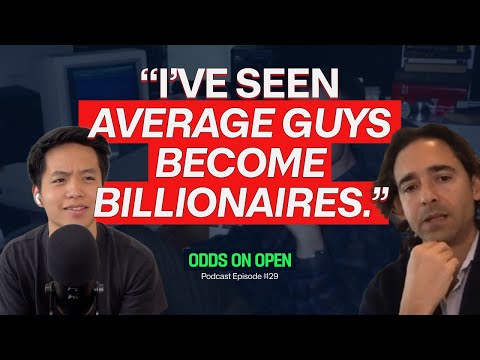
Pascet has also seen average investors become billionaires, showing that the dynamic range between an average investor and a great investor reveals that IQ and intelligence is actually a small percentage of what drives success.
“I've seen guys that I would consider average become billionaires. Okay? So the when you study the dynamic range between an average investor and a great investor, one of the things that you see is that IQ and intelligence is actually a small percentage of what drives our success.”
Charlie Munger said 'Competency is a relative thing. What I needed to get ahead was to compete against idiots. And luckily, there's a large supply.'
“Charlie says. Competency is a relative thing. What I needed to get ahead was to compete against idiots. And luckily, there's a large supply.”
Warren Buffett's poker analogy: 'If you've been playing poker for half an hour and still don't know who the patsy is, you're the patsy,' which has the strategic implication that if you have many patsies in your game, you're in a good position to win.
“Warren Buffett, if you've been playing poker for half an hour, you still don't know who the psy is, you're the psy. Uh, by the way, the strategic implication of that is fine game. I have a lot of psis.”
'Value-itis' is a bias where investors overly anchor to valuation being their investment thesis; 'it's cheap' is not an investment thesis because there are 5,000 books on value investing and 'everybody's a value investor,' reducing the edge that value investing had in the 1970s.
“value itis when you overly anchor to valuation your investment thesis. Why do you own it? It's cheap. So that's not a that's not an investment thesis. Who cares if it's cheap? There's 5,000 books on value investing on Amazon. Okay? Everybody's a value investor. It has it, you know, in the 70s when no one knew value investing, it was an advantage to be a value investor. Okay? Today it's very it's harder. It's way more competitive.”
'Emotional estimation' bias occurs when someone has an emotional reaction to something not based on thought, then looks only for validation of their emotional conclusion rather than disconfirming evidence.
“emotional estimation, seeing validation. You have an emotional reaction about something that is not based on thought and then you go and you only look for validation that you're right as opposed to disisconfirm the evidence that you're wrong.”
An analyst has five skills they need to develop and hone: recall of past patterns, mental visualization of a business within the feedback loops of its ecosystem, reading between the lines, making leaps of judgment, and synthesizing—AI tools inhibit or dull all of these skills, especially in rookies.
“An analyst has five skills they need to hone and develop. Recall off past patterns, mental visualization of a business within the feedback loops of its ecosystem, to read between the lines, to make leaps of judgment, and to synthesize. AI tools inhibit or dull all these investment skills, especially in rookies.”
The 'premortem' is a process by Gary Klein and Danny Kahneman where you imagine it's five years in the future and your investment decision was a catastrophe, then identify what went wrong and solve for those reasons before making the decision.
“The premortem and the pre- parade by Gary Klein and Danny Conaman. So premortem is a process of saying, 'Hey, I'm about to make an investment or a decision. If five years from now ends up that decision was a catastrophe, why did it go wrong?' and take those reasons and and solve for them.”
AI will make the mistakes that Warren Buffett warned about worse, at least during the growing pains period of AI tool adoption.
“This was written before the age of AI. It's one of my beliefs that AI is going to make the things that Warren talked about worse, at least for the first growing pains that we're going to go through as we use these AI tools.”
Warren Buffett argues that a single big mistake can wipe out a long stream of successes, and investment success requires someone genetically programmed to recognize and avoid serious risks, with temperament, independent thinking, emotional stability, and keen understanding of human and institutional behavior being vital—not just intelligence.
“over time markets will do extraordinary even bizarre things. A single big mistake could wipe out a long stream of successes. We therefore need someone genetically programmed to recognize and avoid serious risks including those never before encountered. Certain perils that lurk in investment strategies cannot be spotted by use of the models commonly employed today by financial institutions. Temperament is also important. Independent thinking, emotional stability, and a keen understanding of both human and institutional behavior is vital to long-term investment success. I've seen a lot of very smart people who have lacked these virtues.”
In backgammon, to make consistent money gambling, one should not compete against other great players but instead find rich backgammon players with big egos who don't play as well—the 'prime pattern' of exploiting competitively disadvantaged players.
“if you wanted to make a lot of money gambling you shouldn't do that. And it wasn't about ego, about being the best player is to really make a lot of money, you had to find rich back gamma players that had big egos. Dad did not know how to play as well as you did. And if you did that, you could consistently make money.”
Smart marketers are already using AI tools to design content that LLMs pick up on, embed links to their products, and drive retail buyers through those links without those buyers understanding they're being manipulated by AI-optimized content.
“smart marketers are designing pieces of content that the LLMs pick up on and put as a link with their product and to the link if you click through it so that you go and pay the product. you know, the smarties out there that are way smarter than we will ever be, they're figuring out, hey, how can we use this to growth hack the system, okay?”
Willis Johnson's book 'From Junk to Gold: The Story of Copart' shows how a sophisticated operator took over junkyards (historically run by uneducated people) and brought advanced business techniques to consolidate the industry into one of the best businesses—an example of the 'prime pattern' of competing against structurally disadvantaged competitors.
“This book uh by Willis Johnson, one of my favorites uh is from junk to gold, the story of Copart. This guy would took junkyards which is um usually historically uh run by uh people that are not very educated and he brought sophisticated business techniques to that space and eventually consolidated and became one of the best businesses out there.”
Pascet spent 25 years observing smart people make investment mistakes, including seeing grown men cry over losses, families move to cheaper neighborhoods, and people with very high IQs lose everything.
“In 25 years of doing this, um, I gotta sound like a [ __ ] boomer. Um, in 25 years of doing this, I've seen a lot of smart people go through every emotion that the E Trade Baby has gone through. I've seen grown men cry when they lose money. I've seen people having to move their families to cheaper neighborhoods and cheaper schools because they lost everything. Okay? And really high IQ people at that.”
Pascet learned about probability and backgammon at 18, became obsessed with it, read all available books, hired the best player in Boston to teach him, and within 6 months was consistently winning against skilled players—demonstrating that structured learning and deliberate practice can close skill gaps.
“So my story with with uh Backam is when when I was 18 I saw my uncles play the game and I remember we were we were by uh at the beach and they were playing and I had noticed them playing before but that moment I started paying attention and I noticed that there was probability and I was obsessed with probability at the time and I learned the rules. I played with them and they got very cocky with me as they were beating me because I didn't know uh how to play. So I got pissed. I went back uh home and I bought all the books on back that I could find, right? Uh there was actually a gambling store in France and they had all these backon books. I bought them all. I read them, got better, came back a couple months later and trounced my uncles.”
Understanding how quant funds were deleveraging in August 2007 helped Pascet's first hedge fund (which he started in 2006) manage the crisis: he was up 35% in 2007, dropped 10% in August due to quant contagion affecting his longs and shorts, but recovered most of that by end of Q3 and Q4.
“And that also led me to understand August of 2007 when the quant funds were blowing up what actually was happening. Um and that saved our fund actually because I ran a uh my first hedge fund I started in 2006 and we were up uh 35% in 2007. Uh but August alone we dropped 10% because when quant funds were deleveraging a lot of our longs went down and our shorts went up. Uh we made most of that back in the end of Q3 and Q4.”
Pascet's friend has been trying to go long retail stocks for 22 years and has lost on every attempt; yet he makes money on industrials consistently; Pascet has humorously advised him to do the opposite of his retail calls since inverse correlation is as good as perfect correlation.
“if one of my buddies calls me with a retail name, it's an automatic short because he's been trying to go long retail for 22 years that I've known him and he's O for O at every moment. And at one point, he was like, I'm going to quit investing in retail. I was like, no. He's like, why? He's like, why deprive the rest of us? You know, doing the opposite what you do in retail is as good as doing, you know, like no, don't keep doing that. um you know, but he like persists. He like is obsessed with retail uh and losing money at it.”
Have thought partners and confidants—people you can pitch ideas to and who will be gentle with your ego while giving you honest feedback; Pascet calls this 'the power pair' or 'the unstoppable two.'
“Have thought partners and confidence. The power pair or the power of the unstoppable too. I'm very lucky to have confidence that if I have an idea, I can pitch it to them and they're very gentle with my ego about giving me feedback on it. Okay, you need people like that. You want to be people like that and know how to build the right ritual.”
Value investing isn't dead; it just needs adaptation of how you apply value principles in a changed market structure.
“Value principles uh get to know them. Value investing isn't dead, okay? It's just that there needs to be an adaptation of how you apply value principles.”
Young investors should watch out for the decades of their 40s and 50s—for many people this is a 'lost decade' because both men and women go through a form of menopause that impacts energy, how you think, mood, and all these things; midlife crisis dynamics are real and manageable if you're aware early.
“young as a younger person start watching out for the decade of your 40s and your 50s both men and women. The and for many people this is a lost decade and often because they don't understand what's happening there. But men go through a form of menopause. Women go through a form of menopause. And it starts impacting your energy, how you think, your mood, and all of these things. And the midlife crisis dynamics are really real. Okay? You don't have to worry about that. And you're probably saying, 'Why is this boomer talking about this shit?' But trust me, it's coming. Okay? And the earlier you manage for it, the better.”
Smart people often leave the investment business because they lose the energy to deal with markets; this happens because they've neglected their life force by not working out, relaxing, massaging, or doing things that force recovery over long periods.
“One of the reasons you see smart people leave the investment business is they lose the energy of dealing with markets. So working out uh relaxing, massaging, doing things that force you to recover uh over long periods of time is very important.”
Phil Stuts is a psychologist whose concepts (introduced in his Netflix documentary with Jonah Hill) provide powerful insights for smart people, particularly around process design for overcoming internal obstacles.
“We learned that concept from a psychologist called Phil Stuts, who I'm kind of obsessed with right now. If you haven't seen Stuts, the documentary on him uh by Jonah Hill on Netflix, it's a mustwatch.”
Don't do violence to yourself in the morning by plunging into ice cold water upon waking; this jacks up adrenaline and negative hormones unnecessarily, whereas you should wake up gently to preserve emotional regulation and resilience.
“Don't do violence to yourself in the morning. These guys that are plunging into ice cold bass when they first wake up. No, no, no, no, no. That's stupid. The you're you're literally jacking up your adrenaline, jacking up all sorts of negative hormones. No, don't do that in the morning. Wake up gently.”
'Theatricality and deception' (from Chris Nolan's Batman trilogy) will be amplified by AI tools—deception becomes easier and more convincing when powered by AI.
“I'm obsessed with Chris Nolan. Almost everybody my personality, if you ask somebody my personality type, what's your favorite movie? the Batman trilogy is always in there like and you know theatricality and deception you know are going to be amplified by AI you know so so you have to be very very careful”
'Dynamic evaluation' is a process where instead of deploying only your strengths when studying an idea, you deliberately deploy your weaknesses as well; for example, if an analyst is shy, have them call five people they don't know and ask them questions, which helps the person's weakness (shyness) become an edge through uncomfortable practice.
“There's a concept called dynamic evaluation. Uh it's one of the new ones for us and since we've started doing that, our performance has improved, which is that if I'm studying an idea, instead of putting my strengths in play, I put my weaknesses in play as well. So, for example, uh uh if an analyst is shy and he's reporting to me on an idea, I always be like, 'Okay, I need you to call five people that you don't know and ask them these questions.' So, that since his weakness is shyness, putting that weakness into motion actually helps you make money.”
The first baby boomer was born in 1946 and is turning 80 next year; baby boomers hold $76 trillion in wealth in the United States, Gen X holds $37 trillion, the Silent generation holds $19 trillion, and millennials hold $13 trillion.
“The first baby boomer is turning 80 next year. The first baby boomer was born 1946. And in terms of wealth, that generation has $76 trillion in the United States. Gen X, which is my generation, by the way, I call Gen X neoboomers because we were raised by boomers and we have boomer sensibilities, but we were the first to really use the internet. So, we're both analog and digital. Um, uh, Amogenics, by the way, and our generation has 37 trillion. the silent generation. So, this would be your grandparents, your great-grandparents, my grandparents, they have 19 trillion. And then the millennials have 13 trillion.”
Smart people are prone to intellectual arrogance, which smart funds exploit by using signals based on human behavior (like market specialists' end-of-day inventory liquidation) rather than pure statistical arbitrage, because behavioral anomalies are more durable than statistical anomalies.
“one of our first signals is in E8, we noticed that market specialists did not like to go home with positions on. So around 355 and a lot of positions they had in inventory, they would actually sell those off and the stocks would go down imprecibly, right? And they realized that they could build a quant signal that could pick up on which are these stocks and actually short them around 350 and cover them right before the close”
Success in investing comes from synthesizing insights from multiple fields (poker, backgammon, quant funds, complexity theory, military strategy, psychology) rather than focusing narrowly on traditional finance knowledge; breadth creates edge.
“we've been literally stealing stuff from there. How can we apply that to investing, right? So, so you want to develop that network. And then what you see is that when you're asking for advice, you can ask different people in different networks.”
Pascet's morning routine is: massage with a rumble roller to detense, drink 1 liter of water, exercise, heavy fat-based breakfast, then read 3 hedge fund letters, 1 investment memo, and review one manager's 13F filings—this 'morning 90' feeds his competitive advantage daily.
“I wake up and I go I get a theraun or rumble ruler and I literally give myself a massage... I drink a liter of water... And then the third thing I do is I exercise. Uh so that's my morning routine. Uh and then I have usually a a breakfast which is usually very heavy on fats... and then after that I do my morning 90 which is three hedge fund letters, one investment memo, 113F.”
'Meta-rationality' is having the humility and understanding that someone smarter than you might be doing something and that you need to minimize your own intelligence and do what the smart person is doing to be more effective—it's harder to do than it sounds.
“Intellectual arrogance, lack of meta rationality. So what metar rationality is is having the humility and understanding right that there's somebody smarter than you doing something and that you need to to to to m to minimize your own intelligence that wants to do X and go do Y which is what the smart guy is doing gets more effective. It's actually harder than you think.”
Recommended books include: 'The Intelligence Trap,' 'Mistakes Were Made (But Not by Me),' 'Military Misfortunes: How Smart Militaries Make Catastrophic Mistakes,' 'When Genius Failed' (on Long-Term Capital Management), 'Why Smart People Make Big Money Mistakes,' 'The Halo Effect' (on narrative investing), and reading Michael Mauboussin's research.
“Here are some of the books I would recommend. Uh the intelligence trap uh mistakes were made but not by me. Uh one of my favorites on here is Military Misfortunes: How Smart Militaries Make Catastrophic Mistakes. when genius failed which is on on long-term capital management and how they failed why smart people make big money mistakes and how to correct them and then one of the best ways to understand narrative investing today which is the halo effect you have to read Michael Moes's research this one methods to improve decision-m very powerful”
Smart people love intricate complexities and use them to show they're smart, but the real competitive advantage comes from finding unrecognized simplicities, not from understanding complicated things.
“Smart people tend to love intricate complexities. It's kind of how they show they're smart. Uh the a very close friend of mine runs a fund and he was invested in the name where literally to understand it and to make money in it, you have to understand California weather patterns. Okay? And the guy the analyst that was covering that for him uh was intellectually arrogant and he loved this idea but he also lost $400 million investing in it. Right? It's not intricate complexities that matter. It's actually finding unrecognized simplicities that matter.”
Being exposed to feedback on your ideas publicly through content sharing is valuable because it prevents intellectual arrogance; if your ideas are really good, people often hate them initially, and that negative reaction is feedback worth understanding.
“If your ideas, including investment ideas, are really good, when people hear it, usually they're going to hate it. Okay, that's also good feedback. Why are they hating it, right?”
Creating 'triads' (introducing two people who don't know each other) is a high-leverage way to add value, create emergence, create luck, and generate business opportunities—and the cost of triads that fail is minimal compared to the upside.
“one of the things that I do if I'm studying an idea is I always say, 'Hey, who are the two smartest people that I'm collaborating with this idea that don't know each other that I can introduce to?' the more triads you have in your network, the more you perform uh uh or you're successful. The sociologists actually done a great work on that. Not refreshing your network. You know, the smart people tend to consolidate with this group that they have and they very rarely go and meet new people and then too many dormant ties uh which is people that you know that you haven't spoken with. You have to fix all of that.”
For a smart person in their mid-20s, developing emotional intelligence and emotional health is more important than learning modeling skills; it should involve dance, travel, learning new languages, trying new foods, having novel experiences, constantly meeting new people, and learning diverse skills.
“For a smart person in the mid20s, much more important to go develop your emotion emotional side and not be emotionally repressed than it is to go and learn modeling skills, for example. Take a dance class, travel, preferably as a group activity, what's called a compound experience. Learn new languages, try new foods, have novel experience, constantly meet new people, learn diverse skills. Especially if you're shy, go learn comedy, improv, public speaking, acting even.”
When someone says 'I've done six months of work on this and I think the idea is bad,' if they're still long, it's almost an automatic short—probably because they've done five months, three weeks, five days too much work and failed to recognize error.
“When I hear I've done six months of work on this and I think the idea is bad, if the guy is long, it's almost an automatic short. Okay? Why? Because you've probably done five months, three weeks, five days too much work on this. Okay? Be very careful whenever you hear, I've done six months of work on this, especially as a stock is going down.”
In the investment business, investors are typically categorized as either micro guys or macro guys, but there's actually an intermediate level called the 'messo' (one step above micro); you should know the influences one level above micro that are impacting you and your businesses.
“in the investment business the there's a there's either micro guys or macro guys but there's actually one level called the messo. So you have the micro, the messo and and the macro. And the messo is one step above the mic, the micro. You have to know the influences that are having an impact on you, your businesses, and it's only one step above.”
A process recommended by Elon Musk involves asking: What are the requirements of our investment process? How do we make them less dumb? For example, many investment firms require meeting management to make investments, but there's no reason to do this since CEOs will naturally present favorably.
“Elon has a process that I love I just we just did a study on this actually and it improved our process is like what are the requirements of our investment process and how do we kind of make them less dumb like for example a lot of investment firms require meeting management to make investments we don't why do you need to meet a CEO like literally you know no father ever thinks his daughter is unattractive no mother ever thinks uh uh her son is unattractive of course the CEO is going to say good things it's a waste of time sometime if you meet a CEO Talk to him about his competition, about his suppliers, what's going on in the industry. Fine. You talk to him about the business. That's not a requirement for us. Delete the parts of process step.”
Process optimization involves five steps: Delete (unnecessary requirements), Optimize (improve existing steps), Accelerate (speed up), Automate (use AI/tools), and only then Integrate; many people are automating without doing the first three, which is dangerous.
“Delete the parts of process step. For example, on the short side, we've deleted a lot of process steps. Well, the pro you to solve the problems of the short side. Optimize, you know, how do you make a step or process uh a part of the process better? Accelerate. How do you speed it up? How do you automate? You know, with the the with AI, there's certain things that we've automated, but today people are automating things without doing the previous four. Very dangerous.”
Build leverage into your personal and business life through multiple types of capital: code, content, community, contractual, structural, and conditional leverage—not just the ability to borrow money.
“Build leverage into your personal and business life. Not the ability to borrow money but capital code content community contractual structural and conditional leverage. Very powerful. I have a YouTube talk on this. Go do it.”
The future of investment performance belongs to people who have both analog and digital capabilities—what Pascet calls 'both analog weapons and digital weapons.'
“we believe that the future of investment performance is guys that have both jet analog weapons and digital weapons.”
Smart people project too much of the past into the future and fail to recognize that the game has changed due to the internet, social media, narratives, new players (quant funds, ETFs, passive investing), making historical pattern analysis an unreliable guide to future outcomes.
“Projecting too much of the past into the future. The game has changed. the internet, social media, narratives, new players, quant funds, ETF, passive, uh, uh, have changed the game. You can't take a look at a past situation and project it into the future anymore. There's novelty now.”
There is a 'junior-senior problem' in asset management where portfolio managers don't want to hire junior analysts because they lack strategic reference points to model competitor and CEO behavior, don't handle pressure well, and have lower resilience to market swings due to hyper-stimulation.
“There's a problem right now in the investment business called the junior senior problem. And a lot of PMs are noticing that they don't want to hire juniors anymore... they know how to model, they learn the pod talk early in college, idios and and and factors and such. But if you ask them, hey, what do you think the CEO is thinking? They don't have the strategic reference points.”
'High personal business overhead' is a killer for smart people: as they succeed, they jack up personal overhead (expensive homes, private schools, luxury goods), which amplifies almost every bias and creates blind spots while threats and opportunities pass by unnoticed.
“High personal business overhead, a killer for smart people. Be very careful as you succeed that you jack up your personal overhead. It amplifies almost every uh bias you have and creates blind spots. While you're focusing on your overhead and the cost and how expensive it is, opportunities are going by, threats are going by, you're not seeing them.”
Smart people can apply lessons from gambling (choosing competition, studying other smart players, asking for advice, recognizing when you're wrong, designing processes for improvement) directly to investing, which has an advantage over gambling: in investing you can call a smart person mid-decision for advice.
“basically go with smart people read all the books on investing. Uh, I still can't believe, by the way, that people will write books, spend two years writing books that they sell for $15 and you can get all those lessons and less than a day sometimes. Um, but it was very powerful when I got into investing to apply the same process. Find smart people, uh, read books, ask for advice. But one of the beauties of investing is if you're playing poker in the middle of a hand, you cannot call a smart guy and say, 'Hey, what do you think I should do?' Whereas investing, you actually can, right?”
The majority of quant fund employees came from one specific school, leading Pascet to visit that school and study the philosophies and intellectual frameworks (chaos theory, complexity, systems thinking, cybernetics, network theory) the firm was using to make money.
“I noticed that the majority of them had gone to one school, right? So I literally took a trip to that school, had meetings with all the teachers and said, 'Hey, what do you teach?' And this was where I when my development as a fundamental investor picked up because I started understanding the philosophies that this firm was using to actually make money including chaos theory, complexity, systems thinking um and others, right?”
One of the smartest macroeconomic thinkers Pascet knows is one of the worst money makers he's ever seen, primarily because this person wants to be right more than he wants to make money.
“one of the smartest macroinkers I know is one of the worst money makers I've ever seen. Mostly because he wants to be right.”
Smart people often lack self-awareness about their power zone—the specific types of ideas where they consistently make money; outside people observing you can often identify your power zone better than you can yourself.
“You don't know your power zone. What are the ideas that are your power zone that if you invest them, you're going to make money. I find that you need outside people to tell you that because some of my friends, they actually don't know what their power zones are.”
Getting feedback on your ideas and processes, and knowing your talents that you have ritualized and amplified to be a strength, is critical; for example, field research is a strength for Pascet, which he amplifies by following 13Fs of great consumer investors and surrounding himself with others strong in consumer stocks.
“Not getting feedback on your ideas and sites or processes, not knowing your talents that you have ritualized and amplified to be a strength. So, for example, if you're good at field research, and by the way, we are, we like to focus on consumer stocks because the field research is much more easier to be done, right? So, how do you amplify that? Follow the 13Fs uh and hedge fund letters of great consumer investors, surround yourself with other people that are great consumer stocks, and so on.”
The 'self-sabotage' or 'self-destruct' button is a pattern Pascet has noticed in smart people: once they get rich, they start losing money, pushing a metaphorical self-destruct button—it's a human tendency that all humans have and that smart people are particularly susceptible to.
“self- sabotage the self-destruct button. One thing I noticed very smart people, they get rich and there's a self-destruct button that they keep pushing and they start losing money. Um, it's one it's we all have it in humans. By the way, I'm not saying uh by the way, I'm prone to probably every bias in here, but we have systems and processes. Usually my friends that thank God love me dearly are like, 'Hey, jackass, you're doing that again, okay?'”
'Goal-induced blindness' or having the wrong goals creates blind spots; Pascet's firm has goals around mentoring, learning, and teaching, which are both selfless and help them make money.
“Goal induced blindness or having the wrong goals. So, for example, in our investing, one of our goals is mentoring, learning, and teaching. It's actually even though it seems like a selfless act, it's actually something that helps us make money as well.”
'Structural and conditional blindness' refers to being blind to regulatory, physical, social structures and economic forces that are having a massive impact on our lives or pushing us backwards; investors have to 'wake up' to these structural forces.
“Structural and conditional blindness. You know, we tend to walk around regulatory, physical structures, social structures, and almost are blind to it, right? We're blind to the economic regulatory forces that are having a massive impact on our lives or pushing us backwards. You have to wake up to these things.”
Being stunted in one part of your being (body, emotion, mind, environment, relationships, ideas) creates blind spots; wholeness across all domains is necessary for good decision-making.
“and being stunted in one part of your be Mary as a last so body emotion mind environment relationship ideas if you're missing things in those areas that can have a big impact and create a blind spot”
Having a spiritual practice is very important for smart people—it provides grounding and perspective beyond the ego-driven drive for success.
“Have a spiritual practice. Very important for smart people to have a spiritual practice.”
Good schools can paradoxically be harmful to intellectual humility; students at elite schools are repeatedly told they're winners and the future, which can lead to intellectual arrogance and conviction in ideas without exposure to opposing viewpoints.
“a lot of them go to good you know great schools and I think that you know I studied at UCL was a good school and I'm now I'm at Colombia and one of the things I noticed with people intelligent people who go to good schools is they can generally fall into a position well get into a position where they're in love with their ideas and they're so convinced they're right because they're surrounded by other people who are extremely smart and they're consistently told you are winners. You are the future of society. You are going to rule the world. You deserve the world.”
Intellectual arrogance is the most dangerous when it's secret (held privately without exposure to challenge); passive-aggressive intellectually arrogant people in investment business think 'I'm right but I won't tell you I'm right,' which is a disaster because Mrs. Market slaps you down violently.
“the intellectual arrogance kills smart people. It's intellectual arrogance is even worse when it's secret. A lot of passive aggressive guys in the investment business have this secret intellectual arrogance. I'm right, but I'm not going to tell you I'm right. You know, I'm just going to keep that as a secret, dude. Mrs. Market is going to slap you around like her little [ __ ] Okay. Like the the it's when you see it happen, it's always violence. When smart people lose money, it's not, you know, they lose 10%. It's always a catastrophe.”
Smart people make a networking mistake by belonging to only one network; instead, you should have multiple networks structured by geography (east coast, west coast, Europe, Southeast Asia), industry/sector, age, and passion projects.
“they tend to have one network and then belong to just that. Whereas you should join multiple networks. So for example, we've tried to build a network to be east coastbased, west coastbased, um to have a network in Europe, to have a network in Southeast Asia, and I want to belong to multiple networks. So there's my back network, there's my poker network, there's my investing network, there's my all the geeky stuff that I study.”
Geography and culture of thought shape how people think; the West tends to see things very differently than the East; books like 'The Geography of Thought' and 'Treatise on Efficacy' (analyzing Chinese vs. Western strategic thought) are important for understanding different perspectives.
“the geography and culture of your thought, you know, in the west we tend to see things very differently than in the east. There's a great book on this. It's called the geography of thought. A second great book on this. I'm obsessed with the writer. um is he's a French sonologist called uh Franisa he uh the book is called treaties on efficacy which is an analysis of Chinese strategic thought and western strategic thought brilliant”
Never developing your own authentic style is a mistake; when an investment coach had Pascet lean into his natural style (despite insecurities), his performance went up, and he believes 'Mrs. Market' rewards personality and authenticity imbued in investing.
“Never developing your own style. So when my first coach, investment coach, had me go to things that were more my style, despite my insecurities about my style, my performance went up. To this day, I'm still shocked. Uh, and being okay with that. There's something about Mrs. Market, when she feels your style, she wants to reward that. I know it sounds like cuckoo nonsense, but I really do believe that that when your personality and authenticity is imbued in your investing, that's when you get rewarded.”
'Miss it' bias occurs when investors hear about a stock that has gone up and say 'I missed it,' when in reality the best stocks are ones bought at new highs—you haven't missed anything until the stock has risen far beyond fundamental value.
“I missed it. Bias. This is when you you you talk about an idea, the stock is up, and you hear somebody say, 'I missed it.' Or better yet, you think it time to do some work. You haven't missed anything. The best stocks are the ones that you buy at new highs.”
'Bull-bear debates' are very powerful; if you're long an idea, find a short seller and debate them on it; if you're short, find a long buyer—there are services on Wall Street that facilitate this; Pascet sometimes studies an idea for 20 minutes and debates it to learn.
“Boar debates very powerful to if you're long to find a short seller and debate him on the idea. If you're short, find a guy that's long, debate him on the idea. There are services that you can pay on Wall Street to get that. One of our most used tools is the bull bear debate. In fact, sometimes I don't know anything about an idea. I literally will study for 20 minutes and come up with a thesis and debate a short seller on it uh long or if he wants me to debate the short side, I'll debate the short side. It's a very powerful way to learn.”
Analog training is disconnected mental training that older generations had to do because they lacked digital tools; it builds judgment by forcing sustained engagement with complex ideas without distraction.
“analog training is disconnected mental training that older generations had to do more of because we didn't have the digital tools.”
Systems and processes to check against cognitive biases are essential for smart people precisely because their intelligence makes them better at rationalizing biased positions; Pascet has friends designed into his life whose role is to call him on his biases.
“we have systems and processes. Usually my friends that thank God love me dearly are like, "Hey, jackass, you're doing that again, okay?" And stop it, right?”
Investing in the stock market with difficulty and information access (trading on margin, using complex instruments like credit default swaps and asset-backed securities) makes it psychologically easy to lose everything quickly through overconfidence and insufficient analysis.
“Making a big investment is as easy as a single click. Boom. I just bought some stocks... Boom. Asset back securities. Boom. Credit default swaps. Boom. Boom. Boom. Hell. I don't even know what app this stuff means.”
Fantasy stocks - low revenue or zero-revenue companies with massive market capitalizations that can never generate the free cash flow needed to justify their valuations - represent a persistent retail investment category that will eventually collapse, yet are repeatedly bid up on narrative.
“There's a group of stocks out there in the stock market that retail keeps buying. And if they had a knowledge of history, they kind of know how that story is going to end. You know, you have $20 billion market cap companies that are never going to earn the free cash flow that has to actually justify those valuations.”
A close friend of Pascet's father studied engineering at MIT, moved back to his home country, and started a car repair shop instead of a think tank or government job, becoming the owner of one of the largest car repair shops and near-monopoly in that country by competing against car mechanics running lifestyle businesses.
“a very close friend of mine, his father study engineering at MIT and he moves back to his home country and people are like, 'What are you going to do? Are you going to start a think tank? Are you going to join the government?' He's like, 'No, I'm going to uh start a car repair shop.' And he said, 'What? Why are you going to do that?' And he's like, 'Just, you know, I think it's a good business to go into.' And he became and he owns now one of the largest car repair shops. Uh, and it's almost a monopoly in that country. And the reason why when I asked him why did you do that? And he said, 'Did you see who I was competing with?' you know, he was competing against car mechanics that were doing this as a almost like a lifestyle business and he just trounced all these guys.”
Not knowing your weaknesses or negative patterns leads to lack of dynamic evaluation; knowing these is critical for designing processes to turn weaknesses into edges.
“Not knowing your weaknesses or negative patterns, which leads to a lack of dynamic evaluation, which I was just talking about.”
'Stale networks' and having the wrong social influences cause massive blind spots; they're closely related to echo chambers.
“Stale networks, same thing. Having the wrong social influences causes massive blind spots.”
Pascet cold-called the host (Ethan) and they built a relationship; later, Pascet introduced the host to a venture capitalist, and two years later they asked Pascet to join the board of a company they were in—this became one of the biggest private investments Pascet has ever made, all resulting from a triad created a decade earlier.
“the amount of time that a great investment idea comes to us and we realize that it came to us because of a triad that we created a decade ago. I introduced one of my best friends to a venture capitalist once. It was a venture capitalist to another person and then two years later they asked me to be on the board of a company they were in and it's been one of the biggest investments I've ever made on the private side.”
'Life force' consists of three components: your relationship with your body, your relationship with your mind, and your relationship with other people; smart people need to actively maintain all three.
“Not taking care of your life force. So your life force is your relationship with your body, your relationship with your mind, and your relationship with other people. Okay? Very smart people need to take care of their bodies.”
The Santa Fe Institute's research on complexity, network theory, and systems thinking is strategically valuable for investors; some of the earliest successful social media VCs gained their edge by reading 'Complexity' by M. Mitchell Waldrop, a book derived from Santa Fe research.
“a lot of my friends are either on the board or involved with the Santa Fe Institute which is a complexity and network theory think tank. Very important to study what these guys are up to. some of the the earliest VCs that were able to value of of social media had read a book called complexity by Mitch Waldrop that came from the Santa Fe Institute and is still an edge today”
Attending professional clubs (Brooke Club, Racket Club, University Club in NYC) and tapping into alumni networks are underutilized strategies for building geographically and professionally diverse networks that drive deal flow and idea generation.
“one of the things I always advise young people whenever they join a city is join at least two or three different uh clubs. Try to join the Brook, try to join the racket club in New York City, try to join the university club. And those networks are very powerful. leverage the alumni network of your school.”