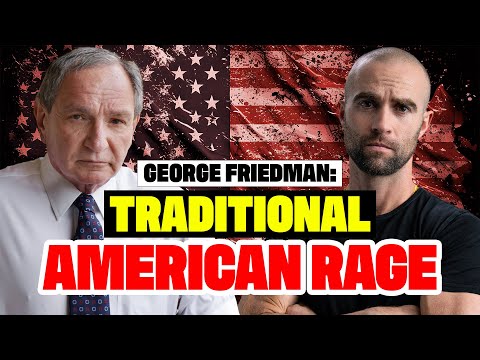
2024 Predictions and Global Power Dynamics with George Friedman
What this covers
In this interview with renowned geopolitical expert George Friedman, we delve into the complexities of current and future geopolitics. Friedman offers insightful predictions for 2024, drawing parallels between historical patterns and present-day geopolitics. We discuss the role of the U.S. in global conflicts, the underlying strategies of world powers, and the unseen forces shaping international relations. Join us for an intriguing journey into the world of geopolitics, where Friedman reveals the hidden truths behind global power struggles and government decisions.
More George Friedman: https://geopoliticalfutures.com @George_Friedman on twitter
The Jay Martin University: https://jaymartinuniversity.com/
Sign up for my free weekly newsletter at https://jaymartin.substack.com/subscribe
Be part of our online investment community: https://cambridgehouse.com https://twitter.com/JayMartinBC https://www.instagram.com/jaymartinbc https://www.facebook.com/TheJayMartinShow https://www.linkedin.com/company/cambridge-house-international
4:04 Forecasting America's Future: Insights from the 2024 United States Forecast 6:39 Decoding the Traditional American Rage: Understanding the Nation's Psyche 7:33 Navigating Political Divide: Lessons from History on Overcoming National Rifts 11:21 2024 Elections: Predicting the Tipping Point in American Politics 16:57 Empire Lifecycles: Tracing the Rise and Fall of Global Powers 23:23 America's Role in Global Conflicts: Analyzing the Ukraine Crisis and Beyond 28:31 The Psychology of War: Understanding National Fears and Strategies 34:26 Psychological Invasion: Assessing the Impact of Foreign Influence on the U.S. 37:00 Forecasting the Israel-Palestine Conflict: Potential Outcomes and Strategies 42:16 The Complexities of Intelligence: Learning from Historical Failures 47:17 The South China Sea Tension: Analyzing the Risks and Strategies 50:25 China's Crippled Ambitions: Unveiling the Reality Behind the Economic Giant
Copyright © 2022 Cambridge House International Inc. All rights reserved.
Source description (no synthesized summary yet).
Friedman argues the United States is entering a transitional political-economic cycle similar to the 1970s, but the crisis peak will come in 2025 not 2024, and structural factors (geographic invulnerability, control of ocean access, military-economic integration) ensure continued American dominance despite apparent decline.
- The 1970s had worse economic/social conditions than today, yet America recovered; current divisions are 'traditional American rage' tied to cyclical transitions, not existential decline
- US military spending and imperial wars are economically productive, not drains; WWII and post-war booms prove this model works when integrated strategically
- China is crippled by internal civil-war risk and investment flight; Russia is contained by geography; the Philippines treaties show Biden quietly secured US dominance in the Indo-Pacific
This asset isn't compiled yet
You're seeing its claims, ranked. Compile it to build the argument threads, weight them, and check each claim against your library — the full view.
Intelligence services cannot protect against novel outlier attacks because they defend against known threats from a pre-existing threat list, but enemies always study the defenses and build attacks designed not to appear on the known threat list, making defense always disadvantaged relative to offense.
“the problem of any intelligence service is they cannot protect against the outlier they're very good at detecting the known threat but the intelligence people have a list of what's threatening and the enemy always has okay I've seen the list we'll do one that's not happening and that's what happened which is that somewhere in the Arab world's relationship to the United States Arab intelligence organizations figured out where our prior primary defenses are and built an operation or IED to evade it”
The United States was founded by immigrants who were not welcomed but essential, through westward expansion engaging Indians, with a constitutional structure deliberately designed to prevent government action through separated powers and federalism.
“the United States is formed through immigrants who were not welcomed but essential it was formed through uh a movement Westward engaging the Indians and so on the founders created this country with the intention that nothing could be done by the government they created a presidency that could not function unless Congress was with it uh 50 Governors and all these other institutions the founders were terribly afraid of getting things done”
Politicians and generals rarely have genuine choices—they are pushed by circumstances into wars and into terrain that forces specific tactics; both Roosevelt and Reagan appeared to have freedom but were actually constrained by the situations they inherited.
“remember one thing about Wars people think of Wars we have choices if you're attacking Russia there are only so many paths to move forward and one of the path all of them have to get to Moscow and one of the paths well the path goes through Stalingrad in the East but the point is that people tend to look at War as if the generals have choices and just as I feel frequently politicians don't have choices they're push pushed into this they're going to be fighting here um it's going to be this war because this is the terrain”
Nation-states are far more than their economies; military, social, and political forces interact in complex ways, making purely economistic analysis of war inadequate.
“a nation state is far more than its economy is link to the military and other social forces and these interact in interesting ways so that an econometric view of the consequence of a war will likely not be right or a military view of the consequence war is likely not going to be right you have to put it together into a systematic po”
The attacker has asymmetric advantage over the defender: the attacker chooses where to engage, forcing the defender to be lucky every time while the attacker only needs to be lucky once.
“the attacker is always in the advantage of being able to choose where to engage unless he's detected before so they very careful not to detect so they could choose where to to engage”
The US was not interested in occupying Moscow during WWII, but Russians could not know this and had to assume worst-case intentions; this defensive assumption shapes Russian strategy even today.
“the Americans had no intention of going to Moscow but the Russians didn't know that so you you assume the worst but all of this you know affects the United States in the same way we had Pearl Harbor we are still living under the effects of Pearl Harbor of being surprised of being into a war without expecting it”
World War II caused massive borrowing and bond sales that drove economic growth in auto, suburbs, and infrastructure; the Depression was not solved by policy but by the spending demands of war, which shows war can have tremendously stimulating economic effects when properly deployed.
“as World War II showed it is a tremendous booster to the economy we were in a depression World War II had a huge amount of bar borrowing bonds being sold um that borrowing drove the drives of the Auto industry of the suburbs of everything else”
9/11 was perpetrated by highly capable enemies who trained themselves in the US over 2+ years without detection, acquired significant funding undetected, and orchestrated a multi-city attack using a precisely coordinated method (hijacking planes from specific airports); the attackers were exceptionally competent, not opportunists with box cutters.
“that's true uh 9911 occurred because the enemy was brilliantly intelligent very capable they came into the United States to get training in aircraft they were not detected huge amounts of money came in to them they decided they were not going to buy airplanes they hijacked airplanes of the same type flying out of the same Airfield okay the related airfields Northeast and simultaneously hitting their targets in other words these were these are pros”
The Israeli military depends on knowing about threats before they arrive because troop strength is limited, making intelligence the cornerstone of defense; thus the 2023 Hamas invasion mirrors the 1973 Egyptian-Syrian attack—both massive intelligence failures—and the real military question is why Israeli intelligence failed twice in this pattern.
“the Israelis have the capability of ending it at any time they want if they want to take casualties and if they want to inflict heavy casualties okay Hamas is in a bad position at this point the United States does not want a blood bath in the region and the Israelis have to listen to the Americans to some extent on this question I think that steps the way they normally stop there's the peace agreements when they're shattered and everybody lives happily for 10 15 years and they started again uh 1973 Israel was attacked by the uh Egyptians and Assyrians complete intelligence failure and I think this is is the important thing to ask about this war Israel is very very proud of its intelligence cap capability how do they miss hamas's attack and this is the second time how in 1973 did they miss the Syrian and Egyptian attack so the really important military question comes out of this it's what's wrong with Israeli military intelligence and so that's where the weakness comes up they rely on knowing before an attack comes that it's coming because they troops are limited in that sense”
Russia attacked Ukraine because NATO expansion into Ukraine placed a hostile force 300 miles from Moscow, which violates Russia's historical survival strategy of maintaining strategic depth; from Russia's perspective, the attack was a forced defensive necessity, not an act of aggression.
“Russia went to war War because NATO was afraid that NATO would be very close so historically um Russia survived because of strategic deth dep yes it was a long way for Napoleon to go it was a long way for Hitler to go and that's what they won after Ukraine broke with them they are now about 300 miles away away from Moscow with hostile forces the Russians had to attack they had to find some way to push back”
The US interest in supporting Ukraine is not about protecting Ukraine but about preventing a return to the Cold War; if Ukraine falls to Russia, the US faces NATO members Poland, Slovakia, Hungary, and Romania directly bordering a hostile Russia, recreating the costly Cold War posture that was far more expensive than the Ukraine support.
“from the American point of view if the ukrainians had won they would be right up to Bay NATO again Poland would be there on the border um Slovakia Hungary uh Romania we would be back in the Cold War now if you go back and take a look how much the Cold War cost us that was expensive so the issue always is to ask okay if we don't do this what happens and the answer is well we don't care about Ukraine what difference it make the issue is what's the next step the potential Next Step from the Russian point of view they're trying to protect their capital from a traditional attack rout from the American point of view you if they give in they're back in the Cold War which was by far the most expensive War we had”
Foreign attempts to influence the US (British during Revolution, German propaganda in WWII, Russian subversion throughout Cold War, modern state actors) have consistently failed to move US strategic policy because the US has a clear understanding of its own strategic needs that overrides foreign influence operations.
“however the attempt to influence the United States uh has always been there the British tried to influence us During the Revolution and Beyond it um during World War II the Germans had a very strong propaganda system to try to keep the us out of the war the Russians absolutely tried to influence us everywhere they could money and so this goes on we are the player that's going to decide the war no price is too much to create a political movement to prevent it those movements were created they just failed so the interesting thing about these forign paav or even domestically grown they never work the United States has very clear understanding usually of its strategic needs Vietnam accepted uh and it was understood by the Americans very well”
Taiwan is being integrated into the American defense perimeter through positioning in the center of US naval and air defense systems, not because it is geographically special but because it sits between Japanese forces (north) and new Philippine bases (south).
“whereas they used to have it from Japan down to Taiwan Taiwan is now in the middle of the American defense structure and south of them have grown up these others”
Wars have been central to American empire throughout history; war is not an anomaly but a normal component of maintaining great-power status and geopolitical dominance, and economists underestimate war's economic effects because they treat war as external to the economy rather than integral to it.
“The weakness of economic analysis is that it rarely takes into account war wars are the normal process of these great Powers Britain was constantly at War Portugal was at War Rome was at War you do not have the position the United States dominating the two oceans that's the important thing without being challenged and Wars can have different economic effects but as World War II showed it is a tremendous booster to the economy”
China's primary fear is not invasion by the US but internal civil war between the wealthy coastal region and the poor interior; historically, Chinese civil wars erupt when the interior becomes destabilized by poverty relative to coastal prosperity, and Mao's rise exemplified this pattern.
“China's fear is not an attack for the United States or anything like that it is Civil War it's Civil War that the poor part of China will rise up against the wealthier part China has enough fre money to uh do one or the other invest in the tech companies or in in the west and the trouble if you see you see people being arrested periodically in China newspapers things like that it's all about this this is the historic Chinese crisis this is the Chinese historical problem they get wealthy at the coast poor in the interior and there's a fight”
Most major Muslim countries (Saudis, Lebanese, Iranians) do not want Hamas to win and are worried about Hamas's regional influence; the Israel-Hamas conflict is unique because a unified 'Islamic world' rising against Israel is prevented by internal Muslim divisions and competing national interests.
“the United States doesn't want to see um the Islamic world unite the interesting thing that everybody misses about the war is that most of the Muslim countries don't want Hamas to win they they're worried about Hamas and what it would do so the Saudis are worried about them Lebanese are worried about them even the Iranians haven't moved the inch so this is a very strange political war where the military aspect is less than less important than the incredible complexity this is a region where everybody's betraying everybody else”
China's economy is currently in very bad shape and is not the superpower it used to be economically; China cannot afford to engage in military conflict with the US because it would lose access to sea trade, which its survival depends on.
“if they went to war okay they would lose access to the Seas their economy is currently in very bad shape um it is not the superpower used to be economically and they can't afford to engage the United States that way”
The United States will not be overtaken by China as the dominant global power because China's economic weakness, internal instability, and lack of trade-independent military capability make it incapable of challenging US dominance.
“as to uh a power that's overtaking the United States not likely I I have to ask one more question”
Nixon's abandonment of the gold standard and wage/price freeze in 1971 created the economic shocks of the 1970s, yet the decade recovered, demonstrating that even radical monetary and fiscal shocks can be survived.
“the gief after Richard Nixon uh decided to go abandon the gold standard and freeze all raises in income or prices uh a sense that the country was coming to pieces”
The US has the capacity to rebuild and benefit from conquered territories (as it did with post-WWII Japan), providing economic returns on military investment that other powers cannot achieve, due to combination of naval control and economic capacity.
“as you conquer areas you also have the opportunity to take benefits the great boom of the Eisenhower era would not have taken place without that World War II we were in a Great Depression we didn't know how to get out of it oddly enough the War caused us to borrow money build plants build an entire and then conquer Japan for example”
North American historical perspective is limited to a few hundred years compared to Russian historical perspective which spans centuries of invasion fears, making Russian decision-making sensitive to long-term patterns that Americans don't perceive.
“as a North American often I feel that we think about history in the context of our history which is pretty short it's a couple hundred years right whereas if you're Russian you're thinking a lot longer term in Russian history and so you remember Napoleon right you remember the uh the risks the real risks of your geography within World War II”
The current period (2024) is not nearly as bad as the 1970s by most economic variables; the US did not have an oil embargo driving prices up in 2024 as it did in the 1970s, so while rage and polarization exist, the underlying stability is stronger.
“we measure this period against the 70s and we find that by most variables this is not nearly as bad as the 70s were we don't have the oil embargo driving prices up”
Traditional American Rage is rooted in the founders' design: they created a system intentionally weak and hard to govern, with separated powers and distributed authority, specifically to prevent any single actor from wielding power. This structural rage between sectors is cyclical and normal, not evidence of systemic failure.
“The United States is formed through immigrants who were not welcomed but essential uh it was formed through uh a movement Westward engaging the Indians and so on the founders created this country with the intention that nothing could be done by the government they created a presidency that could not function unless Congress was with it uh 50 Governors and all these other institutions the founders were terribly afraid of getting things done they were terribly afraid of the wisdom of the politicians so they created a system that would hold together by the citizens and the citizens were different and all through our history the citizens both pulled together and ripped apart”
Israelis can end the Hamas conflict at any time if willing to accept Israeli casualties and inflict heavy casualties on Palestinians; the pattern historically is temporary peace agreements (10-15 year cycles) followed by renewed conflict as underlying territorial/demographic tensions resurface.
“the Israelis have the capability of ending it at any time they want if they want to take casualties and if they want to inflict heavy casualties okay Hamas is in a bad position at this point the United States does not want a blood bath in the region and the Israelis have to listen to the Americans to some extent on this question I think that steps the way they normally stop there's the peace agreements when they're shattered and everybody lives happily for 10 15 years and they started again”
The era of globalization has now ended; countries and corporations are racing to secure their own material supply chains.
“the era of globalization has now come to an end countries and corporations are right now racing to secure the materials they need for their supply chains”
China has sent ministers to interior regions to manage unrest, then withdrawn them as policy shifts, reflecting uncertainty and instability in how to manage the coastal-interior divide.
“you'll see them send ministers there and then throw them out and trying somehow to find that being hungry shouldn't be a problem but every time they do that they hit the tech companies”
The US geographic position (oceanic dominance, protection by two oceans, no land-based invasion threat) is the ultimate foundation of American power; if the US loses this dominance or is forced to fight defensive wars, the economic model breaks down and requires constant military spending without the option to choose when and where to fight.
“the United States is the only major power in the world that cannot be invaded by land north of us is Canada and there we irritate them but they W attack Southwest of Mexico the only threat to the United States comes from the Sea World War II it was Atlantic Pearl Harbor in Pacific the United States at this point controls both o oceans therefore we may choose to go to war but we are never forced to go to war and that has a different effect on the economy”
Successful transitional presidents (Roosevelt, Reagan) were attacked viciously by media and opponents at the start of their terms but deliberately refused to fight back, which allowed them to rise above the fray and build consensus; unsuccessful presidents like Biden fight back every time they are attacked, which keeps them trapped in partisan warfare.
“but also the beginning of both their terms they were attacked viciously particularly by the media so for example Roosevelt was regarded widely as a Playboy unfit for this job there only because he was a Roosevelt right um Reagan was an idiot Reagan wasn't aable to focus on anything Reagan um was just a loser how did we get him so the answer was in both those cases they understood what they were doing so they went silent they did they just well we did had the laugher C we fixed but they what they did was not fight back so unlike Biden who has to hit back every time somebody comes at him and other presidents who are very similar to that Carter uh they essentially ran the presidency at the early stages under heavy attack but not hitting back”
Pearl Harbor created a lasting American obsession with not being surprised by a hostile attack; this fear continues to drive military budgets and postures today, more than 80 years later, and attempts to cut military budgets directly contradict this foundational American fear of surprise attack.
“but all of this you know affects the United States in the same way we had Pearl Harbor we are still living under the effects of Pearl Harbor of being surprised of being into a war without expecting it the entire Cold War was built around nuclear weapons and the nuclear weapons were constantly on alert because he couldn't take another Pearl Harbor even today many times we look at Russia and say is there a Pearl Harbor here so the Russian autom I response is how close are you going to get to Moscow the American obsession is we must not be surprised”
The Biden administration secured anti-ship missile bases in the Philippines (4 or 5 bases) and a treaty with Papua New Guinea, creating a containment arc from the Ryukyu Islands to Australia that blocks Chinese maritime access; this is a major strategic achievement that went largely unnoticed in US media.
“the United States did something two months ago let scared the hell out we got into a treaty with uh the Philippines that gave us four now five landbased anti-ship bases we also at the same time signed a treaty with um n Guinea now that's not much of a place but it is the southern exit so at this point the Chinese from basically the uan islands all the way down to Australia are blocked if the US chooses to block them”
Consensus around policy (and ability to implement transformational change) only emerges once crisis is severe enough that 'people have the freedom to be all over the place' is no longer possible—i.e., when avoiding the crisis becomes impossible.
“by the time Reagan came in everybody knew something really seriously wrong uh and so there was actually consensus about people would line up behind him when Roosevelt came in nobody could deny that something was absolutely wrong the Great Depression so that's what we're looking for the situation to get worse Until then people have the freedom to be all over the place”
Foreign direct investment in China has turned negative for the first time in decades, indicating investor loss of confidence; Beijing is desperate for capital to maintain economic growth and prevent interior destabilization.
“massive debt crises you mentioned president G coming to San Francisco to meet with president Biden to essentially beg for investment because foreign direct investment has turned negative in in China uh for the first time in a couple decades um which is very significant”
Unemployment and literal hunger (as experienced in the Great Depression under Hoover) or economic dysfunction (as experienced in the 1970s under Carter) are the threshold crises that enable consensus around transformational presidents; current conditions have not reached that threshold.
“we are not yet at a breaking crisis okay life still goes on a sense of catastrophe has not yet broken out most people okay but we also haven't really taken the economic crisis to its final point when Rosevelt got erected unemployment was extraordinary the biggest problem in the country was people were hungry literally and he had to deal with that Reagan had to deal with the credible stress that was created uh by the Viet by well at one point by the Vietnam War but also the stress that was created by an economy is malfunctioning the Japanese are taking over our Auto industry so these are all things we're not quite there yet”
Economic changes occur every 50 years in US cycles, and the major transition will occur in 2025, not 2024, following the pattern seen 50 years ago in 1974-1975 when Nixon abandoned the gold standard.
“according to our model there are changes economic changes every 50 years or so uh in that election and that election will not be this year even though it looks hellish uh it'll be the following year”
Xi Jinping visited the US and met with Biden not to pay homage but to secure American business investment and purchasing of Chinese goods; the subsequent dinner with tech CEOs was a pitch for investment, not a display of Chinese influence.
“think of this fact little noted after G met with Biden there was a second meeting downstairs with business heads yes G fully understood that Biden had nothing to give him what he needed to talk to were people who were buying Chinese goods and more investing in China they have a huge investment problem now”
American tech companies are asking whether China can maintain its regime and prevent internal collapse; the subtext of Xi's pitch to US CEOs was 'can you guarantee that investing in China will be stable?'—a question the CEOs couldn't answer positively.
“question politically can you maintain your regime so that we're not reversed is the question they're asking they haven't come in then they're not confident that China can”
The US mainstream media and political class do not understand the second and third-order effects of strategic decisions; they report casualties and immediate impacts but rarely explain the long-term strategic logic that drives Pentagon decisions (like Ukraine support being cost-containment against Cold War II).
“and this is why now I'm always wondering because I know there are people in the Pentagon who understand this most wondering if the president understands this is the reason and can explain it I'm not sure so this is a sort of thing that is understood it's in in the DNA of the Pentagon keep the Russians at a distance but do the Russians had to attack that's we could predict that we did predict that they there was no way they wouldn't do it so once again what you get into is the second and third order effects of us doing or not doing something and often the conversation in mainstream media never gets that far right”
The US administration is carefully keeping itself out of direct military involvement in the Israel-Hamas conflict while managing global and American anger at Israel; the US commitment is political (managing appearances) rather than military, sending only already-purchased ammunition rather than committing forces.
“the administration is committed to saying nice things in other words it it is carefully kept out of it from a military standpoint uh we have some ships in the area and some interesting things happen to Red Sea but this is not like Ukraine we didn't get into the war we would like the biggest problem Administration has is global and American anger at Israel whether justify it or not he has to kind of deflect it on the other hand he's under pressure from an old Ally Israel actually is important to the United States militarily that he's got to keep them so I don't envy the president trying to find the middle around here but the basic reality is this is not a war we engaged in except for sending our artillery shells 155 millimeter artillery shells and some rockets”
The US has historically always been uncomfortable with foreign immigrants, but this is normal—the same discomfort has applied to each wave of immigrants (Irish, German, Mexican) and has never prevented immigration from occurring because demographic necessity (low-wage labor) overrides cultural preference.
“we've always been uncomfortable with foreign um immigrants you mentioned that earlier yeah that was a good point and when you take a look at that this is a normal case uh the Mexican coming in I live here in Texas and half the people think it's terrible and the other half are hoping to hire them it's is a very complex situation we have a demographic problem everybody knows that we need immigrants to take low-end jobs just we'd prefer them to be English preferably Lords but they're not going to come here and do this this is what happens”
Ronald Reagan was the last transitional president 50 years ago (1974); he came into a shattered economy and angry public, and solved it by manipulating the tax system to make capital available for investment and adopting a calm, non-hostile personality that refused to attack enemies viciously.
“Ronald Reagan was the last transitional President we had 50 years ago okay uh he came into a situation where the economy was shattered and where people really were angry at each other I mean it was a difficult period and he was able to deal with it essentially by manipulating the tax system by making a investment Capital available and also by a personality that could look at it and no nobody ever thought he'd Riot or anything like that he never attacked anybody viciously or anything like that he just sat on top of it”
Franklin D. Roosevelt solved the Great Depression era rage by managing ethnic scapegoating and soothing the country through programs that created consensus even though underlying divisions were severe.
“Great Depression the rage between segments of the population was enormous I mean somebody had to be blamed and it probably the Catholics the Jews blacks whoever got available okay and it was an ethnic problem and roselt solved it”
The 2024 election winner will be a 'vanilla president' (neither Trump nor Biden) who will inherit the broken system; the real crisis and opportunity for leadership comes in the 2025-2028 period when conditions worsen enough to demand consensus and enable transformation.
“what whoever the election of this President is going to be is what I call Jimmy Carter Jimmy Carter had The Misfortune to be elected as the last president that cycle and there was also Herbert Hoover who was elected that it's not a pretty good place to be but this in this election we get our vanilla president the next president and that next president is going to have to face everything we're we're looking at”
Throughout US history, citizens have 'both pulled together and ripped apart' at transition points; these cycles are normal and expected, not signs of systemic failure.
“all through our history the citizens both pulled together and ripped apart and at the transition point which which is coming very soon the rage between the sectors is great”
Hitler learned from Napoleon's failure to invade Russia and knew the risks, but invaded anyway, suggesting military logic (capture resources, defeat enemy before encirclement) overrides historical precedent.
“as I've understood you know Hitler's strategy during World War II he seemed to learned a lot from Napoleon including that key mistake that you should not march on Moscow and then he did it anyways obviously we know it didn't work out he hit seasonality wasn't able to move Armory and had to Pivot to take Stalingrad which also did not work out in their favor”
Geopolitical Futures publishes weekly forecasts on regional developments every Friday.
“I know you're publishing I believe Weekly right now for your subscribers new region every Friday”