Why I Deleted My Second Brain: A Journey Back to Real Thinking
What this covers
Two nights ago, I erased everything from my digital second brain, including years of notes, quotes, and to-do lists.
This drastic action brought relief and mental clarity. Building a second brain promised enhanced memory and productivity, but it turned into a mausoleum of old thoughts that stifled creativity.
Reflecting on my sobriety and past mental frameworks, I realized that outsourcing my memory to digital tools made me dependent on structures rather than genuine thought.
00:00 Deleting Everything: A Fresh Start 00:26 The Second Brain: Promise and Pitfalls 01:03 Sobriety and Reflection 01:54 The Evolution of Personal Knowledge Management 03:58 The Illusion of Mastery 04:59 Embracing Deletion and Simplicity 06:12 A New Approach to Knowledge and Memory
Source description (no synthesized summary yet).
The speaker argues that personal knowledge management (PKM) systems designed to capture and store everything paradoxically inhibit genuine thinking and memory, and that deletion, forgetting, and restraint are more intellectually productive than comprehensive archival.
- PKM systems transform thinking into processing and storage, replacing reflection with filing
- Human memory is associative and embodied, not archival—tools that treat it as a database contradict cognition
- Deletion and forgetting are disciplines that restore agency and presence, while comprehensive capture creates deferral and anxiety
This asset isn't compiled yet
You're seeing its claims, ranked. Compile it to build the argument threads, weight them, and check each claim against your library — the full view.
The metaphor 'the map swallows the territory' (from Borges' Library of Babel) describes how PKM systems designed to represent knowledge can become so complete that the representation substitutes for and eclipses the reality it was meant to map.
“In the library of Babel, he imagines an infinite library containing every possible book. Among its volumes are both perfect truth and perfect gibberish. The inhabitants of the library descend into despair, madness, and nihilism. The map swallows the territory.”
Human memory is associative, embodied, contextual, and emotional—not an archive—and therefore tools that treat memory as a database contradict actual cognitive architecture.
“The second brain metaphor is both ambitious and to a degree biologically absurd. Human memory is not an archive. It is associative, embodied, contextual and emotional. We do not think in folders. We do not retrieve meaning through backlinks.”
Donald Merlin argues that human intelligence evolved not from static memory storage but from external symbolic representation tools (language, gesture, writing) that allowed rehearsal, sharing, and restructuring of thought, making culture itself a living memory system.
“Donald in his theory of cognitive evolution argues that human intelligence emerged not from static memory storage but from external symbolic representation. tools like language and gesture and writing that allowed us to rehearse, share, and restructure thought. Culture became a collective memory system, not to archive knowledge, but to keep it alive, replayed, and reworked.”
Historical figures in knowledge work (Michelangelo, Leonardo) destroyed their sketches and left works unfinished, suggesting that preservation and completion are not the highest virtues in creative work.
“Michelangelo destroyed his sketches. Leonardo left thousands of pages unfinished.”
Personal knowledge management (PKM) systems promise clarity, control, and mental leverage through comprehensive capture and storage of all information.
“The premise, capture everything, forget nothing. Store your thinking in aworked archive so vast and recursive it can answer questions before you know to ask them. It promises clarity and control and mental leverage.”
Over time, the speaker's PKM system became a mausoleum of accumulated layers of old selves and interests rather than a functional thinking tool, inhibiting rather than accelerating thought.
“But over time, my second brain became a moraleum, a dusty collection of old selves, old interests, old compulsions piled on top of each other like geological strata. Instead of accelerating my thinking, it began to replace it. Instead of aiding memory, it froze my curiosity into static categories.”
What enabled the speaker's recovery from addiction (6 years sober) was not contained in any of the archived notes, goals, or mental frameworks from that period.
“What got me sober, what got me through the first one, two, three hard years, none of it was in those notes.”
Tools and systems designed to capture all knowledge at scale create a false sense of mastery and coherence while delivering abstracted confusion and cognitive overload.
“PKM systems promise coherence, but they often deliver a kind of abstracted confusion. The more I wrote into my vault, the less I felt.”
PKM systems reshape attention and behavior patterns such that users begin reading to extract, listening to summarize, thinking in formats they can file, and treating all experience as extractable content.
“Worse, the architecture began to shake my attention. I started reading to extract, listening to summarize, thinking in formats that I could file, and every experience became fodder. I stopped wondering and I started just processing.”
PKM systems enable a psychological trap of deferral, where users delay the actual work of thought (sorting, distilling, extracting value) to a perpetually absent future self, creating anxiety rather than productivity.
“Eventually I realized I had created an entirely new problem. Deferral. The more my system grew, the more I deferred the work of thought to some future self who would sort and tag and distill and extract the gold. And that self never arrived.”
The pursuit of being 'caught up' (with the feed, discourse, meme cycle) has no finish line; it is fundamentally goalless, making comprehensive knowledge capture a response to undefined anxiety rather than a rational strategy.
“The fear of losing track of forgetting of not being caught up. But caught up to what? The feed, the discourse, the meme cycle. There is no finish line in the pursuit of knowing, only presence.”
The insight 'what got me here won't get me where I need to be next' emerged from reviewing archived frameworks and recognizing their irrelevance to actual transformation.
“What got me here won't get me where I need to be next.”
The act of capturing insights (clipping, tagging, linking quotes) without revisiting them divorces the insight from lived experience and removes its nutritional or transformative value.
“A quote would spark an insight, and I'd clip it, tag it, link it, and move on. But the insight was never lived. It was stored. Like food, vacuum sealed and never eaten, while any nutritional value slips away.”
By outsourcing reflection to a PKM system's structure and organization, the speaker ceased to revisit and interrogate ideas, instead filing them away and trusting the structure to do the thinking work.
“In trying to remember everything, I outsourced the act of reflection. I didn't revisit ideas. I didn't interrogate them. I filed them away and trusted the structure. But a structure is not thinking, and a tag is not insight, and an idea not reenccountered might as well have never been had.”
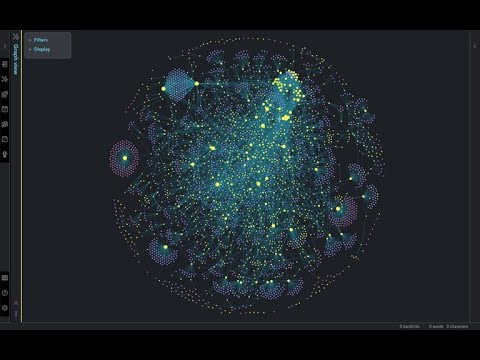
Tools reshape the hand that uses them; PKM software, despite being brilliant, can become a trap that creates an illusion of mastery through visual complexity (nested folders, plugins, graph views) without guaranteeing understanding.
“Every tool changes the shape of the hand that uses it. Obsidian is a brilliant piece of software. I love it dearly. But like anything without restraint, it can also be a trap. Markdown files in nested folders, plugins that track your productivity, graph views that suggest omniscience. There's an illusion of mastery in watching your notes web into constellations. But constellations are projections. They tell stories. They do not guarantee understanding.”
Unread lists of unread things create a special anxiety distinct from unread books, functioning as a totem of imagined wisdom and a shrine to an aspirational identity one never becomes.
“There is a guilt that accompanies unread books, articles, and blog posts. But there is a special anxiety reserved for unread lists of unread things. My reading list had become a totem of imagined wisdom, a shrine to the person I would be if only I read everything on it. But I never did.”
Deletion is not a failure of recordkeeping but a reassertion of agency; it mirrors the design principle of subtraction as refinement found in sculpture, music, and knowledge work.
“The act of deletion is not a failure of recordkeeping. It is a reassertion of agency. In design, we speak of subtraction as refinement. A sculptor chips away everything that is not the figure. A musician cuts a line that clutters the melody. In knowledge work, we hoard. We treat accumulation as a virtue. But what if deletion is the truer discipline?”
The speaker's new approach is characterized by deliberate non-system: writing knowing it may disappear, highlighting with the expectation that highlights will fade, and trusting that what matters will resurface.
“My new system is very simply no system at all. I write what I think. I delete what I don't need. And I don't capture everything. I don't try to. I read what I feel like. I think in conversation, in movement, and in context. I don't build second brains. I inhabit the first brain, my brain.”
Reading through archived notes and goals after a 6-year sobriety milestone, the speaker experienced existential lag—a recognition that each past iteration of self was earnestly building frameworks that ultimately didn't matter.
“Reading through these remnants, I felt a tightening in my chest. Not sadness, not nostalgia, a kind of existential lag. I could see how each iteration of myself was trying so earnestly to build a road map to something better.”
Naming a goal, storing a thought, or filing a fact creates a false sense of accomplishment and entitlement to deploy that knowledge, when in fact these acts are performance rather than actual understanding or capability.
“This mirrors a deeper psychological error. And I am so guilty of it. The belief that by naming a goal, you are closer to achieving it. That by storing a thought, you have understood it. that by filing a fact you have earned the right to deploy it. And this is productivity as performance. It is a symptom of modern intellectual insecurity.”
The speaker keeps a single note called 'what' for things they must remember, trusting that important bits will find their way back naturally without comprehensive capture systems.
“I've started keeping a single note called what where I write down a handful of things I have to remember. The important bits will find their way back.”
The speaker deleted all personal notes stored across multiple platforms (Obsidian, Apple Notes, to-do lists) and experienced relief rather than loss.
“Two nights ago, I deleted everything. Every note in Obsidian, every halfbaked atomic thought, every zettocast and slip, every carefully linked concept map. I deleted every Apple note I'd synced since 2015, every quote I'd ever highlighted, every to-do list from every productivity system I'd ever borrowed, broken, or bastardized. Gone. Erased in seconds. What followed? Relief and a comforting silence where the noise used to be.”
A mind free to read what it needs, memory that forgets gracefully, and ideas that resurface because they mattered (not because they were indexed) are preferable to a complete map of everything ever read.
“I don't think I want a map of everything I've ever read. I want a mind free to read what it needs. I want memory that forgets gracefully. I want ideas that resurface, not because I indexed them, but because they mattered.”
The speaker has been sober for 6 years, and this milestone created psychological space to reassess old systems, frameworks, and archived goals through a critical lens.
“I've been sober for 6 years now, and that kind of milestone does something to your perception of time. It creates a before and an after. And it invites you gently at first and then insistently, to take stock.”
The speaker's post-deletion experience has been described as 'swimming without clothes—light, naked, a little vulnerable, but cleaner than felt in years,' suggesting relief and clarity despite the loss of system security.
“What does it feel like to start again? Like swimming without clothes. light, naked, a little vulnerable, but cleaner than I felt in years.”
The speaker intends to use Obsidian again from scratch, but with deeper curation and restraint, as a workspace for existing cognition rather than as a second brain augmenting it.
“I still love Obsidian and I'm planning on using it again from scratch and with a deeper level of curation and care. Not as a second brain, but as a workspace for the one I already have.”
For the first time in a long time, the speaker is excited by the prospect of using digital tools for knowledge work, suggesting that the deletion and subsequent restraint has restored engagement and possibility.
“And for the first time in a long time, I'm actually excited by”