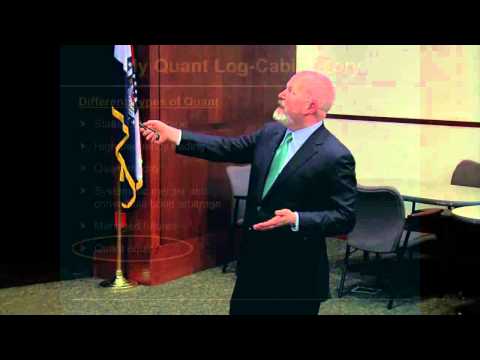
Cliff Asness: A Brief and Biased Survey of Quantitative Investing
What this covers
A Brief and Biased Survey of Quantitative Investing
Cliff Asness Founder of AQR Capital
Source description (no synthesized summary yet).
Asness argues that quantitative investing is a disciplined, systematic approach to exploiting persistent patterns in markets (value, momentum, carry, and defensive characteristics) through rigorous testing and diversification, not a black box, and that misconceptions about quants—particularly regarding leverage, complexity, and causation of financial crises—obscure how the field actually operates and creates value over time.
- Quantitative models are transparent and explainable if practitioners share their reasoning; the 'black box' critique inverts reality
- Value and momentum are durable, empirically validated investment principles that work across geographies and asset classes because they exploit human behavioral errors, not because of data mining
- The 2007–2008 crisis was mislabeled as a quantitative failure when quants were incidental to the housing-credit catastrophe; survivorship and disciplined risk management matter more than avoiding all drawdowns
This asset isn't compiled yet
You're seeing its claims, ranked. Compile it to build the argument threads, weight them, and check each claim against your library — the full view.
Asness wrote his dissertation on price momentum investing at the University of Chicago despite studying efficient market theory, arguing that momentum works and complements value investing, which was a contrarian position in an efficient-market-believing institution.
“I wrote my dissertation for them on adding momentum to that that's the one of the few things I was actually pretty early in investigating how price momentum worked and this was a scary dissertation to write at the University of Chicago you might have quite open-minded professors at the University of Missouri but at Chicago we were efficient market people and I had to go into a guy named Eugene F's office uh he's The Godfather demigod I don't know what you want to call him of of efficient market theory and tell him that I want to write a assertation on price momentum buying what has been going up selling what has been going down”
In August 2007, quantitative hedge funds suffered a sudden 10% drawdown in about four days due to forced liquidations by other hedge funds facing credit crisis losses, not due to fundamental problems with the quantitative strategies themselves; this was the scariest professional experience for Asness but recovered by month-end and is missed in monthly data.
“what this shows is there is not a strategy in investing quantitative less quantitative any field that is not subject to the risk even if it's a good strategy even if it's a fairly priced strategy it's not even stretched to a lot of people trying to get out the door in the same day and we went through that and that was the beginning of this book so I wanted to tie up loose ends that became a book about the financial crisis have I mentioned that but if you go back and look at the data at the daily level this was again the scariest professional three or four days of my life um it all is gone look at the monthly data nothing happened”
High-frequency trading is not synonymous with quantitative trading; all high-frequency traders are quantitative traders (they must be), but most quantitative traders are not high-frequency traders because they hold positions for 6 to 12 months, not nanoseconds.
“there are various versions of this there is a version I don't like at all and and and I I've just written something on high frequency trading where I largely defend it but I say it's not a blanket defense all high frequency Traders are quantitative Traders they trade like every nanc uh you really have to be a quantitative Trader or else you are the fastest talker and the most annoying person on Earth you're calling up every nanc is difficult um all quants are not high frequency Traders a lot of what we trade for instance probably the bulk of what we trade are based on two simple Concepts and I'm going to refer back to these as I go uh and they're two of the things that come out of academic Finance value based trading trying to buy cheap things and sell expensive things and momentum the fact that even though value tends to win over the long term what happened last Thursday tends to keep happening for a little while longer except the momentum we look at is even about 6 to 12 months so we are nowhere near high frequency when we own a stock all else equal we probably own it a year from now”
In AQR's first year of business (1999), they correctly identified the technology bubble using their value and momentum models and shorted tech stocks, but the strategy suffered significantly that year until tech collapsed, creating a difficult early track record that felt personally devastating but ultimately validated the approach.
“our first year in business was 1999 our First Act was the combination of value and momentum declaring it a bubble particularly tech stocks but not only tech stocks too expensive and shorting a bunch of them this obviously ended up working out for me the way you figure that out is I'm in front of the room talking it's called survivorship bias that actually has a name if it didn't work out for me I wouldn't be here but it was a disastrously painful start”
Financial theory predicts that higher-risk investments should return more than lower-risk ones, but empirical evidence using volatility or market beta as the risk measure shows this relationship is flat or even slightly inverse—high-risk assets earn similar or lower returns than low-risk ones.
“Financial Theory says uh a higher risk firm a higher risk country a higher risk currency a higher risk bond market should return more well what we found is is using various definitions of risk you can use volatility you can use the academic's favorite which is a market beta for those of you who've studied it this relationship has been almost totally flat it's supposed to be upward sloping”
Investors who focus only on rolling 3–5 year performance trends are prone to pro-cyclical behavior: they invest heavily when recent returns are strong (exactly when strategies are expensive and likely to underperform) and pull out when recent returns are weak (exactly when strategies are cheap and likely to outperform).
“the investing world looks a lot like this when the rolling 3 to 5 years is good everybody loves you and you get inflows when the last 3 to five years is bad it's a lot nastier than this I've WR written the nice version of of what they say there should be punctuation marks all all over this by the way it's not as predictable as this looks too if you actually try to trade this you're better off doing almost nothing and just sticking with a strategy that's good long-term but if you're going to trade this you probably want to be a bit of a contrarian do more of it when it's been bad for 3 to 5 years and do less of it when it's been good for 3 to 5 years the world does the opposite this is something I've given up on”
Asness tested value and momentum strategies across multiple countries and markets beyond the US, providing geographical out-of-sample tests that validated the ideas work across different regions, reducing concern that findings were specific to US market conditions.
“a different kind of add a one out of sample test is does it work in another place I was lucky enough and there's a lot of dumb luck in anyone's career and I will readily admit that at Goldman in the early '90s to be asked to try to implement these models for on on real money why someone would let me do that at that point is is a question that I I thank God they did no idea why someone would let me do that I wouldn't let me do that looking back but we had to prove to ourselves does this really work a different kind of out of one out of sample test is to wait 25 years that's a really bad career move to go back to the then Partners at Goldman and say all right here's what we're going to do we're going to wait 25 years if this stuff holds up we're going to pounce bad move we ended up going around the world testing what we do for individual stock selection in every country we could find”
Fama and French pioneered systematic testing of whether a diversified portfolio of cheap stocks systematically outperforms expensive stocks, moving beyond Graham-Dodd stock picking to test whether the value characteristic itself creates excess returns across many securities.
“Jean F and Ken French uh to me started a lot of this um other people might dispute that um they're not in the room so I'm safe uh they were in the mid 80s and I showed up at Chicago in the mid in the mid to late ' 80s um they were doing research into value investing their research was pretty unique um it was not unique in that it like cheap stocks people have been talking about that forever certainly guys named Graham and DOD for instance Which business school student some of you are you've probably heard of them would get a little annoyed were they alive that is a prerequisite for being annoyed um but if if I said f and French invented value investing but what they did was test they didn't call it this at the time but a quantitative approach not Graham and DOD were much more about stock picking using value criteria fmer French were much more about this idea of does a systematic cheap portfolio Diversified not beholden to any one stock systematically beat an expensive portfolio”
A strong quantitative investment strategy should be persistent (work over long time periods), pervasive (work across multiple markets and asset classes), and dynamic (not just backtest well but handle changing conditions).
“what do we look for in in any strategy with value and momentum being two of of the biggies persistent has it worked over the over the long term pervasive has it worked in many places if you can form a version of the strategy for picking stocks in another country if you can look at a strategy and go what would if people make this error for picking stocks what would it mean for bonds if you can then go test it it should work the same way not necessarily exactly the same numbers but if it fails you really should step back for a second and go well has this has this blown my thesis Dynamic um you shouldn't cheat”
A quantitative portfolio manager should never concentrate risk in a single stock, even if the model rates it highly on all characteristics, because individual companies can fail catastrophically (fraud, bankruptcy); instead, a model should go long 400 stocks with similar favorable characteristics and short 400 with opposite characteristics, playing a statistical game rather than betting on individual company quality.
“one of the stupider things you could do in investing would be to use a quantitative model to bet the ranch on one stock what a quantitative model does is want to go along 400 stocks that in aggregate have the characteristics it likes and underweight or short 400 stocks that are the opposite you're not betting on an individual company you don't know much about an individual company on that side”
Data mining is a fair critique of investment research when a researcher has no theory, tests thousands of potential patterns with no priors, reports only the ones that worked, and finds statistical flukes; the probability of finding a few false positives increases rapidly with the number of tests performed.
“a term in the industry is data mining in some Industries this is a positive term if you have enough good data maybe it should be a positive term but in economics it's almost invariably incorrectly used as an insult if you say oh that paper's data mining what you mean is you had no Theory you had no idea how it would come out you tested a million things and you reported the one that seemed to work so if if everything has a one out of a thousand chance of working randomly for for 50 years even and you test 10,000 Things even if nothing in the world Works you're going to find 10 that work kind of sums it up”
Out-of-sample testing (testing a strategy on data not used to develop it, or in a different time period or geography) is the primary validation tool statisticians dream about because it proves whether a discovered pattern reflects real economics or lucky data mining.
“the thing you dream about as a statistician Financial or otherwise regular people dream about houses and cars and significant others statisticians dream about out of sample tests we believe if we get good out of sample tests that will lead to nice cars nice houses and nice significant others but the primary thing is an add a sample test and why is that so important you found this thing that works you didn't data mine you had a theory you didn't test a million things you didn't cheat still could be dumb luck F and French could have been dumb loock they tested stocks originally from 1963 to 1988 in their first paper we've since been able to test back to 1926 and had the 35 plus years since their paper”
Electronic trading (not high-frequency trading specifically) has been a genuine revolution in how markets function, and this change is irreversible—the market will never return to open outcry systems even if there are occasional glitches.
“most of the issues the the glitches um that's such a mild word for some of these terrifying events have been much more about electronic trading than high frequency trading and that is that's is not going back in the bottle we are not going to suddenly stop what is most of the trading that goes on nowadays which is electronic and go back to open outcry by four guys under an apple tree on Wall Street it's just not going to happen”
The key lesson for surviving crises and big events is that they are inevitable in investing, and having a good process that is robust to unexpected market behavior is more important than predicting or preventing crises.
“survival is important someone write that down”
Survival is the most important metric in investing: a strategy that is correct long-term but kills you in the short term through bankruptcy or redemptions is worse than a mediocre but stable strategy, so robustness to drawdowns is a first-order concern.
“survival is important someone write that down”
High frequency trading has on net made markets cheaper to trade for anyone wanting to trade and is not something AQR does; while there may be legitimate concerns about information asymmetry from collocation (proximity to exchange servers), high frequency traders primarily engage in mundane market-making (placing and canceling bids/asks to capture spreads), not front-running based on hidden order information.
“I'm actually a defender of it uh I think it's netm made the world a cheaper place to trade for anyone who wants to trade it is not something we do”
Every quantitative investment strategy is subject to periods where it 'doesn't work'—including Fama-French factors, momentum, carry, and even Warren Buffett's strategies; claiming 'this always works' is false, but claiming it will work long-term with proper risk management is reasonable.
“everything a Quant does everything any investor does frankly Warren Buffett has had disastrous five year stretches is subject to not working at a time”
Financial markets show a strong preference for recent performance over long-term fundamentals—when a strategy has been good for the last 3-5 years it gets large inflows, and when it's been bad for 3-5 years it suffers outflows—which is the opposite of what a contrarian approach would suggest and makes it difficult for disciplined strategies to maintain consistent sizing.
“this is why I said I'm being too defensive I'm still giving this presentation a little bit but this is what happens this is a something I have fought against and lost the investing world looks a lot like this when the rolling 3 to 5 years is good everybody loves you and you get inflows when the last 3 to five years is bad it's a lot nastier than this I've WR written the nice version of of what they say there should be punctuation marks all all over this by the way it's not as predictable as this looks too if you actually try to trade this you're better off doing almost nothing and just sticking with a strategy that's good long-term but if you're going to trade this you probably want to be a bit of a contrarian do more of it when it's been bad for 3 to 5 years and do less of it when it's been good for 3 to 5 years the world does the opposite this is something I've given up on”
Carry trading—making money when prices don't move (e.g., buying high-yielding currencies while selling low-yielding ones)—is a powerful and pervasive investment strategy that works across all markets, but is a 'left tail' risk strategy where downside losses are very large but infrequent.
“one is carry I mentioned this earlier what happens if nothing happens in the world currency is the most famous carry strategy out there buy a high yielding currency short a low yielding currency that strategy has a small problem of occasionally almost ending your life it's it's what we call a left tail strategy that's a wonderful euphemism for strategy where the Downs are much bigger than the ups that sounds really bad but the UPS have been far far more frequent you've actually made a lot of money doing a carry strategy if you manage not to die for the last 50 years but carry is a pervasive Force we find in every market”
High-frequency traders act primarily as market makers—placing bid-ask quotes and adjusting them as market conditions shift—not as speculators trying to anticipate price movements; their main activity is canceling and revising orders, not executing edge-driven trades.
“do what are called cancel and corrects all the time so they say we will buy IBM at 40 and we'll sell it at 41 it's way wider than a typical bit ass spread but um and when as soon as the market moves a tiny amount they cancel those two and they move it and that's that's most of what high frequency trading is that's called Market making they actually have no opinion on IBM but they want Bill my colleague to buy it at 41 um and me to sell it at 40 uh and if too many people are buying it just like a bookie again this is an analogy that's mathematical only they'll change the odds and they'll skew what they what they do”
Quantitative investing can be applied in different structural contexts: as a benchmark-beating traditional manager (owning 200 best stocks, beating the S&P 500), or as a hedge fund manager using leverage and shorting to create market-neutral returns unrelated to market direction.
“lot of things I'm talking mostly about quantitative stock picking using quantitative models to choose individual stocks um you can use this uh to beat a benchmark like a traditional manager someone tells you to beat the S&P 500 you own 200 stocks that are the 200 best on your model model instead of all 500 you're fully invested you're doing nothing odd or or scary or you can use this as a quantitative hedge fund manager to go long your your 200 favorite stocks and short your 200 favorite stocks maybe all over the world make it make it a thousand long and short the hedge fund manager has to use what I call the dirty words of Finance leverage derivatives and shorting to produce a return long and short the goal is to produce a return that's unrelated to the direction of the market”
It is fair to charge high hedge fund fees (e.g., '2 and 20': 2% management fee, 20% performance fee) if the manager possesses true alpha that cannot be obtained elsewhere; such true alpha is analogous to the advantage of possessing legal inside information, though real alpha is obtained through superior diligence and insight rather than illegal means.
“what it basically says I'll give you the gist is it is absolutely fair to charge what active managers or hedge fund managers charge if you have what's called true Alpha returns that you can't get anywhere else but at that manager this will be the second worst thing I'll say in the presentation remember the grandmas when I need to explain Alpha to someone forgot you're taping this this is even worse I use the example of illegal inside information again let me be clear I am not advocating illegal inside information I am simply saying that if you have a stock picker who possesses it it looks a lot like Alpha you you you show them against an index you say yeah they're they're they're related to the index but God they beat it by 10% a year great researchers who are completely honest one way to think about it if you want to be a negative kind of kind of person I don't know if this is negative but they're they're trying to approximate some of the advantage of of of of the illegal kind of insight information by great diligence and insight they're trying to figure out something other people don't know it's legal Insight information is one way to put it they just come at it through legal means”
Efficient market theory, which posits that all available information is reflected in prices and market participants rationally price all assets, has been weakened by empirical evidence from the tech bubble and housing bubble, causing Asness to shift from an efficient-market perspective toward behavioralism—the view that markets are generally efficient long-term but make recurring errors.
“if you are a fan of efficient markets and I've uh 20 some odat years ago I I was more in that camp and I I think living through the tech bubble and the real estate credit bubble among other things have probably um certainly weakened me on that and made me more of what's called a behavioralist an idea that markets can be very good long-term but aren't perfect and and make some errors”
Value investing works not because cheap companies are fundamentally better companies than expensive ones, but because they are priced too low, creating an opportunity; similarly, shorting expensive companies is attractive when their prices are too high, not because they are inherently bad.
“value investing has worked not because cheap companies are generally much better companies than expensive it has worked because they get a little too cheap buying a Bad Company can be a good idea if the price is too low selling or shorting a great company can be a wonderful idea if the price is too high”
The combination of value and momentum strategies is superior to either alone because they often offset each other's drawdowns: when value is down, momentum tends to be up, and vice versa, leading to more consistent returns.
“I pointed out that both it and longer term slower trading value seem to work and actually seem to complement each other very well over the long term both seem to to add return but when one is having a bad period the other often has a good period”
Out-of-sample testing—validating a strategy on data not used to develop it, across multiple time periods and geographies—is essential to distinguish genuine investment insights from data-mining artifacts; a strategy tested on 1926–1988 data and again on 1990 onward (25+ years), or across multiple countries, has stronger evidence of real effect than in-sample backtest alone.
“statisticians dream about out of sample tests we believe if we get good out of sample tests that will lead to nice cars nice houses and nice significant others but the primary thing is an add a sample test and why is that so important you found this thing that works you didn't data mine you had a theory you didn't test a million things you didn't cheat still could be dumb luck F and French could have been dumb loock they tested stocks originally from 1963 to 1988 in their first paper we've since been able to test back to 1926 and had the 35 plus years since their paper um out 25 plus years yes I have Quant in my title did I mention that and I can't do math in front of people that's called an add of sample test 25 years of we found it is it going to work in the next 25 years is wonderful”
Asness wrote his dissertation on adding momentum (price trends over 6–12 months) to Fama-French's value approach, and initially faced skepticism from Eugene Fama (efficient markets proponent) but argued momentum works alongside and complements value, not as a replacement.
“I wrote my dissertation for them on adding momentum to that that's the one of the few things I was actually pretty early in investigating how price momentum worked and this was a scary dissertation to write at the University of Chicago you might have quite open-minded professors at the University of Missouri but at Chicago we were efficient market people and I had to go into a guy named Eugene F's office uh he's The Godfather demigod I don't know what you want to call him of of efficient market theory and tell him that I want to write a assertation on price momentum buying what has been going up selling what has been going down”
In 1999, AQR's first year, the firm declared a tech bubble and shorted expensive stocks while going long cheap ones (value + momentum), which was painful in a year of rising tech valuations but proved correct over subsequent years, demonstrating the long-term edge of value and momentum despite short-term reversals.
“our first year in business was 1999 our First Act was the combination of value and momentum declaring it a bubble particularly tech stocks but not only tech stocks too expensive and shorting a bunch of them this obviously ended up working out for me the way you figure that out is I'm in front of the room talking it's called survivorship bias that actually has a name if it didn't work out for me I wouldn't be here but it was a disastrously painful start”
Fisher Black proposed in 1972 that an index fund should hold only low-beta (low-volatility) stocks instead of all stocks, which the industry dismissed as mediocre, but 40 years of subsequent testing validated his idea; AQR found his approach would have worked well over time.
“a guy named fiser Black who certainly had he not passed away would have shared the Nobel Prize proposed doing this at an at an index fund he worked at instead of buying all the stocks buying the low beta ones in 1972 we have a memo to it and we included in in our presentation just for fun they laughed at him uh he was they already doing index funds which is heresy for 1972 there was a time when index funds were called unamerican because they accept mediocrity they accept the average it's much better to pay a lot for active management and get less than the don't startop me um but fiser proposed this uh and we just basically noticed 40 years later we said hey has anyone actually tested how Fisher's idea worked for the last 40 years turns out they really should have listened to to fiser”
AQR was part of early academic research validating value and momentum, but the firm has also 'piggyback[ed] off academic research' (like Fama-French) rather than claiming to have invented these factors—intellectual honesty requires acknowledging the debt to prior scholars.
“we've done much of this research we've participated in it but we've also piggyback off the academic research”
Value and momentum strategies will continue to work long-term because they exploit natural human tendencies (behavioral biases) that do not change fundamentally; these biases—overvaluation of momentum, undervaluation of cheap assets—are persistent human nature, not temporary market glitches.
“I think over time some of these strategies will continue to work because they they they they they work against Natural human nature and I don't think that's changed”
The critique that quantitative investing amounts to 'driving with only the rear view mirror' through backtesting is only fair when a model is based purely on historical pattern-matching without a prior investment thesis or theoretical justification; most serious quants have an investment thesis they believe in, and the backtest serves to examine how that thesis has performed in different periods rather than the basis for discovering it.
“model driven trading is driving with only the rear view mirror that's that's I hate that one um that refers to the fact that a lot of quants run back tests um and back test is let me come up with a rule and let's see if I had followed this rule for the last 100 years how it would have done this can actually be a fair criticism in some cases um if all you've done is search for what has worked well in the past and don't have a story and don't have evidence from other places and don't have any reason why you believed in it to begin with I think this would be a very fair critique just because something has worked well in the past is not a reason it will work going forward I think most quants um and I'll say this I think there are good quantitative investors and good of I'm going to actually say normal investors making us the abnormal uh investors are really uh most of them have an investment thesis they have things they believe lead to good returns and if anything the rearview mirror is simply to examine how it's done and in what periods it's done particularly well or poorly”
Beyond value and momentum, quants have added carry (e.g., buying high-yielding currencies and shorting low-yielding ones) and defensive strategies (buying low-volatility or low-beta assets) to their toolkit; carry is a real risk factor, but defensive strategies challenge traditional financial theory which predicts higher-risk assets should return more.
“we have added two main categories over time to value and momentum lot of little things have been added also I don't want to imply this as everything but added two main things one is carry I mentioned this earlier what happens if nothing happens in the world currency is the most famous carry strategy out there buy a high yielding currency short a low yielding currency”
Fisher Black (who would have shared a Nobel Prize had he lived) proposed in 1972 that instead of holding all stocks in an index fund, a fund should hold only low-beta (low-risk) stocks, which was radical heresy at the time when index funds themselves were called 'unamerican' for accepting mediocrity.
“a guy named fiser Black who certainly had he not passed away would have shared the Nobel Prize proposed doing this at an at an index fund he worked at instead of buying all the stocks buying the low beta ones in 1972 we have a memo to it and we included in in our presentation just for fun they laughed at him uh he was they already doing index funds which is heresy for 1972 there was a time when index funds were called unamerican because they accept mediocrity”
Managed Futures (systematic trend-following strategies) have worked as a strategy for over a hundred years—they buy what's been going up and sell what's been going down—which is a long out-of-sample test validating momentum as a real phenomenon.
“uh managed Futures are are systematic traders who almost invariably are Trend followers uh their main way and it's a great question the main way they trade um is buying what's been going up in the last year and selling what's been going down turns out if you are a fan of efficient markets and I've uh 20 some odat years ago I I was more in that camp and I I think living through the tech bubble and the real estate credit bubble among other things have probably um certainly weakened me on that and made me more of what's called a behavioralist an idea that markets can be very good long-term but aren't perfect and and make some errors uh manag Futures uh Traders largely buy what's going up in the last one to 12 months and sell what's going down they don't even do the value part usually uh it's been an annoyingly good strategy for a hundred years um we wrote a paper recently on this uh called the century plus evidence on managed Futures”
Quantitative investors are not conducting complicated analyses; they are doing simple things with great discipline and transparency across many places; the perception that quants do complex stuff is misconceived.
“we do fairly simple stuff people think we do complex stuff we do simple stuff with a great deal of discipline in a lot of places”
The shift from open-outcry to electronic trading is irreversible; regulating away electronic trading in favor of manual human trading is infeasible, so the industry must adapt to electronic and high-frequency markets rather than attempting to return to pre-electronic practices.
“but this has gone on throughout history people who have been automated out of a job are rarely happy about it and high frequency trading sounds very very um uh very scary I think what you're saying certainly can go on I think there are worse practices you didn't mention that I actually would come close to Banning and at the very least require disclosure of but I think most of what they do is very mundane uh and they actually make a fair amount less money than people think when you look at the total that's taken out of the market by high frequency trading um it's big numbers um but it's it's not big numbers on Market scales so yeah um we're still trying to figure out how to regulate them by the way most of the issues the the glitches um that's such a mild word for some of these terrifying events have been much more about electronic trading than high frequency trading and that is that's is not going back in the bottle we are not going to suddenly stop what is most of the trading that goes on nowadays which is electronic and go back to open outcry by four guys under an apple tree on Wall Street it's just not going to happen”
Managed Futures strategies (systematic trend-following) have worked for approximately 100+ years, buying assets that have gone up recently and selling those that have gone down, which is surprising given that it contradicts efficient markets theory.
“managed Futures uh Traders largely buy what's going up in the last one to 12 months and sell what's going down they don't even do the value part usually uh it's been an annoyingly good strategy for a hundred years um we wrote a paper recently on this uh called the century plus evidence on managed Futures there aren't many things you can test that long but because they only trade indices they don't trade individual stocks our data goes way further back”
Fama and French's research in the mid-1980s pioneered systematic quantitative value investing by testing whether a diversified portfolio of cheap stocks systematically beat a portfolio of expensive stocks, rather than just discussing cheap stocks conceptually as Graham and Dodd did; this marked the beginning of modern quantitative equity investing.
“Jean Fama and Ken French...to me started a lot of this...they were in the mid 80s...they were doing research into value investing...it was not unique in that cheap stocks people have been talking about that forever...but if if I said Fama and French invented value investing but what they did was test...a quantitative approach not Graham and Dodd were much more about stock picking.”
While Asness defends high-frequency trading overall, he opposes specific practices such as allowing traders to 'peek' at order flow or gaining information asymmetries through server collocation, and believes these practices should at minimum be disclosed to market participants.
“there is a version I don't like at all and and and I I've just written something on high frequency trading where I largely defend it but I say it's not a blanket defense there have been cases where they're allowed to peek ahead at order flow or whatnot at the very least exchanges should have to disclose that uh I don't know I'm not a big regulation guy uh I it kind of chokes in my throat when I want to prohibit things but I get close on that one at the very least they should have to uh disclose that because they're they're getting they are absolutely getting information”
Over 1990–present, quantitative equity strategies combining value and momentum have generated positive returns (alpha), but subsequent expansion into carry, defensive, and other factors has diminished the incremental benefit, suggesting these strategies become commoditized as capital flows into them.
“we think over time these four styles let me give you a a little a little tour in 1990 apparently that's a very important year to me I didn't realize till this presentation how important that year was to me I think just doing value and momentum in that quantitative fashion in so many places at once was a form of what they call an investing alpha alpha is very overused term we called our first fund the global Alpha fund um worked kind of well when we were there Goldman Sachs closed it eight years after I left when they were having a bad time and we weren't”
The 2008 financial crisis was not primarily a quantitative investing crisis but a housing-credit catastrophe; quants did not threaten world financial market stability, and attributing the crisis to quantitative strategies alongside mortgage-backed security raters conflates unrelated events.
“2008 happened which was not very particular to quantitative investors that was about the World crisis and he ended up writing a book with the subtitle men who almost brought down the financial Market some of the chapters were on people like me some of the chapters were on like the guys at S&P who gave AAA to subprime mortgages”
It is fair for hedge fund and active managers to charge premium fees (2% management, 20% performance) only if they generate 'true alpha'—genuine excess returns unrelated to known factors and unexplainable by legal insight information; most managers claiming alpha are actually delivering returns from simple factor exposure.
“it is absolutely fair to charge what active managers or hedge fund managers charge if you have what's called true Alpha returns that you can't get anywhere else but at that manager”
Quantitative managers can execute trade-offs with trading costs explicitly in their models in ways that are difficult for traditional managers; they trade electronically and systematically, which is different from and often more efficient than high-frequency trading.
“finally quants can do a few things that are much harder to do with with visit the company concentrated type managers um we make explicit trade-offs with trading costs it's very hard uh to to know uh for for visit the company type people we trade electronically um that's uh been a revolution I mentioned before we're not high frequency Traders but we are quants we're also electronic traders that stands in in in the middle that's a much longer talk but we're two of the three we're Quant and electronic but but not high frequency”
Non-quantitative investors who visit companies and pick individual stocks often fail to maintain discipline against hype and market psychology, whereas quantitative managers can hold themselves to systematic rules despite emotional pressure, which partly explains why value investing works—investors overpay for recent winners and undersell distressed assets.
“objective and discipline we do find great non-quantitative managers can hold themselves to this I don't think this is only quants they can they can hold this discipline in their head and not get caught up a lot of investors get caught up in the hype and we think this is part of why things like value investing work uh they end up paying too much for things things that have done had had had good good times over the last four or five years and and the opposite”
Alpha is a term for returns that cannot be attributed to an index or benchmark; many hedge fund managers and active managers claim to deliver alpha, but often they are simply running strategies similar to simple style factors (value, momentum, carry) that have become widely available and commoditized.
“there's there's a flaw to what I'm about to do but we think over time these four styles let me give you a a little a little tour in 1990 apparently that's a very important year to me I didn't realize till this presentation how important that year was to me I think just doing value and momentum in that quantitative fashion in so many places at once was a form of what they call an investing alpha alpha is very overused term we called our first fund the global Alpha fund um worked kind of well when we were there Goldman Sachs closed it eight years after I left when they were having a bad time and we weren't I was not mentioned for eight years of the news story yet when they closed it it was a fun started by me this is a little bit of I'm trying to end the same way I began the presentation with some bitterness”
Quantitative investing has produced net positive returns for investors over the long term (since 1990), with disasters and drawdowns distributed relatively evenly across both quantitative and non-quantitative strategies, contrary to the narrative that quants are uniquely fragile.
“there have been disasters uh investing is about surviving disasters and having a good process both of these have been still good since 1990 but there have been disasters but they've been nice and evenly distributed”
The phenomenon of 'survivorship bias' means we only hear from successful investors and strategies; unsuccessful ones disappear, making past successes seem more impressive than they are. Asness's presence at the podium is itself evidence of survival, not proof that value and momentum are foolproof.
“this obviously ended up working out for me the way you figure that out is I'm in front of the room talking it's called survivorship bias that actually has a name if it didn't work out for me I wouldn't be here”
Not all investment styles can be implemented everywhere; for example, carry for stocks is simply dividends, which overlaps with value metrics (price-to-earnings and price-to-cash) to such a high degree that using both would be double-counting the same information.
“not every one of these things can be done everywhere stock picking uh I lied to you a little bit I pretended you could do both carry and value not one of you called me on it um what's what's carry for a stock it's the dividends you get I told you if price doesn't move what do you make those dividends should be all In You Can Count share or purchases value or things like price to earnings price to cash price to sales turns out those are almost exactly the same things in geek speak they're highly correlated so you can actually do both you just wouldn't want to you'd be double counting”
The risk-return relationship is found to be nearly flat across asset classes despite financial theory predicting it should be upward-sloping, because investors systematically overpay for 'safety' (low-risk assets) relative to their expected returns, creating a defensive anomaly.
“this relationship has been almost totally flat it's supposed to be upward sloping...if things are incredibly flat you can do better by overweighting low risk why would you accept high risk and not be compensated for it”
High-frequency trading, despite concerns, has made financial markets cheaper to trade in for all market participants; prices can be executed at tighter spreads today because of HFT competition, benefiting average investors even if HFT itself is controversial.
“many of you have probably heard about high frequency trading um that is not I'm going to give you kind of two-edged uh comments on that I'm actually a defender of it uh I think it's netm made the world a cheaper place to trade for anyone who wants to trade it is not something we do it's become almost synonymous in the financial press with quantitative trading”
Resentment of high-frequency trading partly stems from traditional market makers who previously extracted large spreads and earned good money doing so; HFT automated market making and compressed spreads, putting these traders out of business, creating resistance similar to any labor displacement by automation.
“it used to be a Cartel Market making and it's not a cartel anymore and a lot of the resentment I think towards high frequency comes from people who used to make this money that high frequency managers now make yeah but we've seen this look if someone automates me at of I'm not going to pretend I'll like that um but this has gone on throughout history people who have been automated out of a job are rarely happy about it”
Quantitative investing is often mischaracterized as a 'black box' that simply spits out answers, when in reality a good quantitative model can be explained with precision—the opacity comes from refusal to share, not from the nature of the model itself.
“a black box is something that you have no idea why it spits out its answer to me a good quantitative model might be complex but if a client an investor or anyone else wants to know why you're own this stock and why you're short this stock there is a precise answer they can be a black box if you refuse to tell your clients the answer but if you're willing to share and I find most quants are shockingly um shock we all think we've discovered the greatest things in sliced bread but we all enjoy bragging about it”
There is an inherent tension in quantitative investing between sticking with old, proven models and developing new research; while new research is valuable, the hurdle for new strategies to consistently beat existing ones should increase over time, and human nature changes slowly enough that older value and momentum strategies should continue working.
“there is a conflict in the Quant world I know this is very important to you you follow it in the newspaper every day it's a burning issue everything going on in the world Syria horrible problems and you're you're very upset about the Quant debates but whether to add whether to the best thing is to stick with old models or try to make models better that is a very hard thing to try to figure out nothing we do I use the word Works a number of times you heard me I should have said it at the time I use the word works like a cowardly statistician again if something works two out of three years most but not all fiveyear periods for a hundred years I proudly say it works but everything a Quant does everything any investor does frankly Warren Buffett has had disastrous fiveyear stretches is subject to not working at a time I happen to think new research is great my firm has pushed the boundary quite a few times remember that that's why that page was first we were supposed to impress you with the research but I am one of the Heretics in the Quant world who thinks it's at least as important to stick with some of the same things we've been doing for 25 years um because I think they still will work going forward human nature is not fundamentally changed”
Asness's wife pointed out a hypocrisy in his complaints about the tech bubble: he makes his living because people make mistakes and create market inefficiencies, so complaining that the bubble is too extreme is contradictory—he profits from errors but wants them to be smaller and more temperate.
“all she said to me was thought you make your money because people make mistakes and she left it there she was too nice to keep pushing it but she's basically saying my God you're a whiner you make your money over time you believe you make your money because people aren't perfect to make mistakes and now you're whining to me that they mistakes are too big what what you want which is absolutely true is investors to make a bunch of small errors you don't have to make big bets and after you put the position on meaning you think it's a cheap thing with some good momentum investors to go oh Cliff's right but when they continue to make an era even bigger you get upset”
It was fair for active and hedge fund managers to charge high fees (1-2% management fee plus 20% performance fee) 25 years ago when value-and-momentum strategies were novel and difficult to implement across many geographies; but as these strategies have become widely known and easier to execute, the fee justification has weakened and the market will naturally pressure fees lower.
“if you have what's called true Alpha returns that you can't get anywhere else but at that manager this will be the second worst thing I'll say in the presentation remember the grandmas when I need to explain Alpha to someone forgot you're taping this this is even worse... great researchers who are completely honest one way to think about it if you want to be a negative kind of kind of person I don't know if this is negative but they're they're trying to approximate some of the advantage of of of of the illegal kind of insight information by great diligence and insight they're trying to figure out something other people don't know it's legal Insight information is one way to put it they just come at it through legal means if you have something that good some of the prices that hedge funds charge and active managers charge can be quite Fair we think I should say we it's not just me it's a lot of a lot of research a lot of years at my firm that a lot of people even some with very good track records are actually doing things that are far simpler that look a lot like those simple Styles I was showing you before and maybe it was fair to them in the past to charge quite high prices for it we think it's less Fair these days”
Survival is more important than being perfectly right—it's easier to explain poor performance by saying 'we fixed the model' but often harder (and more honest) to say 'stuff happens, we still believe in the strategy,' even though the latter is often closer to the truth.
“part of it is business it is actually easier to go to people in a tough period and go we figured out what was wrong we fixed it then to go stuff happens sometimes we still believe in it that second one is very often closer to the truth but is is a tougher sell and I like I'm actually kind of proud that it sometimes I've been willing to and our firm has been willing to say that not that we won't change a model uh but a a big event doesn't necessarily have us run to the to the drawing board”
Misconceptions about quantitative investing are applied asymmetrically: when quantitative managers have bad periods or lose money, entire fields are indicted ("quantitative investing has failed"), but when non-quantitative managers fail, media does not declare "human judgment has failed," revealing a bias in how the two approaches are evaluated.
“whenever a quantitative investor loses a significant amount of money or there's a bad period somehow there's a general indictment and even in in papers like the Wall Street Journal or whatnot it's quantitative investing has failed whenever someone blows thems up the oldfashioned way without a model you do not see articles well human judgment has failed again um so I do think somehow the world is biased”
The ideal quantitative portfolio combines four characteristics: (1) cheap (low price-to-earnings, price-to-book, etc.), (2) good momentum, (3) positive carry, and (4) low risk. Finding one stock with all four is rare, but a diversified portfolio of 500 stocks selected globally can exhibit all four characteristics on aggregate.
“if we're building our perfect portfolio again I'm I'm simplifying for the sake of a presentation but our favorite stock in the world our favorite currency in the world our favorite bond market would be one that the measures that we've tested and think are intuitive and relevant is cheap that has good momentum we actually like it to have been working for a while and we're willing to give up some cheapness the existence of good momentum means you're not buying the precise bottom if it has to start to work first you're giving up on that we just find it more consistent we like to get paid if nothing happens didn't have to work it ends up being a very effective strategy carry is a form of risk and it's quite clear it's a form of risk it's not a free lunch but we think it's one that you get amply paid for bearing and finally if we have our perfect Brothers we'd also like that that security to be low to be low lower risk than the average that's all we want is cheap good momentum be paid to do nothing and have low risk is that so much to ask it's very rare to find one stock one again I can expand it country currency bond market that has all four of these characteristics some of them are explicitly offsetting value and moment momentum often go the exact opposite way others are just unrelated and finding one thing that's good on very good on all of them is rare but you can interestingly enough pretend you're buying a conglomerate pretend your portfolio of of 500 stocks is one conglomerate you can choose those 500 stocks from 5,000 around the world so your portfolio really is better on all four of these then either things you're short if you're a hedge fund or a benchmark if you're a traditional”
Asness believes the market will force down management fees for hedge funds and active managers employing simple strategies (value, momentum, carry, defensive) as more capital flows into them and their strategies become commoditized, even though he personally would accept higher fees if offered.
“we think it's less Fair these days and we think the Market's going to change in that way and that's I said in the beginning I talk a little bit about the future um trust me I as a business person um you know people just want to pay me a higher fee I I I I after explaining it to them I like to think I'm honest I would accept a higher fee I just don't think that's where the Market's going I think over time some of these strategies will continue to work because they they they they they work against Natural human nature and I don't think that's changed and there's not a trillion dollars in them yet if anything that's less money in them before 2007 but I don't think people can charge the fees they used to if they're being honest about what they're doing”
Since 2008, AQR has made micro-adjustments to portfolio construction: tighter constraints on market neutrality (allowing less drift from long-short balance), and shorter-term risk estimation (2008 showed risk levels can shift faster than historical estimates suggest), but the core thesis remains unchanged because major events are best addressed through robust processes, not constant model overhauls.
“what have we done since 2008 we uh this will get real geeky but in portfolios that are supposedly Market neutral meaning long is about the same amount that they're short we used to allow them to drift away from that more there was some power to that when they want when they ended up being that long they they did better um markets tended to rise we seem to be picking some of that up but it wor that that got very dangerous it worked out positively for some negatively for for others in 2008 but it was incredibly volatile so we're tighter on that we're a little shorter term in estimating our risk 2008 might might never happen again but was an example where the risk levels changed far faster than ever before but these were micro changes most of what we did was and this was rewarded stick with what we were doing which is often if I can be philosophical for a second the harder thing and part of it is business it is actually easier to go to people in a tough period and go we figured out what was wrong we fixed it then to go stuff happens sometimes we still believe in it that second one is very often closer to the truth but is is a tougher sell”
It is very difficult for an individual investor to keep both value and momentum concepts in their head simultaneously; their natural psychology tends to align them with one or the other (value investors are cynical and cautious; momentum investors are optimistic and trend-following), which is why quantitative models that can mechanically combine both approaches have an advantage.
“it's very very hard for an individual to keep both those Concepts in their heads. I find I've had talks with psychology friends saying you should throw out all your personality tests just figure out if someone is a value or a momentum investor we'll tell you everything. Value investors are cynical they're kindly they act older than they are they believe nothing you say. Momentum investors you're much happier people.”
The August 2007 quant crisis is omitted from most financial databases because they report monthly returns, not daily; the crisis was largely recovered within a month, so it shows up as a normal month on monthly data, making one of Asness's most professionally harrowing experiences invisible in standard academic datasets and contributing to misunderstanding of quant investing risks.
“most databases you will encounter are still monthly...you won't find the most harrowing event of my entire career because it pretty much all recovered by the end of the month...it's like having a traumatic experience...and everyone else is saying didn't happen look.”
New factor research is valuable and AQR actively pursues it, but there is an asymmetry in validation difficulty: each new factor faces a high hurdle to match the long-term success of existing factors (value, momentum), so adding incrementally worse factors over time is likely a losing game.
“I am one of the Heretics in the Quant world who thinks it's at least as important to stick with some of the same things we've been doing for 25 years um because I think they still will work going forward...the hurdle that you will find new things as good as your prior things again and again and again should get harder and harder”
Quantitative managers mitigate single-stock risk by holding large diversified portfolios (e.g., 400 long and 400 short positions) with similar characteristics on average, rather than concentrating bets on a few high-conviction ideas like traditional stock-pickers, making them more akin to casino operators managing a portfolio of similar wagers than to stock analysts.
“what a quantitative model does is want to go along 400 stocks that in aggregate have the characteristics it likes and underweight or short 400 stocks that are the opposite you're not betting on an individual company you don't know much about”
Quantitative investing is not a black box if practitioners are willing to explain their models; the black box critique applies only when managers refuse to disclose their reasoning, but most quants are eager to share their methods because they believe in their ideas.
“a good quantitative model might be complex but if a client an investor or anyone else wants to know why you own this stock and why you're short this stock there is a precise answer they can be a black box if you refuse to tell your clients the answer but if you're willing to share and I find most quants are shockingly um shock we all think we've discovered the greatest things in sliced bread but we all enjoy bragging about it”
Asness does not believe in pure 'quant style' without investment thesis; rather, quant investing requires an explicit thesis that patterns reflect behavioral or economic principles, validated through historical backtests and out-of-sample geographies, avoiding mere pattern-matching.
“I do not believe some might dispute this I do not believe in a Quant style it just says pattern match find things that have worked in the past I think you have to have an investment thesis you need to be able to test that through time you need to be able to test that in places you haven't looked at yet to make sure you're not cheating this is essentially in simple terms my investment thesis um it is unfortunately sadly and annoyingly not unique to me”
Asness's wife pointed out a hypocrisy in his worldview: he profits from market inefficiencies and behavioral errors, yet he complains when those errors are too large. Rationally, he should be indifferent or pleased by larger errors, since he profits from them.
“thought you make your money because people make mistakes and she left it there she was too nice to keep pushing it but she's basically saying my God you're a whiner you make your money over time you believe you make your money because people aren't perfect to make mistakes and now you're whining to me that they mistakes are too big what what you want which is absolutely true is investors to make a bunch of small errors you don't have to make big bets and after you put the position on meaning you think it's a cheap thing with some good momentum investors to go oh Cliff's right but when they continue to make an era even bigger you get upset so this has been a hypocrisy I've lived for many years”
Statisticians can never prove a strategy works; they can only estimate the probability of being wrong, e.g., "there is a 1% chance we are wrong." This intellectual humility is intellectually honest but sounds weak compared to non-statistical claims of certainty.
“we never ever say we're sure we say the chance we're wrong has gotten smaller it's an inherently wimpy profession in real life you say this works stati statisticians go there's only a 1% chance we're wrong now that that's actually intellectually honest it just sounds so damn wimpy it still bothers me”
Value investors and momentum investors have fundamentally different personality profiles—value investors are cynical and skeptical while momentum investors are optimistic—and it is psychologically difficult for a single person to hold both mindsets, which is why models help combine them.
“I've had uh uh talks with psychology friends saying you should throw out all your personality tests just figure out if someone is a value or a momentum investor we'll tell you everything value investors are cynical they're kinly they act older than they are they believe nothing you say momentum investors you you're much happier people”
After 2008, AQR made micro-adjustments to risk management—tightening constraints on how much market neutral portfolios could drift from being perfectly hedged, and shortening risk estimation horizons—rather than wholesale model changes, because they believed the core strategies remained sound and that most major events result from temporary liquidity stress, not permanent strategy failure.
“what have we done since 2008 we uh this will get real geeky but in portfolios that are supposedly Market neutral meaning long is about the same amount that they're short we used to allow them to drift away from that more there was some power to that when they want when they ended up being that long they they did better um markets tended to rise we seem to be picking some of that up but it wor that that got very dangerous it worked out positively for some negatively for for others in 2008 but it was incredibly volatile so we're tighter on that we're a little shorter term in estimating our risk”
After the August 2007 crisis, the book 'Men Who Brought Down the Financial System' was written to tell the story of quantitative managers, but it was expanded to cover the 2008 financial crisis, unfairly conflating quantitative investing (which recovered in days) with the broader financial crisis.
“in August of 2007 something I'm going to discuss was a wild ride to be a quantitative investor it was about a two-e period where anyone doing anything vaguely similar suffered very greatly and then it all went away and and fixed itself and this guy set out to write a book on this and then 2008 happened which was not very particular to quantitative investors that was about the World crisis and he ended up writing a book with the subtitle men who almost brought down the financial Market some of the chapters were on people like me some of the chapters were on like the guys at S&P who gave AAA to subprime mortgages”
There is currently not a trillion dollars invested in value and momentum strategies; if anything there is less capital in these strategies now than before 2007, suggesting they retain profitability even as capital has entered, and they are unlikely to be fully arbitraged away soon.
“and there's not a trillion dollars in them yet if anything that's less money in them before 2007 but I don't think people can charge the fees they used to if they're being honest about what they're doing”
Post-2007/2008, quantitative investors have unfairly been subject to negative generalizations whenever one quant investor or strategy fails, while non-quantitative investors are not similarly indicted when they suffer losses, reflecting an asymmetric attribution bias in financial media and public perception.
“post 2007 um and 2008 which again I think was a mislabeling um people uh uh of course focus on the negative here's something I believe for a long time oddly whenever a quantitative investor loses a significant amount of money or there's a bad period somehow there's a general indictment and even in in papers like the Wall Street Journal or whatnot it's quantitative investing has failed whenever someone blows thems up the oldfashioned way without a model you do not see articles well human judgment has failed again um so I do think somehow the world is biased”
Asness lived through the tech bubble and real estate-credit bubble, which weakened his faith in efficient markets theory and made him more of a 'behavioralist' who believes markets can be good long-term but make errors and create exploitable opportunities.
“if you are a fan of efficient markets and I've uh 20 some odat years ago I I was more in that camp and I I think living through the tech bubble and the real estate credit bubble among other things have probably um certainly weakened me on that and made me more of what's called a behavioralist an idea that markets can be very good long-term but aren't perfect and and make some errors uh manag”
The August 2007 quantitative investment crisis, in which some quant hedge funds suffered ~10% losses in ~4 days, was not due to flaws in quantitative investing itself but rather a liquidity event: levered hedge funds that had suffered losses in unrelated credit markets (July 2007) were forced to liquidate liquid quant positions quickly to raise cash.
“August of '07 some of you who've looked at the financial crisis might remember people argue about when it officially started but a lot of people date it from July of'07 when we first saw the Rumblings of problems with credit saw some fairly negative returns to anything liquid linked to real estate real estate takes a while to show up um but things like REITs and whatnot any credit instruments and what happened was a lot of really hedge funds had had seen great long-term records uh track records of quants added quantitative strategies to what they do as hedge funds are want to do in a levered aggressive manner got smacked in July on things that were unrelated to Quant and said what can we take down fast they like to cut their wrist rather fast turns out quants had the dubious distinction of being what in the markets is called quite liquid you can get rid of us quite quickly”
The book 'Fooled by Randomness' by Nassim Taleb, which portrays quants as 'men who almost brought down the financial market,' mischaracterizes the 2007 quant drawdown as equivalent to systemic risk, when in fact markets were up overall during that period and quants were not central to the financial crisis (which was driven by subprime mortgages and credit instruments, not quantitative equity strategies).
“he set out to write a book on this and then 2008 happened which was not very particular to quantitative investors that was about the World crisis...the subtitle and then the opening chapter is about me don't like that...a central thesis of this book was even that during this rough quantitative period in in August um that uh that that we were threatening World Financial Market stability”
Quantitative macro strategies often include value and carry trading components, looking at what parts of the world appear cheap or offer positive carry opportunities; this differs from pure trend following by including a fundamental valuation lens.
“um Quant macro also often includes things like value and carry trading uh it's Trend following but they're also looking for what parts of the world look cheap what parts of the world or for positive carry uh positive carry is is I call it the lazy person strategy it's if prices don't change in the world things still have different returns for instance it's very good to have a higher yield if nothing changes sometimes those blow up those are interesting strategies”
The misconception that quantitative investors trade only recent price patterns and disregard fundamentals is false; the bulk of quants examine the same fundamental metrics as non-quantitative investors—company cheapness, growth, momentum in price and earnings, and historical risk—but apply them systematically across diversified portfolios.
“Quant are trading weird patterns and they disregard fundamentals there are quants who do that but the the bulk of quants are looking at a lot of the same things uh that those other kind of investors I'll just call them non-quantitative investors even though they might be very quantitative people uh we're looking at how cheap a company is what the growth has been what the momentum in their both price earnings and anything else might be how much risk the company has demonstrated historically”
In the 1990s at Goldman Sachs, Asness was asked to implement quantitative models on real money, which served as an out-of-sample test of whether the academic research on value and momentum would actually work in practice with real capital.
“I was lucky enough and there's a lot of dumb luck in anyone's career and I will readily admit that at Goldman in the early '90s to be asked to try to implement these models for on on real money why someone would let me do that at that point is is a question that I I thank God they did no idea why someone would let me do that I wouldn't let me do that looking back but we had to prove to ourselves does this really work”
An ideal portfolio would combine four characteristics: cheap (low valuation), good momentum (upward price/earnings trend), carry (positive yield), and low risk; these factors are rare in a single security but can be aggregated across a diversified portfolio.
“if we're building our perfect portfolio again I'm I'm simplifying for the sake of a presentation but our favorite stock in the world our favorite currency in the world our favorite bond market would be one that the measures that we've tested and think are intuitive and relevant is cheap that has good momentum we actually like it to have been working for a while and we're willing to give up some cheapness the existence of good momentum means you're not buying the precise bottom if it has to start to work first you're giving up on that we just find it more consistent we like to get paid if nothing happens didn't have to work it ends up being a very effective strategy carry is a form of risk and it's quite clear it's a form of risk it's not a free lunch but we think it's one that you get amply paid for bearing and finally if we have our perfect Brothers we'd also like that that security to be low to be low lower risk than the average”
When building a value and momentum portfolio, managers must make compromises that prevent them from buying the very cheapest stock in the universe if it is still declining in price; instead, they might buy the 14th cheapest stock that is recovering, balancing both value and momentum criteria.
“it often means compromise it means you can't buy the cheapest stock in the universe because it's also in the process of still cratering you can buy the 14th cheapest stock in the universe because it used to be the cheapest but it's actually been recovering maybe it has both value and momentum”
Due to data limitations, dividend yield (carry for stocks) is essentially the same as other valuation measures like price-to-earnings, price-to-book, and price-to-sales for stocks, so quants would be double-counting to use both carry and value separately for equities.
“not every one of these things can be done everywhere stock picking uh I lied to you a little bit I pretended you could do both carry and value not one of you called me on it um what's what's carry for a stock it's the dividends you get I told you if price doesn't move what do you make those dividends should be all In You Can Count share or purchases value or things like price to earnings price to cash price to sales turns out those are almost exactly the same things in geek speak they're highly correlated so you can actually do both you just wouldn't want to you'd be double counting”
For currencies, the distinction between buying high-volatility and high-beta currencies is ambiguous because currencies are always priced symmetrically (you buy one and short another), so theory doesn't tell you which direction to go; this is different from other markets where the distinction is clearer.
“I lied to you when I mentioned currencies and defensive I was just being broad lie is a strong word if you have a low beta currency a low volatility currency which one do you go long and which one do you go short currencies are always two-way Theory doesn't tell us anything but most of these four things that we believe in apply in most things you can trade around the world and we do fairly simple stuff”
Asness has been a pioneer in applying quantitative methods to equity investing for 20+ years and has authored numerous academic papers on value and momentum strategies, earning recognition including the Graham and Dodd Award and the CFA Institute's James R. Vertin Award.
“Mr asnis has authored numerous articles on financial topics and has received prestigious Awards such as the Graham and Dot award for the year's best paper from the financial analyst Journal additionally the CFA Institute has awarded the cliff the James R verton award which is periodically given to individuals who've produced a body of res search notable for its relevance and enduring value to investment professionals he's also on the editorial board of the Journal of portfolio management the governing board of the Kuran Institute of mathematical Finance at NYU and the board of directors of the Q group”
AQR was started by Asness and business partners from Goldman Sachs in 1998 with the goal of implementing quantitative value-and-momentum strategies across multiple asset classes and geographies.
“Mr asnes is the managing and founding principal at aqr Capital Management a global provider of Investment Management Services he founded the company with his business partners from Goldman Sachs in 1998 aqr manages a wide range of investments from aggressive High volatility Market neutral hedge funds to Benchmark driven traditional Equity Funds The Firm employs more than 300 people”
Dean Joan Gell notes that the True Last College of Business mission focuses on pairing industry experts with students to help them understand how to apply business concepts to real-world challenges, opportunities, and decision-making in the professional world.
“our mission here in the true last college of business is focused on student preparation...we strongly believe that pairing industry experts with our students is an ideal way for you to ascertain how you want to Traverse along your path towards success.”
The academic study of quantitative investing has expanded over the past 30 years from testing value and momentum to other factors (carry, low-risk, quality), but much of this research is conducted collaboratively between AQR and academia, raising questions about whether new findings represent genuine discovery or marketing benefit from academic endorsement.
“so there's been a progression of research over the years and we've certainly been part of this but a small part um a lot of it for me... I have a little bit of a obvious uh Source spot for the fact that whenever someone quantitative does something bad I think it kind of sticks to all of us it doesn't happen the other way”
The misconception that quants are highly levered blowup candidates is 'finally fading' as evidence accumulates that quantitative strategies, particularly those with disciplined risk management and diversification, have survived multiple crises.
“quants are highly levered blowup candidates this one's finally fading”
When Asness presented to a group of approximately 2,000 Japanese brokers in Tokyo, he asked 'are there any questions?' at the end, and received zero questions from the entire audience in stark contrast to his experience in New York where audiences ask many challenging questions, illustrating cultural differences in communication norms.
“this is about a decade ago I was presenting it was one of the largest groups I've ever spoken to it was in Tokyo it was...something about 2,000 Japanese Brokers...when you come from Connecticut and New York to the Midwest you get fewer questions...but in New York they're like that just sounds wrong...where you don't even come close to Tokyo they don't ask any questions.”
Statisticians can never be certain a finding is true; they can only express the probability that they are wrong—a position that is intellectually honest but sounds wimpy because saying 'there's only a 1% chance we're wrong' lacks the confidence of declarative statements.
“the thing you dream about as a statistician Financial or otherwise regular people dream about houses and cars and significant others statisticians dream about out of sample tests we believe if we get good out of sample tests that will lead to nice cars nice houses and nice significant others but the primary thing is an add a sample test and why is that so important you found this thing that works you didn't data mine you had a theory you didn't test a million things you didn't cheat still could be dumb luck F and French could have been dumb loock they tested stocks originally from 1963 to 1988 in their first paper we've since been able to test back to 1926 and had the 35 plus years since their paper um out 25 plus years yes I have Quant in my title did I mention that and I can't do math in front of people that's called an add of sample test 25 years of we found it is it going to work in the next 25 years is wonderful”
Different definitions of 'quant' exist in the financial industry; while Asness and others focus on quantitative equity, other people might define quant differently to include macro, futures, or other strategies; none of these definitions are necessarily wrong.
“the point of this slide is um actually my firm gets involved with about four or five of these not all of these U but other people might Define Quant differently and if you hear the term differently they're not necessarily wrong nor am I Quant Equity is by far what most people mean on Wall Street if they mention oh that guy's trading is a Quant Trader they usually mean trading individual stocks in the way I'm going to describe and that's what I'm going to focus on”
Every quantitative investor has backtest results claiming their strategy worked over the past 20 years, which annoys Asness because it reflects a common industry practice rather than genuine innovation; the implication is that people should not be impressed by backtests.
“now I think that just says yeah it's worked there's no Quant ever it could be data minded or it could be true no Quant ever doesn't have a back test to say Hey you really should have been doing this for the last 20 years and this is what I was referring you that just pisses me off 1990 to the present too much”
The bio description in 'The Man Who Almost Broke the Market' incorrectly described Asness as a 'fat kid in high school' when he was not, illustrating how public narratives can contain false personal details and how difficult it is to correct such misinformation.
“the other thing I don't like is he told a little biography of everyone and he said I was a fat kid in high school I am a fat guy now I was not a fat kid in high school how does one combat that do you take out an ad to combat that I i haven't i've probably ruined this entire presentation with that level of shallowness”
Asness notes that the presentation he is giving is titled 'Brief' but may or may not actually be brief, and he has chosen to phrase the three characteristics of being a quantitative manager as positives despite acknowledging that the Q&A may challenge these characterizations.
“the title of my talk today uh I don't know if you define 45 minutes or so is brief uh but the that part might or might not be true...I have chosen to phrase each of the three shockingly as a positive.”