What this covers
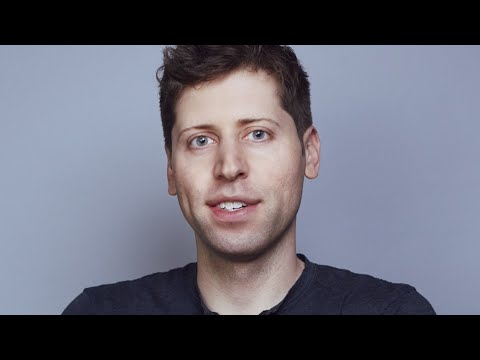
Sam Altman is the co-founder and CEO of OpenAI, the AI research and deployment company behind ChatGPT and DALL-E. Altman was president of the early-stage startup accelerator Y Combinator from 2014 to 2019. In 2015, he co-founded OpenAI as a nonprofit research lab with the mission to build general-purpose artificial intelligence that benefits all humanity. In this conversation with Stanford adjunct lecturer Ravi Belani, Altman gives advice for aspiring AI entrepreneurs and shares his insights about the opportunities and risks of AI tools and artificial general intelligence.
—----------------------------------- Stanford eCorner content is produced by the Stanford Technology Ventures Program. At STVP, we empower aspiring entrepreneurs to become global citizens who create and scale responsible innovations.
CONNECT WITH US Twitter: https://twitter.com/ECorner LinkedIn: https://www.linkedin.com/company/stanfordtechnologyventuresprogram/ Facebook: https://www.facebook.com/StanfordTechnologyVenturesProgram/ YouTube: https://www.youtube.com/user/ecorner
LEARN MORE eCorner Website: https://ecorner.stanford.edu/ STVP Website: https://stvp.stanford.edu/
Support our mission of providing students and educators around the world with free access to Stanford University’s network of entrepreneurial thought leaders: https://ecorner.stanford.edu/give.
Source description (no synthesized summary yet).
Sam Altman argues that AI represents an unprecedented opportunity for technological transformation comparable to the internet, and that the path forward requires iterative deployment, principled mission-driven culture, and trust in human ingenuity to responsibly integrate smarter systems into society's scaffolding.
- This is the best time to start a company since the internet because AI capabilities will expand dramatically each year with profound impact potential
- Iterative deployment with tight feedback loops is essential for responsible AI development, allowing society to co-evolve with technology rather than being surprised by sudden capability jumps
- AGI will function as a tool that extends human capability through societal scaffolding, similar to how modern society is collectively smarter than any individual predecessor
This asset isn't compiled yet
You're seeing its claims, ranked. Compile it to build the argument threads, weight them, and check each claim against your library — the full view.
The most important thing about GPT-5 or future models is simply that they will be smarter, and we can say with high degree of scientific certainty that GPT-5 will be smarter than GPT-4, GPT-6 will be smarter than GPT-5, and we are not near the top of this curve and we know what to do to continue this trajectory.
“I think the most important thing about gp5 or whatever we call that is just that it's going to be smarter and this sounds like a Dodge but I think that's like among the most remarkable facts in human history that we can just do something and we can say right now with a high degree of scientific certainty GPT 5 is going to be smarter than a lot smarter than GPT 4 GPT 6 going to be a lot smarter than gbt 5 and we are not near the top of this curve and we kind of know what know what to do”
Resilience and adaptability are among the most important life skills historically, but will be even more critical over the next few decades as technological change accelerates.
“I believe resilience can be taught uh I believe it has long been one of the most important life skills um and in the future I think in the over the next couple of decades I think resilience and adaptability will be more important theyve been in a very long time”
AI will be very net good overall, but will be misused like any sufficiently powerful tool; this does not absolve OpenAI, industry, governments, or society from attempting to mitigate bad uses and maximize good uses.
“I believe that AI will be very net good tremendously net good um but I think like with any other tool um it'll be misused like you can do great things with a hammer and you can like kill people with a hammer um I don't think that absolves us or you all or Society from um trying to mitigate the bad as much as we can and maximize the good”
Giving people power through technology or tools shapes what people in society can do; industry voices, public voices, and government/elected representative voices all participate in negotiating this balance of safety versus freedom, with government and democratic processes having the loudest voice.
“I think we have a voice in that I think you all have a voice on that I think the governments and our elected representatives in Democratic process processes have the loudest voice in that but we're not going to get this perfectly right like we Society are not going to get this perfectly right and a tight feedback loop I think is the best way to get it closest to right um and the way that that balance gets negotiated of safety versus freedom and autonomy um I think it's like worth studying that with previous Technologies”
There's a scenario where we build PhD-level or beyond intelligent AI systems, make researchers vastly more productive with autonomous research capability, and yet detect no change in global GDP growth for years afterwards, which would be 'very strange' and different from intuitive expectations of how capability increases translate to economic impacts.
“I can totally imagine a world where we build PhD level intelligence in any area and you know we can make researchers way more productive maybe we can even do some autonomous research and in some sense like that sounds like it should change the world a lot and I can imagine that we do that and then we can detect no change in global GDP growth for like years afterwards something like that um which is very strange to think about and it was not my original intuition of how this was all going to go”
Being right and being contrarian are separate variables; being contrarian and wrong is still wrong, and a track record of predicting recessions incorrectly is not valuable even if some predictions happen to be correct.
“first of all what you really want is to be right being contrarian and wrong still is wrong and if you predicted like 17 out of the last two recessions you probably were contrarian for the two you got right probably not even necessarily um but you were wrong 15 other times”
Training and inference compute costs have followed a multiplicative growth pattern: GPT-3 cost $100 million with 175 billion parameters, while GPT-4 cost $400 million (4x) but with nearly 10x the parameters, suggesting costs continue to grow with each subsequent model generation.
“chat gbt 3 was I've heard it was $100 million to do the model um and it was 100 175 billion parameters gbt 4 was cost $400 million with 10x the parameters it was almost 4X the cost but 10x the parameters”
Energy generation capacity appears to correlate strongly with quality of life for people, suggesting that abundant cheap energy is a prerequisite for broadly improved human welfare.
“energy does seem to correlate quite a lot with quality of life we can deliver for people”
Giving people better tools historically leads to more amazing things, as all of human history suggests people will surprise us on the upside with better tool usage; therefore Altman is not worried about AI stifling human innovation.
“I really deeply believe that people will just surprise us on the upside with better tools I think all of history suggest that if you give people more leverage they do more amazing things”
Making money and capitalism are good things; organizational incentive structures matter enormously but can be designed to align with mission, and OpenAI's board structure was intentionally designed to have financial independence so members make decisions as nonprofits thinking about humanity as stakeholder rather than shareholders.
“I think making money is a good thing I think capitalism is a good thing um my co-founders on the board have had uh financial interest and I've never once seen them not take the gravity of the mission seriously um but you know we've put a structure in place that we think is a way to get um incentives aligned and I do believe incentives are superpowers”
Altman is more concerned about subtle, pernicious dangers of AGI like societal attention disorders (analogous to TikTok-induced ADD) than about cataclysmic risks, because subtle dangers are more likely to be overlooked while explicit catastrophic scenarios receive significant attention from safety researchers.
“I'm more concerned about the subtle dangers because I think we're more likely to overlook those the cataclysmic dangers uh a lot of people talk about and a lot of people think about and I don't want to minimize those I think they're really serious and a real thing um but I think we at least know to look out for that”
Global and equitable access to AI compute for both training and inference is critical to OpenAI's mission, and OpenAI makes ChatGPT available for free to anyone globally (except countries where it can't or shouldn't operate) to enable widespread access.
“no matter where the computers are built I think Global and Equitable access to use the computers for training as well inference is super important um one of the things that's like very C to our mission is that we make chat GPT available for free to as many people as want to use it with the exception of certain countries where we either can't or don't for a good reason want to operate”
This is probably the best time to start a company since the internet, at least, and maybe in the history of technology, because AI will enable increasingly remarkable capabilities each year and the greatest companies and most impactful products are created at technological inflection points like this.
“I think this is probably the best time to start a companies since uh the internet at least and maybe kind of like in the history of technology I think with what you can do with AI is like going to just get more remarkable every year and the greatest companies get created at times like this”
Energy demand will increase due to AI and other technologies, and global electrical generation capacity will need to expand from current levels (estimated at 3,000-4,000 GW); fusion is likely to eventually dominate electrical generation globally as the cheapest, most abundant, reliable, and densest energy source, though solar plus storage is also a viable path.
“I mean it will go up for sure well not for sure you can come up with all these weird ways in which like we all depressing future is where it doesn't go up I would like it to go up a lot”
OpenAI's strategy is not just about building chips or foundries, but about viewing AI infrastructure holistically as a critical commodity that includes energy, data centers, chip design, and networks—and requires solving the entire ecosystem together rather than optimizing individual pieces.
“it's not just foundies although that that's part of it it's like if if you believe which we increasingly do at this point that AI infrastructure is going to be one of the most important inputs to the Future this commodity that everybody's going to want and that is energy data centers chips chip design new kinds of networks it's it's how we look at that entire ecosystem um and how we make a lot more of that and I don't think it'll work to just look at one piece or another but we we got to do the whole thing”
Iterative deployment of AI models with tight feedback loops is critical because AI and surprise don't go well together; people want gradual rollout and the ability to influence these systems, allowing society to co-evolve with technology rather than being blindsided by sudden capability jumps.
“one thing we've learned is that Ai and surprise don't go well together people don't want to be surprised people want a gradual roll out and the ability to influence these systems um that's how we're going to do it”
You should never take advice from anyone about what startup to start because by the time an idea is obvious enough that an expert will publicly recommend it, it's probably not a great startup idea; instead, the most impactful careers come from charting your own non-consensus course and building the muscle to trust yourself on generating original ideas.
“I think you should never take this kind of advice about what startup to start ever from anyone um I think by the time there's something that is like the kind of thing that is like obvious enough that me or somebody else will sit up here and say it it's probably like not that great of a startup idea”
AI industry people need to join research labs or companies with significant compute resources rather than academia to do meaningful AI research in the current environment, because academia lacks the computational infrastructure.
“I say this with sadness I think I would pick industry realistically um I think it's I think to you kind of need to be the place with so much compute”
Starting a company is a legitimate path for learning entrepreneurship alongside joining an existing company; there is no 'pre-startup' equivalent to pre-med education, and founding a company is how you learn to run startups.
“I think you learn a lot just starting a company and if that's something you want to do at some point there's this thing Paul Graham says but I think it's like very deeply true there's no pre-startup like there is Premed you kind of just learn how to run a startup by running a startup”
Altman's greatest strength is breadth—being good at many things rather than highly specialized—which allows him to make connections across domains and generate ideas that specialists in single areas would miss.
“I think I'm not great at many things but I'm good at a lot of things and I think breath has become an underrated thing in the world everyone gets like hypers specialized so if you're good at a lot of things you can seek connections across them um I think you can then kind of come up with the ideas that are different than everybody else has”
What people really want to know when they ask 'when is AGI?' is 'when is the world going to be super different, when does the rate of change get super high, when does the economy fundamentally change, when does my life change?' rather than a technical definition of artificial general intelligence.
“I kind of think what people want to know when they say like what's the timeline to AGI is like when is the world going to be super different when is the rate of change going to get super high when is the way the economy Works going to be really different like when does my life change”
Modern humans are not biologically smarter than their ancestors but dramatically more capable because societal infrastructure (internet, iPhone, knowledge systems) acts as external scaffolding that makes individuals more capable, and similarly future humans will be more capable through AI tools added to this scaffolding, not through replacing humans with smarter entities.
“humans have gotten dramatically smarter and more capable over time you are dramatically more capable than your great great grandparents and there's almost no biological drift over that period like sure you eat a little bit better and you got better healthare um maybe you eat worse I don't know um but that's not the main reason you're more capable um you are more capable because the infrastructure of society is way smarter and way more capable than any human”
OpenAI's culture is bound together by a shared mission to achieve AGI and a deep sense of purpose and loyalty to that mission, which is the strongest force for organizational success that Altman has observed in startups, and this mission-driven culture attracts and converts people even those who initially don't believe AGI is important.
“I think it is the shared Mission um I mean I think people like like each other and we feel like we've you know we're in the trenches together doing this really hard thing um but I think it really is like deep sense of purpose and loyalty to the mission and when you can create that I think it is like the strongest force for Success at any start at least that I've seen among startups”
OpenAI's nonprofit-for-profit hybrid structure was adopted gradually as circumstances evolved (discovering they needed massive compute, discovering a viable business model) rather than by design; Altman acknowledges this structure would not be chosen if starting over with current knowledge, but he advocates for adapting rather than redesigning mid-course.
“we got here we got to the structure gradually um it's not what I would go back and pick if we could do it all over again but we didn't think we were going to have a product when we started we were just going to be like a AI research lab wasn't even clear we had no idea about a language model or an API or chat GPT”
There is value in being wrong as a contrarian if surrounded by the right peer group, because original thinkers create a culture that supports independent judgment, though ultimately this requires some degree of solo thinking or with co-founders to avoid getting trapped in groupthink.
“I do think surrounding yourself with the right peer group is really important and finding original thinkers uh is important but there is part of this where you kind of have to do it Solo or at least part of it Solo or with a few other people who are like you know going to be your co-founders or whatever um and I think by the time you're too far in the like how can I find the right peer group you're somehow in the wrong framework already”
Don't hold yourself to too high a standard when learning to trust your own judgment, because the skill of independent thinking takes time to develop and unrealistic standards early on will inhibit learning.
“and don't hold yourself to too high of a standard too early on”
Earlier definition of AGI as 'software that could mimic the median competence of a median human for tasks' is too loose and allows for too much room for misinterpretation to be useful for predicting timelines.
“I think we need a more precise definition of AGI for the timing question um because at at this point even with like the definition you just gave which is a reasonable one there's that's your I'm I'm I'm paring back what you um said in an interview well that's good cuz I'm going to criticize myself okay um it's it's it's it's too loose of a definition there's too much room for misinterpretation in there um to I think be really useful or get at what people really want”
OpenAI's founding motivation was pure—to push AI research forward without financial or power incentives—which Altman attributes to already having made money from Looped, making wealth accumulation less motivating at that life stage.
“I know this gets back to motivations but that's the pure motivation there's no motivation around making money or or power I cannot overstate how foreign of a concept like I mean for you personally not for open AI but you you weren't starting well I had already made a lot of money so it was not like a big I mean I I like I don't want to like claim some like moral Purity here it was just like that was the of my life a dver driver”
The prospect of creating systems smarter than humans should be scary and it would be a bad sign if Altman didn't feel fear about it, suggesting that appropriate emotional responses to AGI development are important signals of good judgment.
“it of course does and I think it would be like really weird and uh a bad sign if it didn't scare me”
A key concern is the rate at which society can adapt to something as new as AGI compared to the rate at which AGI capabilities will advance; the gap between adaptation speed and capability growth is an understudied risk.
“I am worried about what rate Society can adapt to something so new and how long it'll take us to figure out the new social contract versus how long we get to do it”
OpenAI's board that temporarily removed Altman made a decision driven by genuine concern for the mission, not malice or power plays, and the team demonstrated resilience and capability to operate without him during that period.
“we had an incredible team that totally could have run the company without me and did did for a couple of days um and you never and also that the team was super resilient”
Altman's most dangerous weakness is a general bias to be too pro-technology due to curiosity and belief that technology is net good, which has received positive reinforcement and shaped his worldview, but this bias has sometimes been wrong and harmful to others.
“I think I have like a general bias to be too Pro technology just cuz I'm curious and I want to see where it goes and I believe that technology is on the whole a net good thing but I think that is a worldview that has overall served me and others well and thus got like a lot of positive reinforcement and is not always true and when it's not been true has been like pretty bad for a lot of people”
The changes that will happen in the next 19 years will 'pale in comparison' to what happened in the past 19 years, indicating an accelerating rate of technological change.
“and you know a lot has changed in the last 19 years but that's going to pale in comparison what's going to happen in the next 19”
Sam Altman is not concerned about spending $500 million, $5 billion, or $50 billion per year on AI development as long as OpenAI can maintain a trajectory where they eventually create way more value for society than the costs, and can figure out a way to pay the bills while making AGI.
“whether we burn 500 million a year or 5 billion or 50 billion a year I don't care I genuinely don't as long as we can I think stay on a trajectory where eventually we create way more value for society than that and as long as we can figure out a way to pay the bills like we're making AGI it's going to be expensive it's totally worth it”
Altman was initially unwilling to return to OpenAI after being removed, but changed his mind when considering how much he loved the people, culture, and mission, choosing to stay and finish building AGI together with the team.
“I was like no um I'm mad um and and then I thought about it and I realized just like how much I loved open AI um how much I loved the people the C the culture we had built uh the mission and I kind of like wanted to finish it Al together”
Altman has moved through phases of career motivation—from needs for affiliation, achievement, and power—but currently is driven by wanting to do something useful and interesting, suggesting a higher-order motivation that transcends status.
“I think at various times in my career all of those I think there these like levels that people go through um at this point I feel driven by like wanting to do something useful and interesting okay and I definitely had like the money and the power and the status phases”
ChatGPT and current language models are 'mildly embarrassing at best' in their capabilities, but GPT-4 represents a qualitative leap and is 'the dumbest model any of you will ever have to use again by a lot,' establishing a baseline for understanding how quickly models will improve.
“Chachi PT is not phenomenal like Chachi PT is like mildly embarrassing at best um gp4 is the dumbest model any of you will ever ever have to use again by a lot”
Early investors (like Sequoia) saw value in social mobile apps like Looped, showing that pre-smartphone or early-adoption consumer internet had sufficient capital and validation mechanisms to support venture creation.
“he then dropped out of Stanford spent seven years on looped which got Acquired and then he rejoined Y combinator in an operational role he became the president of Y combinator”
Space is not hospitable for biological life, so sending robots for space exploration and colonization is easier than sending humans.
“I think space is like not that hospitable for biological life obviously and so if we can send the robots that seems easier”
Sam Altman felt excited, optimistic, and curious as a 19-year-old Stanford undergrad, and still feels those same emotions at 39, suggesting constancy of personality across major life transitions despite external circumstances changing dramatically.
“excited optimistic and curious okay and what would be your three words now I guess the same which is terrific so there's been a constant thread even though the world has changed”
It's reasonable to assume that people will make the same decisions in hypothetical scenarios as they would have made in reality, so Altman wouldn't stay as a student in the 'Freaky Friday' scenario because he didn't in reality.
“I think staying as a student is a perfectly good thing to do I just I it would probably not be what I would have picked no this is you this is you so you have the Freaky Friday moment it's you you're reborn and as a 19-year-old and would you yeah what I think I would again like I think this is not a surprise cuz people kind of are going to do what they're going to do”