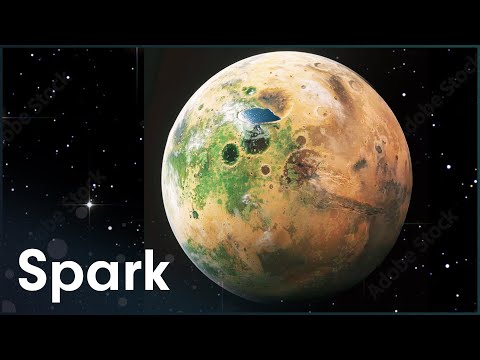
Are There Other Planets In The Solar System That Could Sustain Life? | Spark
What this covers
A documentary presented in a lighthearted manner, The Secrets Of The Universe marvels at the sights and the astral bodies that surround us in the Solar System.
Subscribe to Spark for more amazing science, tech & engineering videos: https://goo.gl/LIrlur 🚀
Find us on: Facebook: https://www.facebook.com/SparkDocs/ Instagram: https://www.instagram.com/spark_channel/
Content licensed from Vision Films to Little Dot Studios. Any queries, please contact us at: owned-enquiries@littledotstudios.com
#Spark
Source description (no synthesized summary yet).
A comprehensive tour of the solar system, neighboring planets, moons, and distant astronomical phenomena, presented as a guided journey from the International Space Station in 2057, designed to showcase the scale of the universe and the possibilities of extraterrestrial life.
- The speaker visits all eight major planets and highlights their moons, geological features, and potential for hosting life
- The narrative emphasizes the vast scale of the universe through comparisons of distances and sizes, from the solar system to distant galaxies
- Throughout the tour, the speaker speculates on the probability of extraterrestrial life based on the sheer number of potential habitats discovered
This asset isn't compiled yet
You're seeing its claims, ranked. Compile it to build the argument threads, weight them, and check each claim against your library — the full view.
Humans tend to see familiar shapes in astral objects, like the face of the moon or constellations, and astronomers typically name their findings on this basis, which is why the Omega Nebula has been given poetic names like 'Horseshoe Nebula' or 'Swan Nebula' in addition to scientific designations.
“humans tend to see familiar shapes in astral objects like the face of the moon or the shapes of the constellations even experts in astronomy typically name their findings on that basis that's why for example the omega nebula in the sign of sagittarius hasn't solely been ascribed to scientific names such as m17 or ngc 6618 this phenomena has also been given more poetic names like horseshoe nebula or swan nebula”
Enceladus has active cryovolcanism with geysers that keep renewing its surface by spitting out ice fountains up to 300 miles in height, and analysis of the discharged material has shown a very high density of organic chemicals, which combined with water and moderate temperatures form the basic components necessary for the creation of life.
“another source of enceladus ever fresh looks is its active cryovolcanism geysers keep renewing the surface by spitting out ice fountains of up to 300 miles in height analysis of the discharged material has shown a very high density of organic chemicals such organic materials in combination with water and moderate temperatures form the basic components necessary for the creation of life”
The Moon is covered entirely in grey dust called regolith, produced by meteor strikes that pulverize the surface due to the Moon's lack of atmosphere, and while water has only been traced in microscopic quantities, the Moon's dark areas were historically called 'seas' based on earlier scientific beliefs that they contained water, when in fact they are basins of solidified lava created by heavy asteroid hits.
“the moon dust produced this way actually resembles sand or scientifically speaking regolith so far water has only been traced in microscopic quantities nevertheless we still group the moon's surface into areas of lands and seas we talk about lands and seas on the moon today because of earlier times scientific beliefs that the dark areas on the moon contained water we now know that those seas are in fact basins of solidified lava most likely they were created by heavy asteroid hits”
Pluto was officially defined as the ninth planet from 1930 until 2006 when the trans-Neptunian object Eris was discovered in 2005, prompting the scientific community to create a new category of 'dwarf planets' to accommodate these types of objects, which caused Pluto to lose its regular planet status.
“from 1930 until 2006 it was officially defined as the ninth planet of our solar system when the trans-neptunian object heiress was discovered in 2005 the media quickly announced it to be our tenth planet the scientific community decided differently and came up with a new category to accommodate these types of objects dwarf planets in the process the similar-sized pluto lost its status as a regular planet”
The Crab Nebula in the constellation Taurus is one of the most interesting and most studied objects of visible space, with its torn and furrowed appearance indicating that a star exploded around the year 1054 A.D., as recorded by ancient Chinese astronomers, and was so bright it could be seen during daytime.
“the crab sun exploded around a thousand years ago in the year 1054 a.d the explosion was so bright that it could be seen during daytime according to ancient chinese astronomers”
Tethys looks almost identical to Dione and has a giant impact crater named Odysseus covering close to 40 percent of its surface, which because of the crater's orientation makes the moon look like a certain deadly battle station from science fiction.
“thetis could then again be the younger brother of diony as these two moons look almost identical the most striking feature of thetas is a giant impact crater named odysseus it covers close to 40 percent of this surface due to the orientation of that crater thetas may remind science fiction enthusiasts of a certain deadly battle station”
Europa's surface is among the smoothest and youngest in the solar system with hardly any structures rising more than 300 feet, yet the network of chaotic ridges and trenches called 'linea' up to 12 miles wide and reminding observers of ice fields on Earth are a clue to a major secret: under Europa's icy crust lies a vast ocean of liquid water.
“europa's surface is among the smoothest and youngest there are hardly any structures that rise more than 300 feet above the surrounding grounds still the network of chaotic ridges and trenches is visually striking these so-called linea are up to 12 miles wide and are strongly reminiscent of ice fields on earth since the positions and alignments of the linea cannot be explained by geological processes they are a clue to one of the biggest secrets of our solar system under europa's icy crust lies a vast ocean of liquid water”
Arp 273 is a pair of galaxies where the smaller galaxy has fully passed through the bigger one and as a result created a form reminding observers of a rose.
“galaxies are drifting through space which allows for occasional breathtaking compositions for example this pair of galaxies known as arp273 scientists assume that the smaller galaxy has fully passed through the bigger one and as a result created a form that reminds us of a rose”
Triton, Neptune's biggest moon, is covered by a thick crust of ice with cracks and deformations indicating geological activity, has geysers that shoot up through the surface ice up to five miles high, and has the lowest temperature ever measured in the solar system at -394 degrees Fahrenheit on its dark side.
“triton's surface is covered by a thick crust of ice cracks and deformations on the surface make up a network of disturbances which is a sign of geological activity and really there are geysers on triton they shoot up through the surface ice forming fountains into the atmosphere some as high as five miles... the half of triton that is in the shade has temperatures down to -394 degrees this is the lowest temperature ever measured in our solar system”
Earth's magnetic field is created by complex geodynamical activity and diverts solar winds around the planet, preventing them from diminishing Earth's atmosphere and oceans, such that without the magnetic field Earth would probably have become as barren and bleak as the Moon.
“earth's magnetic field this huge force field shields us from deadly radiation from the sun the magnetism is created by complex geodynamical activity it diverts solar winds around our planet preventing them from diminishing our atmosphere and oceans so without the crucial magnetic field earth would probably have become as barren and bleak as our silent companion the moon”
Mars must have had a much denser atmosphere millions of years ago and likely had lots of liquid water on its surface, offering much better conditions for the creation of life before its atmosphere was thinned out by solar winds.
“we know that mars must have had a much denser atmosphere millions of years ago and is likely to have had lots of liquid water on its surface back then it offered much better conditions for the creation of life that changed when its atmosphere was thinned out by solar winds”
Our own Milky Way galaxy may collide with the neighboring Andromeda galaxy in the future, similar to what happened with the Antenna Galaxies.
“in a couple of billion years our own galaxy may collide with our neighbor andromeda something similar has happened with the antenna galaxies”
Our Sun will eventually share a similar fate to the Crab Sun, but it should remain good for another couple of billion years before that happens.
“well in case you're wondering yes one day our sun will unfortunately share a similar fate but don't worry it should still be good for another couple of billion years”
Triton moves in the opposite direction to Neptune's rotation and is forced closer and closer to Neptune due to tidal forces, such that in a few hundred million years it will collide with Neptune, be ripped apart, and form a much denser ring system around Neptune similar to Saturn's appearance.
“it moves in the opposite direction to neptune's rotation at the same time it's fairly close to neptune so incredible tidal forces are created due to gravitation these forces are believed to be responsible for the cold volcanism of the geysers in the long run triton isn't going to remain in this position it is forced closer and closer to neptune in a few hundred million years it will collide with neptune which will cause it to be ripped apart the debris will form a much denser ring system around neptune resulting in a look similar to saturn”
The Moon has a diameter of 2,000 miles, making it the fifth largest moon in the solar system, orbits Earth once every four weeks (a period reflected in the etymology of 'month'), and exerts significant gravitational effects on Earth including tidal systems and maintenance of Earth's magnetic field.
“with a diameter of two thousand miles earth's companion is the fifth largest moon in our solar system the moon needs four weeks to orbit once around the earth a fact that is mirrored in our everyday language the word month is a derivate of moon through its gravitational pull the moon bears significant effects on earth the most visible effect is our tidal system the moon also plays a role in maintaining the crucial magnetic field”
As scientists look closer into the Kuiper Belt, more and more dwarf planets are discovered, all trans-Neptunian planets have been named after earthly deities including Makemake (a Polynesian god), Sedna (the Inuit goddess of the sea), and the distinctively ellipsoid Haumea (named after the Hawaiian goddess of childbirth).
“all trans-neptunian planets have been named after earthly deities for example makamake a polynesian god then there is sedna the inuit goddess of the sea or the distinctively ellipsoid haumea named after the hawaiian goddess of childbirth”
Saturn is the sixth planet and located almost 1 billion miles from Earth, has a diameter of about 75,000 miles making it the second largest planet in the solar system, and its distinctive ring system has become a symbol for astronomy, space exploration, and science fiction alike.
“saturn is the sixth planet of our solar system located almost one billion miles away from earth it's incredible that it's visible to the plain human eye in our night sky... it has a diameter of about 75 000 miles making it the second largest planet in our solar system the stylized shape of saturn with its rings has become a symbol for astronomy space faring and science fiction alike”
The Pleiades (also known as the Seven Sisters) are readily visible from Earth, are the subject of many old scriptures and legends, were created about 100 million years ago when dinosaurs were still roaming Earth, making them younger than our own Sun which has about 5 billion years on the meter.
“the pleiades also known as the seven sisters are also readily visible from earth that makes them the subject of many old scriptures and legends these suns were created when dinosaurs were still roaming the earth about a hundred million years ago that makes the pleiades quite a bit younger than our own sun which has about five billion years on the meter”
Neptune is 2.7 billion miles away from Earth, which does not amount to a light year in distance and is equivalent to a mere four light hours, meaning if someone flashed a gigantic light on Neptune, it would be visible on Earth four hours later.
“neptune is 2.7 billion miles away from the earth which doesn't even amount to a light year in distance in fact this distance is equivalent to a mere four light hours to put that into context if someone flashed a gigantic light on neptune we would be able to see it on earth four hours later”
Titan is the biggest moon of Saturn and even bigger than the planet Mercury, is the only known moon to have a really dense atmosphere rich in clouds consisting mainly of nitrogen with traces of carbon hydride and other organic components, and is the astral body in the solar system that most closely resembles Earth.
“the biggest of saturn's moons is a really big guy in fact it's even bigger than the planet mercury... titan is the only known moon to have a really dense atmosphere this atmosphere is rich on clouds and consists mainly of nitrogen although it carries traces of carbon hydride and other organic components too... titan is the astral body in our solar system that resembles earth the most”
Olympus Mons on Mars reaches an impressive height of 16 miles, making it the highest elevation in the entire solar system, and dominates the surrounding plains.
“mars also has the olympus mons measuring an impressive height of 16 miles it dominates the surrounding plains and makes it the highest elevation in our whole solar system”
The Eagle Nebula is located seven thousand light years away in the star constellation of the Serpent and is 95 light years high, which equals about 55 trillion miles, while our entire solar system is a mere 10 billion miles long.
“seven thousand light years away in the star constellation of the serpent lies the eagle nebula it's 95 light years high which equals about 55 trillion miles as a comparison our solar system is a mere 10 billion miles long”
The Valles Marineris is the largest known rift system in the solar system, stretching over 2,500 miles in length, up to 440 miles in width, and running up to 5 miles deep, with the western part called Noctis Labyrinthus containing chaotic entanglement of rifts and valleys up to 12 miles wide and 3 miles deep.
“running parallel to the equator is the valles marineris these mariner valleys are the largest known rift system of our solar system it stretches out for over 2500 miles and is up to 440 miles wide and runs up to 5 miles deep... in the western part called noctis labyrinthus it develops into a chaotic entanglement of rifts and valleys which are up to 12 miles wide and up to three miles deep”
The Hubble Space Telescope photograph of the Pillars of Creation was taken in 1995, but these pillars actually crumbled thousands of years ago driven apart by the cosmic radiation of nearby suns, and it takes light 7,000 years to travel from that location to Earth, meaning the camera sensors show a very distant past.
“this sensational photograph was taken by the hubble space telescope in the year 1995. now this is a relatively recent picture by human standards these pillars crumbled thousands of years ago driven apart by the cosmic radiation of the suns how is this possible well it takes light 7 000 years to travel from there to here that means when these light rays finally arrive at the sensors of our cameras they show a very distant past”
Neptune's blue color is due to methane in its atmosphere, which absorbs red light in the upper layers of the atmosphere, and Neptune has wind speeds of up to 1,200 miles per hour on the way to its stony core.
“the color is due to the fact that neptune's atmosphere is made up mostly of methane because of its properties methane absorbs red light in the upper layers of the atmosphere... in this thick soup we have wind speeds of up to 1200 miles per hour on the way to the stoney core”
The Moon is geologically very active today with moonquakes occurring up to 10 times per day, some reaching level 5 on the Richter scale, and while such quakes would seriously damage unprotected buildings on Earth, they cause no structural concern to the airless lunar landscape.
“the moon is still geologically active today to be more precise the activity is so fierce that moon quakes occur up to 10 times a day most of these are moderate but some reach up to level 5 on the richter scale on earth this would be enough to seriously damage unprotected buildings well fortunately there are no buildings here and the craters don't seem to mind a little moonquake from time to time”
The Orion Nebula is 1,500 light years away and contains between 1,000 and 2,000 young stars in the making, created by four of the largest stars in the galaxy called the Trapezium, with newborn suns surrounded by protoplanetary disks where material is perpetually drawn to the center of gravity.
“the orion nebula here lies a star forming area which is 1500 light years away... in this incredible cosmic configuration somewhere between one thousand and two thousand young stars are in the making these are made by four of the largest stars in the galaxy called the trapezium many of these stars will later be surrounded by planets formed in the process around this trapezoid we find newborn suns that are surrounded by so-called protoplanetary disks these protoplanetary disks are vast accumulations of material perpetually drawn to the center of gravity”
The Sun has been running steadily for approximately 5 billion years and has a core temperature of 27 million degrees Fahrenheit where hydrogen is constantly fused into helium, with photons taking about 1,000 years on average to escape the Sun's center before taking just 8 minutes to reach Earth after escaping.
“fortunately enough the earth's sun has been running steadily for approximately 5 billion years now... in the very core of the sun it reaches 27 million degrees because hydrogen is constantly fused into helium the fusion reaction causes the release of energy in the form of photon rays these photons dart around at light speed but as they collide with matter frequently it takes a thousand years on average for them to finally leave the sun's center because it's so dense compare that to the mere eight minutes it takes for the photons to reach earth once they've escaped the sun's center”
Venus has over 50,000 volcanoes total, with Maat Mons being a giant volcano 5 miles tall that towers over other Venusian volcanoes, and the entire surface of Venus is composed of shapes made of solidified lava, including distinctive circular pressure domes called pancakes.
“in total there are over fifty thousand of them it's not surprising that the whole surface area of venus is composed of shapes made of solidified lava among them are some rather strange looking specimens like these circular pressure domes suitably called pancakes”
Venus and Earth are often referred to as 'sister planets' because Venus has approximately the same size, density, and mass as Earth with gravitational force close to 90 percent, despite major differences in their atmospheric conditions.
“venus has approximately the same size density and mass as earth likewise the gravitational force is close to 90 percent in spite of these resemblances there are major differences”
In the Crab Nebula, the remaining core of the exploded star has turned into an extremely dense neutron star over the 1,000 years since the explosion, and continues to spawn a large number of high-energy particles, causing the Crab Nebula to take an ever-changing shape.
“during the 1000 years that have passed since the remaining core of the crab sun has turned into an extremely dense neutron star it continues to spawn a large number of high-energy particles and therefore the crab nebula takes an ever-changing shape”
Saturn has a whirlwind at the south pole with a fixed position and diameter of 5,000 miles, and at the north pole a polar vortex in the shape of very tidy hexagons stretching 15,000 miles and several hundred miles deep.
“this whirlwind is a hurricane with a fixed position and a diameter of 5 000 miles the north pole offers a similarly distinctive feature a polar vortex in the shape of very tidy hexagons this phenomenon stretches out over 15 000 miles and is several hundred miles deep”
Materials shot out by dying suns form cosmic nebulas which later become part of new stars and planets, creating a cycle of cosmic creation whose byproduct is sites of incredible beauty.
“we saw the materials shot out by dying suns form cosmic nebulas at first only to later become part of new stars and planets this is the cycle of cosmic creation the byproduct is sites of incredible beauty”
Despite the heat generated by volcanoes on Io, the average surface temperature is -236 degrees Fahrenheit, demonstrating Io as having a harsh environment where any life would need to be exceptionally hardy.
“despite the heat generated by the volcanoes the average surface temperature of io is a low minus 236 degrees fahrenheit i guess you could really call this a harsh environment so if there should be any life on io it's definitely got to be tough as nails”
Enceladus has a very bright surface reflecting 99 percent of all incoming sunlight because it consists of almost flawless water ice, making it the most reflective astral body in the entire solar system.
“the mini moon enceladus also has an interesting surface it's very bright because it consists of almost flawless water ice making it reflect 99 percent of all incoming sunlight enceladus is the most reflective astral body in our entire solar system”
Titan has a diameter of 3,200 miles and its average surface temperature is -270 degrees Fahrenheit, yet despite this extreme cold, Titan has landscapes that look like those on Earth with mountains of up to a mile in height created by water ice washed down by methane rain, with the ice being as hard as silicate rock due to low temperatures.
“titan has a diameter of 3 200 miles... the average temperature is as low as -270 degrees fahrenheit still tighten as landscapes that look a lot like those on earth along the equator for example lies a region called xanadu which is about the size of australia here we find mountains of up to a mile in height they were created by water ice that was washed down by methane rain causing them to take their current shape due to the low temperatures the ice is as hard as silicate rock”
The Antenna Galaxies are two galaxies that merged when they crashed into one another, and the resulting forces spawned billions of new suns, most of them in tightly packed groups called superstar clusters.
“similar has happened with the antenna galaxies these two galaxies merged when they crashed into one another and the resulting forces have spawned billions of new suns most of them in tightly packed groups called superstar clusters”
Jupiter was named after the Roman god Jupiter a very long time before the invention of the telescope, and the Babylonians called it the 'king's star', and Jupiter truly reigns over its own little realm with its 63 moons, some nearly planet-sized themselves.
“it was named after the roman god jupiter a very long time before the invention of the telescope the babylonians called it the king's star and indeed jupiter reigns over its own little realm with its 63 moons some nearly planet-sized themselves”
Io orbits Jupiter at a distance of 250,000 miles and completes one orbit every 42 hours, and is described as a 'hell of a moon' due to its active volcanism with seas of liquefied sulfur covering the entire planet in various aggregate states from gaseous to liquid to solid, giving it a colorful appearance with yellow being the predominant hue.
“io it orbits jupiter at a distance of 250 000 miles and needs 42 hours to complete one orbit even when looking from quite a distance you might describe it as a hell of a moon after all the most distinctive structures on its surface are volcanoes and lava pools of gigantic dimensions there are seas of liquefied sulfur an element covering the entire planet in various aggregate states from gaseous to liquid to solid this gives io a pretty colorful appearance with yellow being the predominant hue”
Messier 66 is a much more asymmetrical galaxy, the biggest of the Leo Triplets, with displaced appearance owed to gravitational forces of its two nearby siblings that are relatively close by in galactic terms.
“much more asymmetrical is the appearance of messier 66 the biggest galaxy of the leo triplets displaced looks are owed to the gravitational forces of its two siblings that are relatively close by at least when speaking in galactic terms”
Miranda is the most interesting of Uranus's five major moons (Miranda, Ariel, Umbriel, Titania, and Oberon) because it has very different surface structures including heavy displacements, fragmentation patterns, and a labyrinth of canyons up to 12 miles deep, making it a unique astral body.
“to look at it the most interesting is miranda because she has some very different surface structures including heavy displacements fragmentation patterns and a labyrinth of canyons that runs up to 12 miles deep this makes miranda a unique astral body within our solar system”
Hellas Planitia is the biggest Mars crater with a basin diameter of 1300 miles and a low point of five miles below Mars's ground level, making it the lowest point on the entire planet.
“among the numerous impact craters in the southern region is the biggest mars crater called helles planitia the basin has a diameter of 1300 miles with a low point of five miles below the ground level of mars making it the lowest point on the entire planet”
Venus has distinctive features of lava channels of incredible length with an average width and depth of a mile running for thousands of miles, with the longest one called Hilderosa being approximately 4200 miles long, out-competing the reach of the Nile, Earth's longest river.
“another distinctive feature of venus are lava channels of incredible length they have an average width and depth of a mile and run for thousands and thousands of miles the longest one called hilder fossa is some 4 200 miles long out competing the reach of the nile earth's longest river”
As the rate of bombardment finally decreased, Earth slowly cooled off resulting in the forming of a solid crust of stone on the surface, though there were still frequent volcanic eruptions and gases which eventually formed an atmosphere, with vaporized water condensing and returning to the surface in the form of rain while meteors of ice filled up the first oceans.
“as the rate of the bombardment finally decreased earth slowly cooled off resulting in the forming of a solid crust of stone on the surface still there were frequent volcanic eruptions as well as gases which eventually formed an atmosphere vaporized water condensed and returned to the surface in the form of rain while meteors of ice filled up the first oceans”
There are more stars in outer space than grains of sand on the entire planet Earth, and the probability of there not being life anywhere else in the universe seems about as likely as a single person winning a lottery jackpot 100 times in a row.
“out there in space there are more stars than grains of sand on the entire planet earth now with that in mind how could we be the only star system with intelligent life the probability of there not being life anywhere else in the universe seems about as likely as a single person winning a lottery jackpot 100 times in a row”
Earth's surface shows predominantly blue coloring from oceans, brownish continents, and white clouds, representing a stark contrast to its violent creation characterized by constant bombardment of asteroids and celestial bodies, with one particularly heavy asteroid ripping off part of Earth's mantle that remained in orbit and supposedly formed the Moon.
“in this light from the sun earth predominantly glows in the luscious blue of its oceans the continents appear mostly brownish and dark while the second most dominating color is white due to the white clouds in our atmosphere... after a core had formed from materials of the sun's protoplanetary disk the young earth was subject to a constant bombardment of asteroids and other celestial bodies one particularly heavy asteroid ripped off a part of the earth's mantle this rubble remained in orbit and supposedly formed the moon”
If Jupiter had gained only a little more mass, it probably would have ignited and become a sun itself, creating a binary star system instead of our current single-sun solar system.
“really if jupiter had only gained a little more mass it probably would have ignited and become a sun itself while that would have been spectacular it obviously hasn't happened”
In the Eagle Nebula, a gigantic star called Eta Carinae has a mass a hundred times greater than our sun and is so big it can hardly keep itself together, with some experts believing it could even explode within a hundred years.
“the gigantic star etta carina is the father of numerous baby stars in a manner of speaking etta carinae has a mass a hundred times greater than our sun it's so big it can hardly keep itself together some experts believe that etakarine could even explode within a hundred years”
When a Helix-like supernova explosion happened, all planets and moons of that nebular system were torn from their orbits and were either ripped to pieces by gravitational forces or burnt down by the vastly expanding sun, though some comets survived and continue to make their way through the galactic rubble.
“when the explosion happened all planets and moons of that nebular system were torn from their orbits and were either ripped to pieces by the gravitational forces or burnt down by the vastly expanding sun at least some comets survived and they continue to make their way through the galactic rubble”
Uranus is the only planet without an internal heat source and receives only 1/400th of the total energy reaching Earth due to its 2 billion mile distance from the Sun, and due to the low amount of heat, Uranus's atmosphere does not display as many weather effects as Neptune.
“it's blistering cold on uranus for reasons still unknown uranus is the only planet that doesn't have an internal heat source of any kind all of its energy comes from the sun which is not much given its two billion miles out to be precise uranus receives only a four hundredth of the total energy reaching earth due to the low amount of heat reaching the atmosphere of uranus it doesn't display as many weather effects as neptune”
Rupees cliffs on Mercury reach more than a mile in height and stretch over a hundred miles, crossing right through numerous meteoric craters, leading scientists to believe they may have been caused by shrinking of the planet, and calculations suggest Mercury's overall diameter may have been more than 200,000 square miles bigger 4 billion years ago.
“phenomena exclusive to mercury are the so-called rupees cliffs reaching more than a mile in height and stretching over a hundred miles the rupees cross right through a number of the meteoric craters which makes scientific experts believe that these cliffs may have been caused by a shrinking of the planet according to calculations mercury's overall diameter may have been more than two hundred thousand square miles bigger four billion years ago”
Mars is the second smallest planet of the solar system with a diameter only half that of Earth, with a thin atmosphere composed mainly of carbon dioxide that cannot sustain human breathing, and surface temperatures near the equator around 32 degrees Fahrenheit during daytime dropping to -121 degrees Fahrenheit at night.
“Mars is a rocky body just like earth but it's only half the diameter of our home planet which makes it the second smallest planet of our solar system... near the equator temperatures are around 32 degrees fahrenheit during daytime at night it plummets to as cold as -121”
The Kuiper Belt is 20 times wider than the central asteroid ring between Mars and Jupiter orbits, is home to over 70,000 objects of more than 60 miles in size, and represents leftover material from the creation of the solar system that was not included in the formation of planets.
“we find a huge asteroid field called the kuiper belt it's 20 times wider than the central asteroid ring and is home to over 70 000 objects of more than 60 miles in size these objects are leftovers from the creation of our solar system material that wasn't included in the formation of our planets”
Venus is the second brightest object in Earth's sky due to its low orbit and dense, light-reflecting atmosphere, and is often known as the evening star because it is hardly visible during night time, though it is sometimes bright enough to be visible to the human eye during daytime.
“venus is the second brightest object on our earthly sky due to its low orbit venus is hardly visible during night time and is therefore known as the evening star sometimes it's bright enough to be visible to the human eye during daytime”
Aphrodite Terra on Venus covers an area the size of South America, runs across the equator, is shaped like the outline of a scorpion, and consists of three bulged formations called Avda Thetis and Atla Reggio, with Atla Reggio divided by gigantic trenches similar to canyons in North America.
“aphrodite terra and covers an area the size of south america it runs across the equator shaped in a formation that looks like the outline of a scorpion this land of aphrodite consists of three bulged formations called avda thetis and atla reggio the atla reggio is divided by gigantic trenches these steep-walled valleys or chasmas look similar to the canyons of north america”
Venus has an average surface temperature of 867 degrees Fahrenheit, making it the hottest Earth-like planet in the solar system, with a surface air pressure equaling the pressure found at 4,000 feet below sea level in Earth's oceans, and the first Russian probes to arrive were literally crushed by atmospheric pressure.
“the average surface temperature on venus is 867 degrees fahrenheit which makes venus the hottest earth-like planet in our solar system the first russian probes to arrive here in the second half of the 20th century were literally crushed by atmospheric pressure venus has a surface air pressure equaling the pressures found at 4 000 feet below sea level in earth's oceans”
Ishtar Terra on Venus is the northernmost continental formation, about the size of Australia, and is home to the Maxwell Mountains whose peaks reach over 6 miles high, comparable to the Himalayas on Earth.
“ishtar terra and is placed in the northern parts of venus the area is about the size of australia and is home to the maxwell mountains among others its peaks reach over six miles similar to the himalaya mountains back on earth”
Venus's surface features sulfuric acid clouds, acid rain, and active volcanoes, resembles popular depictions of hell, and has no water on the surface due to high temperatures, though topography can be geologically distinguished between highlands and lowlands.
“it seems perfectly fair to agree with claims that downtown venus resembles popular depictions of hell sulfuric clouds acid rain and active volcanoes are all on the list of local attractions alongside dimly red glowing surfaces littered with craters... there is no water on the surface because of the high temperatures”
Mercury is the smallest regular planet in the solar system with a rocky body similar to the Moon, lacks an atmosphere, has a crater-littered surface with 10 largest craters having diameters ranging from 125 to 1,000 miles, and the largest is Caloris Basin, created by an astral body at least 60 miles in width.
“mercury is the smallest regular planet in our solar system... there's nothing preventing meteorites from hitting mercury at full speed... the 10 largest craters have diameters ranging from 125 to a thousand miles the largest one is known as caloris basin this huge dent can only have been created through the impact of an astral body at least 60 miles in width”
Mercury's distance to the Sun is only 30 million miles, just one third of Earth's distance from the Sun, and standing on Mercury's surface would expose a person not only to massive heat but also to a lot of solar radiation which is very hazardous to humans.
“the distance between mercury and the sun is only 30 million miles just one third of the distance between us and the sun standing on mercury's surface you would not only be exposed to massive heat but also a lot of solar radiation which is very hazardous to humans”
Jupiter weighs more than all other planets added together and is so huge that despite being 480 million miles from Earth, it is one of the brightest objects in the night sky.
“it alone weighs more than all of our other planets added together it is so huge that despite being 480 million miles from earth it's one of the brightest objects in our night sky”
Mercury experiences the widest range of temperature spans of any planet, with the sun-facing half reaching 750 degrees Fahrenheit and the night side dropping to -275 degrees Fahrenheit, and a night on Mercury lasts long because the sun only rises every 88 Earth days due to Mercury's eccentric spin.
“the sun facing half of mercury is heated to extreme temperatures reaching up to 750 degrees fahrenheit on the night side temperatures go as low as to minus 275 degrees these conditions make mercury the planet with the widest range of temperature spans the day cycles are similarly extreme a night on mercury lasts pretty darn long the sun only rises every days due to mercury's eccentric spin”
Dione is Rhea's smaller sister with similar features of mostly ice composition but with more sharply drawn craters and light stripes likely caused by cold volcanism.
“ria's smaller sister diony shares similar features it's also mostly comprised of ice but has more sharply drawn craters additionally it has light stripes that are likely to have been caused by cold volcanism”
Saturn has over 100,000 separate rings, each with different color tones mirroring their composition, with the rings visibly separated, and smaller moons called shepherd moons whose orbits plow through the rings, ensuring they are kept nicely in shape.
“there are over 100 000 separate rings around saturn each with different color tones mirroring their composition the rings are visibly separated... these moons are called shepherd moons because their orbits ensure that the rings are kept nicely in shape”
Saturn, like all gas giants, does not have an actual physical surface because its atmosphere consists mainly of hydrogen and helium which liquefy due to rising pressure toward the planet's core.
“unfortunately we cannot set foot on saturn like all the gas giants it doesn't have an actual physical surface its atmosphere consists mainly of hydrogen and helium towards the planet's core the pressure rises to incredible magnitudes prompting the gases to liquefy”
Jupiter has a ring system that is not visually impressive because it is made of tiny particles almost comparable to cigarette smoke and mostly black, making them hard to see, with the rings originating from dust produced from adjacent moons when they are hit by meteors.
“jupiter does at least have a ring system however it's not too visually impressive it's made of tiny particles almost comparable to cigarette smoke these little grains are mostly black and therefore hard to see their origin is interesting as they're made up of dust from the adjacent moons dust is produced from these moons when they're hit by meteors”
The Milky Way has a diameter of about 100,000 light years, so at light speed (671 million miles per hour) it would take 100,000 years to travel from one end to the other.
“altogether our galaxy has a diameter of about a hundred thousand light years so if we traveled at light speed around 671 million miles an hour it would take a hundred thousand years to get from one end to the other”
Jupiter's magnetic field is 14 times stronger than Earth's magnetic field and its outer measurable limits almost reach out to Saturn, and interference with Jupiter's four main moons causes gigantic auroras at the north pole.
“no less impressive is jupiter's magnetic field like all things jupiter it is gigantic it's 14 times stronger than earth's magnetic fields and its outer measurable limits almost reach out to saturn... interference with jupiter's main moons causes gigantic auroras at the north pole”
Jupiter's most distinctive atmospheric feature is cloud bands running parallel to the equator and the Big Red Spot, a gigantic whirlwind with a fixed position whose diameter is three times that of Earth with wind speeds reaching 375 miles per hour, with its existence already recorded in 1664.
“the most distinctive feature is the cloud bands that run in parallel to the equator then there is the big red spot a gigantic whirlwind with a fixed position its diameter is three times that of earth and inside the wind speeds reached to 375 miles per hour its existence was already recorded in the year 1664”
Uranus is 3 billion kilometers away, and a supersonic jet would need at least 200 years to cover that distance.
“the planet uranus is roughly 3 billion kilometers away a supersonic jet would need at least 200 years to cover that distance”
Neptune and Uranus are classified as ice giants and are richer with water, ammonium, and methane than Jupiter and Saturn, the other two gas giants.
“uranus and neptune are richer with water ammonium and methane than the other two gas giants saturn and jupiter that is why they're in the subclass of the ice giants”
Uranus has 27 moons with diameters ranging from six to 1,000 miles, and their small sizes mean they are lightweight, together weighing less than Neptune's moon Triton alone.
“in total uranus has 27 moons with diameters ranging from six to a thousand miles their small sizes means that they're pretty lightweight together they weigh less than neptune's moon triton alone”
Messier 74 is a classical spiral-shaped galaxy not unlike the Milky Way, but its arms are decorated with bright pink areas representing clouds of gases lit up by light from young stars that produce large amounts of ultraviolet light.
“let's start with messier 74. it's a classical spiral-shaped galaxy not unlike our own however the arms of m74 are decorated with bright pink areas those are clouds of gases lit up by the light from young stars these regions produce a large amount of ultraviolet light hence the pink color”
Iapetus is a distinctly bi-colored moon reminding observers of the yin and yang symbol, with a big part of its icy surface tinted in dark red, and scientists remain unsure of exactly how this pattern developed—possibly different colored material emerged from within Iapetus through volcanic activity or meteoric impact events.
“ipedus on the other hand reminds me more of the yin and yang symbol a big part of its icy surface is tinted in a dark red scientists are still unsure of exactly how this pattern developed possibly different colored material may have emerged from within ipedis through processes of volcanic activity or meteoric impact events”
Some experts believe that our Sun was born in a dense star-forming region like the Pleiades and then later moved to its current position over the course of millions of years.
“some experts believe that our son was born in a dense star-forming region like the pleiades and then later moved to its current position over the course of millions of years”
Miranda may have once traveled into the gravitational reach of Umbriel and Ariel, which heated Miranda up, and because it is 80 percent water ice, the strong tectonic effects caused it to break apart until it broke free from those forces to assume its current orbit around Uranus.
“the most probable one suggests that miranda once traveled into the gravitational reach of umbrel and ariel these forces heated miranda up and because she's made of 80 water ice this led to strong tectonic effects after a while miranda broke free from those forces to assume her current orbit around uranus”
Scientists claim it is plausible that microorganisms inhabit Venus's clouds, as Venus is located only marginally outside the calculated habitable zone of the solar system, and since life emerged in Earth's primordial ooze millions of years ago, it could have happened or could be happening on Venus.
“some scientists claim that it's plausible that microorganisms inhabit these clouds... venus after all is located only marginally outside the calculated habitable zone of our solar system mankind can only find answers to that big question through research... although we live in a highly progressive and technologically advanced time large portions of our own solar system still remain in the dark”
Due to Titan's extreme cold, water-based life forms cannot exist, but recent discoveries on Earth suggest the possibility of life forms based on hydrogen rather than water, and Titan is practically teeming with hydrogen, making it a priority for rover exploration.
“because of the cold it's impossible for water-based life forms to exist but recent discoveries on earth would suggest the possibility of life forms that are based on hydrogen and titan is practically teeming with hydrogen so i'd say it's about time we send a couple of more rovers up there to look under every piece of icy rock”
On Earth there are examples of organisms totally independent of sunlight such as very primitive life forms like microbes or endoleths, and there are theories suggesting cosmic radiation may cause release of oxygen in Europa's water, making Europa's waters potentially more oxygen-rich than Earth's oceans.
“on earth there are examples of organisms that are totally independent of sunlight such life forms are only very primitives of nature like microbes or endoleths yet there are theories that suggest that cosmic radiation may cause release of oxygen in europa's water the waters here could already be more oxygen rich than our earthly oceans”
Even the only dwarf planet of the inner solar system, Ceres, which sits right between Mars and Jupiter with a diameter of around 600 miles and supposedly carries a significant amount of water ice, remains mostly unexplored, and scientists speculate life may exist there.
“ceres sits right between mars and jupiter and has a diameter of around 600 miles it supposedly carries a significant amount of water ice which has led to speculation that life may exist there”
A horrendous meteor strike on Uranus is concluded from the severely tilted axis of Uranus, which is why Uranus is mostly viewed top-down from Earth, making its ring system look like an archery target while moons circle like hands on a clock.
“possibly the inner cold of uranus may have something to do with a horrendous meteor strike this is a conclusion drawn from the fact that the axis of uranus is severely tilted therefore we mostly see uranus top down when we look at it from earth in this perspective the ring system makes it look a bit like an archery target while the moons circle around their planet like hands on a clock”
Iapetus has a rift stretching over 800 miles that is up to 8 miles high, making the moon look like a walnut from certain angles, with possible explanations including tectonic activities and crashed remains of asteroid rings.
“another striking feature of ipedis is a rift stretching over 800 miles this formation is up to eight miles high and somehow makes the moon look like a walnut when seen from a certain angle possible explanations for this anomaly include tectonic activities and crashed remains of an asteroid ring”
Venus lacks a moon, which some scientists believe could be explained by theories suggesting Mercury once orbited Venus, a hypothesis that would account for Mercury's irregular orbital trajectory around the Sun, which was mistakenly interpreted in the late 19th century as proof of a phantom planet called Vulcan.
“just like venus mercury doesn't have a moon now this fact has led scientists to believe that perhaps mercury once orbited venus such a theory would explain why mercury's orbital trajectory around the sun is so irregular geometrically speaking mercury's trajectory takes a gyrational form as it was observed in the late 19th century astronomers at the time mistakenly interpreted it as proof of the existence of a previously unknown planet in fact they were so convinced by the evidence that they gave that phantom planet a name vulcan”
In addition to the gazillions of possible habitats for alien life forms, many more are being created continuously, yet it remains questionable whether mankind will ever be able to reach them given the fact that light from these suns takes thousands of years to reach us.
“in addition to the gazillions of possible habitats for alien life forms many more are being created as we speak it's still questionable if mankind will ever be able to reach them given the fact that even the light of these suns takes thousands of years to reach us”
Mankind has undertaken numerous unmanned missions to neighboring planets and successfully landed a remote controlled vehicle on Mars that took photographs.
“as you probably know even in your time mankind has undertaken numerous unmanned missions to our neighboring planets we've even succeeded in landing a remote controlled vehicle on mars and these took photos of their surroundings”
Fellow astronauts have said that seeing Earth from up in space is one of the most astonishing things you can experience with your own eyes, according to the speaker's report.
“since the beginnings of human space travel my fellow astronauts have said that seeing the earth from up here is one of the most astonishing things you can experience with your own eyes”
Mankind can only find answers to whether microorganisms live on Venus through research, with satellites and probes required to be sent up there to scan, sample, and analyze large amounts of data.
“mankind can only find answers to that big question through research satellites and probes will have to be sent up there they will have to scan sample and analyze large amounts of data”
The speaker hopes the tour has passed on enthusiasm for the wonders of space and reflects sadness that the golden days of space exploration seem to be over.
“i hope that i've been able to pass on some of my enthusiasm yet it saddens me a bit to see that the golden days of space fairing seemed to be over i hope that you'll reflect on what you've learned maybe even ponder a bit on the idea of possible aliens or just acknowledge the place of our little earth in this gigantic cosmos”
The heated gas from stellar emissions acts as a battering ram on denser clouds of cold gas, compressing and eventually igniting them, causing a cycle to continue through the star-forming region.
“the heated gas has the effect of a battering ram on denser clouds of cold gas it compresses and eventually ignites them and the cycle continues”
Eventually life appeared on Earth, probably beginning with amoeba in water, continuing to fishes and onto land life, reptiles, birds, and mammals, and eventually humans, with scientists still exploring the wonder of life's creation and its prerequisites.
“eventually life appeared on earth it probably began with amoeba in the water continuing to fishes and onto land life reptiles birds and mammals and eventually man scientists are still exploring the wonder of life's creation and its prerequisites”
Other indications of brutal forces of meteoric impacts on Mercury are the radial marks surrounding the craters, with more recent and therefore brighter meteoric rudiments scattered around the point of impact, and larger craters typically surrounded by ring-shaped walls created through folding.
“other indications of the brutal forces of the meteoric impacts are the radial marks surrounding the craters here more recent and therefore brighter meteoric rudiments are scattered around the point of impact larger craters are typically surrounded by ring-shaped walls created through folding”
The Omega Nebula is clearly named for its resemblance to the North American continent and appears differently in the visible light spectrum versus infrared view.
“here we have the american nebula for example clearly named for its resemblance to the north american continent this likeness is only noticeable in the visible light spectrum though in infrared view the whole thing looks entirely different”
Nebulae are interstellar clouds of dust and gas with compositions including crystals, amorphous substances, and molecular chains.
“nebulae like this one are interstellar clouds of dust and gas. the star dust consists of crystals amorphous substances and molecular chains”
In the cooler north of Mars, there are low plains which are broad dust-covered flat lands with names like Utopia Planitia or Amazonas Planitia, and dark areas visible on Mars's surface since early telescopes were invented were thought to be oceans.
“in the cooler north we find the low plains which are broad dust covered flat lands with names like utopia planisha or amazonas planitia dark areas have been visible on the surface of mars since early telescopes were invented these were thought to be oceans”
The area of the southern pillars of the Carina nebula is so dense that no light can pass through, but infrared cameras depicting heat sources can reveal what is hidden inside.
“here we have the southern pillars of the karina nebula the dust clouds here are so dense that no light can pass through but with our infrared cameras depicting heat sources we can lift that veil and have a look inside”
Future baby stars in the southern pillars of the Carina nebula are visible as yellow or white dots and are cocooned in finger-like tubes shown in pink, with Eta Carinae's radiation and stellar winds having blown stardust to create veins and pillars over millions of years.
“now the future baby stars are visible as yellow or white dots they are cocooned in finger-like tubes shown in pink the star etekarini is just outside the top of the frame like all suns it doesn't only emit light but also strong radiation and energy charged particles these stellar winds have blown the stardust in front of them and chaotic shapes of veins and pillars have formed over a time period of millions of years”
Mars's air is very dusty and mainly made of carbon dioxide, making it impossible for humans to breathe there, and high pressure would make skin boil, so a spacesuit is necessary.
“the air on mars is very dusty and is mainly made of carbon dioxide so humans cannot breathe here also the high pressure would make your skin boil so better bring a spacesuit”
The southern hemisphere of Mars has geologically older formations and more craters, with the highland region of Arabia Terra being densely cratered.
“the southern hemisphere has geologically older formations and more craters for example the highland region of arabia terra is densely cratered”
Stars are categorized into different classes with O stars being the heaviest and hottest, and they emit blue light, which is visible in images of the Omega Nebula taken using visible light.
“o stars are categorized into different classes with o stars being the heaviest and hottest they emit blue light”
Mars's pole caps made of ice melt in spring, allowing distinctive cirrus clouds to form, and spring storms are common which whip up vast quantities of martian dust with wind speeds of up to 400 miles an hour.
“the pole caps made of ice melt down which allows for distinctive cirrus clouds to form we can actually see these in the sky here in spring storms are common which whip up vast quantities of martian dust with wind speeds of up to 400 miles an hour”
Through the process of accretion, cosmic particles in protoplanetary disks coalesce as they grow larger into asteroids, which are directed by the sun's gravitational attraction to move around at high pace and crash into each other repeatedly, resulting in the formation of bigger masses of rock.
“the concentration of these cosmic particles bigger masses of material start to form as these grow larger they grow into what we call asteroids directed by the sun's gravitational attraction the asteroids move around at high pace they crash into each other repeatedly resulting in the forming of bigger masses of rock”
Much of Mars's surface is cast under a dusty veil with sometimes small cyclones called dust devils occurring.
“a lot of the surface is cast under a dusty veil sometimes even small cyclones called dust devils come up”
In the Eagle Nebula, gigantic hot suns illuminate the structures at the top, and their solar winds simultaneously thin out the objects, with shock waves from the emissions sweeping through the formation and creating visible bright contours.
“sitting above the top of this structure are gigantic hot suns that illuminate these shapes and thereby render their three-dimensional shape visible at the same time their solar winds are thinning out this gigantic object”
With the aid of radar image systems, scientists were able to investigate Venus's local topography and geologically distinguish between highlands and lowlands, with two highest planes serving as Venus's continents.
“with the aid of radar image systems we were able to investigate the local topography logically enough there is no water on the surface because of the high temperatures that doesn't prevent us from geologically distinguishing between high and lowlands the two highest planes could be described as the continents of venus”
Another distinctive feature of Venus is the absence of a moon, so standing on Venus's surface you wouldn't be able to see a moon anyway because of the thick atmosphere obscuring the visual field.
“another feature of venus or more accurately lack of feature is the absence of a moon standing on venus's surface you wouldn't have been able to see a moon anyway because of the thick atmosphere”
The Sun can be described as a gigantic fusion reactor with helium and oxygen constantly detonating inside it, but under most circumstances such detonation would result in a star blowing into pieces, except the Sun's incredible gravity prevents that from happening.
“as we know the sun can be described as a gigantic fusion reactor at any given time helium and oxygen detonate inside of it under most circumstances the detonation of helium and oxygen would result in a star blowing into pieces but the sun's incredible gravity prevents that from happening”
In the case of the Helix Nebula, the white dwarf is visible as a bright spot in the middle, while the most recently emitted gases are tinted red, and blue-greenish elements are much cooler gas particles.
“we can now see the white dwarf is a bright spot in the middle while the most recently emitted gases are tinted in red the blue greenish elements are much cooler gas particles”
Saturn has two distinctly separated cloud layers from space, with the lower layer not even visible due to the density of the outer layer, making the site in the outer atmosphere really rather rare.
“saturn has two distinctly separated cloud layers from space the lower layer isn't even visible because of the density of the outer layer so the site here is really rather rare”
Baby stars are hatching at an amazing rate in the Omega Nebula's M17 formation, with no O stars having formed there yet, but one day they will light up the whole area that now lies in darkness and bathe it in bright light like Omega itself.
“inside baby stars are hatching at an amazing rate so far no o stars have formed there but one day they will light up the whole area that now lies in darkness it will bathe in their bright light just like omega itself”
Large portions of our own solar system still remain in the dark, as large portions are unexplored despite living in a highly progressive and technologically advanced time.
“although we live in a highly progressive and technologically advanced time large portions of our own solar system still remain in the dark”
If we were to wait a couple of million years, new planets would emerge in the Mountains of Creation, but the speaker notes a lack of patience for such timescales and instead returns to exploring existing planets in Earth's stellar neighborhood.
“if we were to wait a couple of million years new planets would emerge here as well but i think i don't have the patience for that so let's return to our own stellar neighborhood”
Meanwhile, the huge eye of the Helix Nebula keeps staring into space, perhaps looking for Saturn's rings, which the speaker introduces as the focus of discussion next.
“meanwhile that huge eye of the helix nebula keeps staring into space maybe it's looking for that ring you know i mean the rings of saturn of course”