Lecture: Biblical Series I: Introduction to the Idea of God
What this covers
Watch Exodus available exclusively on DailyWire+: https://bit.ly/3UgQLe6
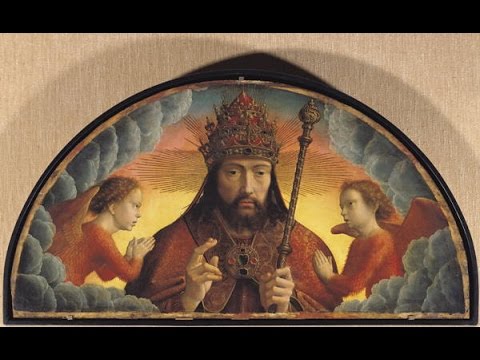
Lecture I in my Psychological Significance of the Biblical Stories series from May 16th at Isabel Bader Theatre in Toronto. In this lecture, I describe what I consider to be the idea of God, which is at least partly the notion of sovereignty and power, divorced from any concrete sovereign or particular, individual person of power. I also suggest that God, as Father, is something akin to the spirit or pattern inherent in the human hierarchy of authority, which is based in turn on the dominance hierarchies characterizing animals.
Q & A Starts: 1:57:25
Producer Credit and thanks to the following $200/month Patreon supporters. Without such support, this series would not have happened: Adam Clarke, Alexander Meckhai’el Beraeros, Andy Baker, Arden C. Armstrong, Badr Amari, BC, Ben Baker, Benjamin Cracknell, Brandon Yates, Chad Grills, Chris Martakis, Christopher Ballew, Craig Morrison, Daljeet Singh, Damian Fink, Dan Gaylinn, Daren Connel, David Johnson, David Tien, Donald Mitchell, Eleftheria Libertatem, Enrico Lejaru, George Diaz, GeorgeB, Holly Lindquist, Ian Trick, James Bradley, James N. Daniel, III, Jan Schanek, Jason R. Ferenc, Jesse Michalak, Joe Cairns, Joel Kurth, John Woolley, Johnny Vinje, Julie Byrne, Keith Jones, Kevin Fallon, Kevin Patrick McSurdy, Kevin Van Eekeren, Kristina Ripka, Louise Parberry, Matt Karamazov, Matt Sattler, Mayor Berkowitz , Michael Thiele, Nathan Claus, Nick Swenson , Patricia Newman, Robb Kelley, Robin Otto, Ryan Kane, Sabish Balan, Salman Alsabah, Scott Carter, Sean C., Sean Magin, Sebastian Thaci, Shiqi Hu, Soheil Daftarian, Srdan Pavlovic, Starting Ideas, Too Analytical, Trey McLemore, William Wilkinson, Yazz Troche, Zachary Vader
--- SUPPORT THIS CHANNEL ---
Direct Support: https://www.jordanbpeterson.com/donate Merchandise: https://teespring.com/stores/jordanbpeterson
--- BOOKS ---
12 Rules for Life: An Antidote to Chaos: https://jordanbpeterson.com/12-rules-for-life/ Maps of Meaning: The Architecture of Belief: https://jordanbpeterson.com/maps-of-meaning/
--- LINKS ---
Website: https://jordanbpeterson.com/ 12 Rules for Life Tour: https://jordanbpeterson.com/events/ Blog: https://jordanbpeterson.com/blog/ Podcast: https://jordanbpeterson.com/podcast/ Reading List: https://jordanbpeterson.com/great-books/ Twitter: https://twitter.com/jordanbpeterson Instagram: https://www.instagram.com/jordan.b.peterson/ Facebook: https://www.facebook.com/drjordanpeterson
--- PRODUCTS ---
Personality Course: https://www.jordanbpeterson.com/personality Self Authoring Suite: https://selfauthoring.com/ Understand Myself personality test: https://understandmyself.com/ Merchandise: https://teespring.com/stores/jordanbpeterson
Source description (no synthesized summary yet).
Peterson argues that Biblical stories, particularly Genesis, represent humanity's multi-millennial attempt to extract and articulate universal psychological and moral patterns through narrative, and that these stories contain deep truths about consciousness, human nature, and proper social organization that remain foundational to Western civilization despite modern secular critique.
- The Bible is a hyper-linked, multi-authored work that has survived because it embodies memorable, archetypal patterns of human experience that resonate across cultures and time
- Biblical stories encode evolutionary wisdom about consciousness, hierarchy, moral behavior, and the confrontation of chaos—patterns discovered through observation of human behavior over millions of years
- Rejecting the metaphysical foundations of Biblical narratives (the image of God in humans, intrinsic human value, consciousness as constitutive to reality) destabilizes legal systems and leads to ideological pathology, as prophesied by Nietzsche and Dostoevsky
This asset isn't compiled yet
You're seeing its claims, ranked. Compile it to build the argument threads, weight them, and check each claim against your library — the full view.
The West is predicated on the principle that even the state is subservient to the individual and that the locus of the divine is the individual consciousness, not collective authority.
“the state is viewed, in some sense, as the entity of salvation... But what happens in the New Testament is that idea gets... deconstructed... I believe that that's the right answer, and I think that the West, in particular, is predicated on that idea. Because it makes the state subservient to the individual. I mean there's a continual dialogue, but in the final analysis the locus of the divine is the individual and not the state.”
The human capacity to think emerges not from abstract reason alone but from the capacity to separate behavioral representation from actual behavior, allowing mental simulation and testing of actions in imagination before embodying them.
“part of the capacity for human abstract thought is that you can pull the behavior, the representation of the behavior, away from the behavior and manipulate the representation before you enact it. That's why you think, so that you can generate a pattern of action and test it out in a fictional world before you embody it and die because you're foolish. Right? You let the representation die, not you.”
Dostoevsky prophesied in 'The Devils'/'The Possessed' that modern rationalistic, utopian, atheistic ideologies would lead to consequences later precisely documented in Solzhenitsyn's 'Gulag Archipelago,' validating fiction as genuine prophecy.
“It's uncanny to read Dostoevsky's "The Possessed" or the "The Devils," depending on the translation, and then to read Alexander Solzhenitsyn's "Gulag Archipelago" because one is fiction and prophecy and the second is hey look it turned out exactly the same way that Dostoevsky said it would for exactly the same reasons”
Systems for detecting and responding to predatory threats evolved hundreds of millions of years ago and are repurposed in human psychology to represent abstract threats and chaos, which is why serpents and dragons appear universally in mythology.
“we seem to represent that which disturbs us deeply using the same system that we use to represent serpentile or other carnvorous predators. You know, we're biological creatures, right? When we've formulated our capacity to abstract... we still have all those underlying systems that were there when we were only animals.”
In the Old Testament, salvation is envisioned as the establishment of a proper state through historical progression, whereas in the New Testament, salvation is relocated from the state to the individual, making personal responsibility and transformation the locus of redemption.
“In the Old Testament, there's this idea... that through a succession of states, the people who behave properly will eventually establish the proper state... But what happens in the New Testament is that idea gets, you could say, deconstructed. And instead of a state being the place of redemption, a state of being becomes the test of redemption. And so the idea that human beings will be redeemed moves from the utopian state vision to the responsibility of the individual.”
The biblical and mythological representation of reality is fundamentally phenomenological—a blend of observable facts and subjective/psychological truth—rather than purely objective, and this makes religious narratives true in a way that is different from but not inferior to scientific truth.
“ancient representations of reality were sort of a weird meld of observable phenomena, the things that we would consider objective facts, and subjective truth, the projection of subjective truth... It's a mix of observation and imagination, right? Because that isn't the world, but it is the way the world appears.”
Understanding is not only abstract knowledge but is embodied and acted out; children in rough-and-tumble play are learning to integrate their body with another's body in harmonious, cooperative, and competitive ways—all instantiated in the body, not as abstract knowledge.
“Understanding isn't just something that you have as an abstraction, it's something that you act out, you know? That's what children are doing when they learning to rough-and-tumble play. They're learning to integrate their body with the body of someone else in a harmonious way and learning to cooperate and compete.”
Pain is the fundamental reality upon which all other claims rest because pain is undeniable—even those who deny it philosophically still believe in it when experiencing it and cannot escape it through logic or rationality, making it the bedrock of existence.
“I think of pain as the fundamental reality because no one disputes it, right? Even if you say that you don't believe in pain, it doesn't help when you're in pain. You still believe in it. You can't pry it up with logic and rationality. It just stands forth as a fundament of existence.”
Dostoevsky's 'Crime and Punishment' precisely depicts what happens when an individual rejects the premise that other people have intrinsic value, and the psychological consequences of this rejection are portrayed with such accuracy that they validate Biblical claims about human nature.
“That's the best... the best investigation of that tactic that's ever been produced Because what happens in Dostoevsky's "Crime and Punishment" is that the main character, whose name is Raskolnikov, decides that there's no intrinsic value to other people... Right? Because, well, why would it be anything else if the value of other people is just an arbitrary superstition?... he finds out something after he kills her, which is that the post-killing Raskolnikov and the pre-killing Raskolnikov are not the same person, even a little bit.”
Ritual and ceremony are deeply important mechanisms for organizing consciousness and behavior; people preserve and perform rituals long after they consciously remember their original justification because ritual works at a pre-articulate level to structure embodied experience.
“The ritual lasts long after the reasons have been forgotten...It's like waking up one day and noting that you really don't know why you put the Christmas tree up.”
The Bible has outlasted kingdoms, empires, and stone structures, demonstrating that a book can be more durable than physical objects because of its capacity to be remembered and transmitted across generations.
“It's very interesting, it turns out that a book is more durable than stone. It's more durable than a castle. It's more durable than an empire.”
Nietzsche predicted in the late 1800s that the twentieth century would see hundreds of millions of people die because the replacement of dream-like religious structures with rationalistic ideology would cause violent oscillation between nihilism and extremism.
“He predicted that in the twentieth century that hundreds of millions of people would die because of the replacement of these underlying dreamlike structures with this rational but deeply incorrect representation of the world. And we've been oscillating back and forth between left and right, in some sense, ever since, with some good sprinkling of nihilism in there, and despair.”
Human beings do not experience positive emotion unless they have an aim and can perceive themselves as progressing toward that aim; attainment itself is actually anti-climactic because it terminates the game and requires generating a new aim.
“the way that we're constructed neurophysiologically is that we don't experience any positive emotion unless we have an aim, and we can see ourselves progressing toward that aim. It isn't precisely attaining the aim that makes us happy. As you all know if you've ever attained anything, because as soon as you attain it, then the whole little game ends, and you have to come up with another game. Right, so it's Sisyphus.”
Human beings are made in the image of God (Genesis 1:27) applies to men and women equally, which is a remarkable and underappreciated achievement in a document from an ancient patriarchal culture.
“I think it's an absolute miracle that right at the beginning of the document, it says straightforwardly, with no hesitation whatsoever, that the divine spark, which we're associating with the word that brings forth being, is manifest in men and women equally. That's a very cool thing.”
Pre-literate cultures store information through oral tradition and embodied practice rather than written text, allowing individuals to maintain vast amounts of knowledge and keep traditions alive across millennia.
“people who aren't literate, they store information quite differently than we do. We don't remember anything. It's all written down in books, right? But if you're from an oral culture, especially if you're trained in that way, you have all of that information at hand. So you can speak and you can tell the stories, and you really know them.”
Rituals and cultural practices can remain relatively unchanged across 10,000 to 20,000 years, as evidenced by bear-worship practices discovered in caves in both Japan and Western Europe, indicating the deep antiquity and stability of archetypal human patterns.
“there are records of rituals that have remained relatively unbroken through up to twenty thousand years, was discovered in caves in Japan that were set up for a particular kind of bear worship that was also characteristic of Western Europe.”
Understanding human beings requires recognizing them as collections of semi-autonomous sub-personalities (motivated subsystems) rather than unified rational agents, each with its own perceptions, desires, and arguments.
“I'm a psychoanalytic thinker. And what that means is that I believe that people are collections of sub-personalities, and that those sub-personalities are alive. They're not machines. They have their viewpoint, they have their wants, they have their perceptions, they have their arguments, they have their emotions.”
Human beings have an intrinsic capacity for religious experience that can be reliably induced through multiple mechanisms (brain stimulation, psychedelic drugs, meditation, music) across all cultures, yet this capacity remains scientifically unexplained.
“no one know why that is. I mean, you can induce it reliably, in all sorts of different ways. You can do it with brain stimulation. You can certainly do it with drugs. There's, especially the psychedelic variety, they produce intimations of the divine extraordinarily regularly.”
Jung believed that dreams contain more information than is yet articulated, and that the dream attempts to express reality that exists outside of fully articulated conscious comprehension, rather than hiding messages behind symbolic disguise as Freud claimed.
“Jung believed the dream was doing its best to express a reality that was still outside of fully articulated conscious comprehension. Because you think, look, a thought appears in your head, right? That's obvious. Bang, it's nothing you ever ask about. But what the hell does that mean?”
English Common Law exemplifies the process described in the Moses narrative: principles are extracted from individual judicial decisions and then articulated into body of law that is literally a 'body'—something people embody through action.
“English Common Law is exactly like that. It's single decisions that are predicated on principles, that are then articulated and made into the body of law. The body of law is something you act out. That's why it's a body of law. if you're good citizen you act out the body of law.”
Consciousness and intrinsic value are foundational to human dignity and rights, and people react extremely negatively when treated as if they don't have consciousness or free will; this negative reaction is itself evidence that consciousness and freedom are constitutive of being human.
“People do not like it when you treat them like they're not conscious. Right? They react very badly to that. And you don't like it if someone assumes that you're not conscious, and you don't like it if someone assumes that you don't have free will.”
The fact that the Bible has 65,000 internal cross-references, with each verse linked to multiple other verses, creates a structure where no interpretation can be exhaustive and the text rewards indefinite analysis.
“And there's sixty-five thousand cross-references, and that's what this map shows. And so that's a great visual representation of the book. And then you can see, well why is it deep? Why is the book deep? Well, just imagine how many pathways you could take through that. Right? I mean you'd just journey through that forever, you'd never ever get to the end of it.”
Without the principle that even leaders are subordinate to something transcendent, dictators emerge unchecked, as happened in the Soviet Union, Maoist China, and Nazi Germany—all of which lacked anything for the powerful to subordinate themselves to.
“That's certainly what happened in the Soviet Union, and what happened in Maoist China, and what happened in Nazi Germany. Because there was nothing for the powerful to subordinate themselves to.”
Modern secular people often underestimate how deeply religious foundations have structured Western thought and institutions; the belief that we can remove religious metaphysics and replace it with pure rationalism while keeping the ethical and legal structures is false—ethics and law rest on implicit theological premises.
“Our body of laws has that metaphysical presupposition, without which the laws fall apart. And that's starting to happen, it really is. The post-modern critique of law. The law schools are overrun by post-modernists who are undermining the structure of Western law.”
Facts (objective reality) do not contain directionality, so you cannot extract how you should act from an array of facts alone; you must overlay objective reality with an interpretive structure that answers the question 'what should I do?' which is the domain of morality.
“You can't extract out an inviolable guide to how you should act from the array of facts that are in front of you. Because there's just too many facts. And they don't have directionality. But you, you need to know. You need to know how how not to suffer. And you need to know what your aim is.”
Human beings are made in the image of God—men and women equally—which instantiates in them something like consciousness, awareness, and the capacity to communicate and participate in creation; denying the divine nature of individual consciousness is denying this image and destabilizes psychology and law.
“In Genesis 1, it relates the idea that human beings are made in the image of the divine, men and women, which is interesting too. [...] I think it's an absolute miracle that right at the beginning of the document, it says straightforwardly, with no hesitation whatsoever, that the divine spark, which we're associating with the word that brings forth being, is manifest in men and women equally.”
The humanities teach proper citizenship and ground people in meaning-making, while mathematics and computer science, though insanely powerful as tools, cannot themselves provide direction about what the tools should be used for—this is the role of the humanities.
“The humanities are there to ground people in proper citizen-hood. That's a way of thinking about it. Yes it makes you powerful, but then the question is, who has the power? Because it might not be you. It might be the mathematics, so to speak, you know? [...] Yes, it has to be a tool of something. And what the humanities were for was to tell people what the tools should be used for.”
Without the cornerstone of religious/mythological understanding, civilization becomes susceptible to psychic and psychological pathology, and people become so irrational so rapidly that even the mysteries of Catholicism would seem rational by contrast—which Peterson claims is already happening.
“People who are adamant anti religious thinkers seem to believe that if we abandoned our immersement in the underlying dream, that we'd all instantly become rationalists like Descartes or Bacon. [...] I don't believe that for a moment, because I don't think there is any evidence for it. I think we would become so irrational so rapidly that the weirdest mysteries of Catholicism would seem positively rational by contrast and I think that's already happening.”
Nations can become possessed by collective dreams and nightmares—fictional visions of utopian or apocalyptic futures—which can manifest as terrifying historical phenomena like Nazi Germany and Soviet communism.
“nations can get caught up in collective dreams. That's what happened to the Nazis. That's what happened to Nazi Germany in the 1930s. It was absolutely remarkable, amazing, horrific destructive spectacle. And the same thing happened in the Soviet Union, the same thing happened in China, it's like, we have to take these things seriously, you know?”
Anxiety during dreams is the primary emotion reported because dreams focus on things that provoke anxiety, making the dream a preliminary attempt to contend with the unknown.
“Dreams often concentrate on things that provoke anxiety. So if you wake people up when they're dreaming, the most commonly reported emotion is anxiety. So the dream is like the first stages of the attempt to contend with the unknown.”
Every single one of a person's ancestors reproduced successfully for three and a half billion years, making each human's existence an 'absolutely unbelievable' achievement, yet humans emerged from dirt and muck conscious and seeking to understand who they are.
“Every single one of your ancestors reproduced successfully for three and a half billion years. It's absolutely unbelievable. We rose out of the dirt and the muck and here we are, conscious, but not knowing.”
In psychotherapy, the evidence shows that directly confronting fears and breaking them into manageable pieces enables mastery, whereas avoidance and suppression lead to escalation and overwhelm.
“we know in psychotherapy, for example, that you're much better off to confront your fears head on than you are to wait and let them find you. And so partly, what you do, if you're a psychotherapist, is you help people break their fears into little pieces, the things that upset them, and then to encounter them one by one and master them.”
Being (phenomenological being—experienced reality) requires consciousness to manifest; time, scale, causality, and existence itself become questions without consciousness, making consciousness a constituent element of reality itself.
“The whole notion of time itself seems to collapse, at least in terms of something like felt duration. And the notion of size disappears, essentially, because there's nothing to scale it. Causality seems to vanish.”
We should understand the Bible rationally and not require leaps of faith that ask people to believe things no one can believe, because the entire project of the Bible is about truth, and starting with lies corrupts the entire pursuit.
“I don't want any uncertainty at the bottom of this. Or I don't want any more than I have to leave in it. [...] Because the people who wrote these damn stories weren't scientists to begin with. [...] So however the people who wrote these stories thought was more like dramatists, more like Shakespeare thought. But that doesn't mean that there isn't truth in it, it just means that you have to be a little bit more sophisticated about your ideas of truth.”
The Bible is primarily a comedy with a happy ending, moving from Paradise at the beginning through historical limitation and suffering to the eventual establishment of a transcendent state beyond suffering.
“The first thing about the Bible is that it's a comedy. And a comedy has a happy ending, right? So that's a strange thing because the Greek god stories were almost always tragic. Now, the Bible is a comedy. It has a happy ending. Everyone lives. There's a heaven. Now, what you think about that is a completely different issue. I'm just telling you the structure of the story.”
Understanding abstract concepts requires embodied experience; you cannot understand 'anger' from a dictionary definition unless you have experienced anger; words refer to experiences that ground them, and without this grounding, language is meaningless circularity.
“Unless you've had the experience of anger, the dictionary can't tell you what anger means. It just refers to other words. But the words themselves refer to something else.”
The reason humans took so long to develop consciousness and self-awareness (7 million years since splitting from chimpanzees, with rapid development only in recent millennia) is that consciousness requires an enormous amount of cognitive capacity and may be encoded and transmitted through cultural systems like stories and myths.
“Chimpanzees don't say 'I am conscious.' It's been seven million years since we broke from chimpanzees. They have no articulated knowledge at all and very little self-representation in some sense, and very little self-consciousness. And that's not the case with us at all. We had to painstakingly figure all of this out during that seven million year voyage.”
The internet is a precursor to consciousness and has more in common with the Bible than either has in common with the difference between chimpanzees and humans; both are collective emergent systems encoding human meaning.
“it's not accidental, because the Internet's also a collective endeavor... The distance between the Bible and the Internet is a lot less than the distance between a chimpanzee and a human being. And the difference between a book and the Internet is also, in some sense it's a matter of degree rather than kind.”
Nietzsche believed that Christianity created the conditions for its own transcendence by training the European mind to interpret everything within a single coherent framework, which eventually enabled people to apply that same disciplined rationality to scientific inquiry and then to question the religious foundations themselves.
“Nietzsche said was that he didn't believe that the scientific revolution would have ever got off the ground if it hadn't been for Christianity. And more specifically, for Catholicism because he believed that over the course of, really, a thousand years, the European mind, so to speak, had to train itself to interpret everything that was known within a single, coherent framework.”
A central achievement of Christian thought is the distinction that even the sovereign ruler is subordinate to divine principle rather than identical with it, preventing the transformation of human leaders into transcendent, all-powerful figures.
“the Christian response to that was, never confuse the specific sovereign with the principle of sovereignty itself. It's brilliant. You see how difficult it is to come up with an idea like that so that even the person who has the power is actually subordinate to something else. Subordinate to, let's call it a divine principle, for lack of a better word.”
The Bible is a mystery because we do not understand how it came about, was put together, or had such unbelievable impact on civilization, nor do we understand what it means that we no longer believe it, or what would happen if we did.
“I'm approaching this whole scenario, this Biblical stories as if they're a mystery, fundamentally. Because they are, there's a lot we don't understand about them. We don't understand how they came about. We don't really understand how they were put together. We don't understand why they had such an unbelievable impact on civilization.”
Valid interpretations of complex texts and of the world are constrained by four factors: (1) the requirement that they protect from suffering across time, (2) compatibility with other people's needs and tolerances, (3) not producing actions that refute the interpretation through their consequences, and (4) neurophysiological embodiment.
“the interpretation that you extract have to protect you from suffering and give you an aim, but it has to do it in a way that's inerrable, so it works across time, and then it has to work in the presence of other people so that you can cooperate with them and compete with them in a way that doesn't make you suffer more... And so an interpretation is constrained by the reality of the world. It's constrained by the reality of other people. And it's constrained by your reality across time.”
When articulated conscious knowledge becomes out of sync with the underlying emotional/dream structure of experience, people become internally dissociated, creating a 'sickness of the spirit' that makes them vulnerable to ideologies, which Peterson characterizes as parasites on an underlying religious substructure.
“if our articulated knowledge is out of sync with our dream, then we become dissociated internally. We think things we don't act out and we act out things we don't dream. And that produces a kind of sickness of the spirit. And that sickness of the spirit, its cure is something like an integrated system of belief and representation. And then people turn to things like ideologies, which I regard as parasites on an underlying religious substructure”
Information about canonical patterns of human behavior is extracted across generations through observation and imitation, distilled through story and art, and embedded in dreams where it becomes accessible for individual and collective use.
“The question still remains: Where does the information in dreams come from? I think where it comes from is that we watch the patterns that everyone acts out. We've watched that forever and we've got some representations of those patterns. That's part of our cultural history, that's what's embedded in stories, in fictional accounts, of the story between good and evil. The bad guy and the good guy. And the romance, you know? These are canonical patterns of being for people.”
Genesis 2 contains the older Jahwist narrative and includes stories of Adam and Eve, Cain and Abel, Noah, and the Tower of Babel, while Genesis 1 is the newer Priestly source dealing with cosmic creation.
“Genesis 2 contains, the Jahwist version, for example, contains the story of Adam and Eve. And that's older than the very first book in the Bible... The Jahwist version uses the name YHWH... And it has a strongly anthropomorphic God... It begins with Genesis 2:4... and contains the story of Adam and Eve, and Cain and Abel, and Noah, and the Tower of Babel”
The God concept in the Bible represents an abstracted ideal extracted from observation of proper function across individuals and hierarchies, beginning with concrete observation of dominant individuals and progressing to abstracted principles of power, sovereignty, and social order.
“You think this is important, and it works because your tribe's alive. And you think this is important, and it works, because your tribe's alive. And so we'll take the best of both if we can manage it, and extract out something that's even more abstract that covers both of us if we can do it... Well it's something like that that's God. It's an abstracted ideal.”
The Trinity concept represents the divine as having multiple manifestations: tradition/father (the accumulation of wisdom across generations), the living individual/son (embodied engagement with the world), and the spirit (consciousness that enables relationship between them).
“There's an idea in Christianity that the image of God is trinity, right? There's the Father, there's the element of the Father, there's the element of the Son, and there's the element of the Holy Spirit. And something like tradition, the spirit of tradition, it's something like the human being as the newest incarnation of that tradition.”
The Johannine formula 'In the beginning was the Word, and the Word was with God, and the Word was God' represents consciousness and its capacity for awareness and communication as a fundamental constituent of reality rather than a mere property of physical matter.
“In the beginning was the word. And the logos is embodied in the figure of Christ. So there's this idea in John that whatever Christ is, the son of God, is not only instantiated in history, say, at a particular time and place... but also, something eternal that exists up, outside of time and space, that was there right at the beginning. And as far as I can tell, what that logos represents is something like modern people, something like what modern people refer to when they talk about consciousness.”
There exists a buffer zone between fully articulated conscious knowledge and complete unknown reality, and this buffer—what we know but not articulately—is accessed through moods, images, emotions, and actions before we can articulate it linguistically.
“there's a very large amount that we don't know about the structure of experience, that we don't know about reality. And we have our articulated representations of the world, and then you can think of outside of that: there are things we know absolutely nothing about. And there's a buffer between them. And those are things we sort of know something about.”
Fiction and narratives can be 'more true' than objective facts because they abstract and represent essential patterns of human experience, just as mathematical abstractions are more real and powerful than concrete instances.
“Maybe it's more true than nonfiction. Because it takes the story that needs to be told about you and the story that needs to be told about you and you and you and you and abstracts that out and says look, here's something that's a key part of the human experience, as such. Right? So it's an abstraction from this underlying, noisy substrate.”
The Mesopotamian deity Marduk, with eyes all around his head and the capacity to speak magic words, represents the principle of leadership as consisting of attention (vision) and proper speech (rhetoric), which transform chaos into order.
“One of the things that's really interesting about Marduk, I'll just give you a couple of his features. He has eyes all the way around his head. He's elected by all the other gods to be king god... And Marduk basically says that if they elect him top god, then he'll go out and stop the flood monster... And he's got eyes all the way around his head. And he speaks magic words.”
Beauty is both a pathway to the divine and a representation of an enlightened consciousness; the heavenly city described in the Bible as paved with gemstones represents not literal wealth but the proper dwelling place for conscious beings.
“Beauty is the proper dwelling place for an enlightened consciousness. And we ignore it at our spiritual and economic peril... they're crystalline, they emit light, it's the proper dwelling place for an enlightened consciousness.”
Music is mysteriously powerful because it is deeply patterned in layers, and this structure mirrors reality's fundamental layered pattern; humans resonate with music because it represents reality at a deep level.
“Music is deeply patterned, patterned in layers, and I think that has something to do with it because reality is deeply patterned in layers. And so I think music is representing reality in some fundamental way and that we get into the sway of that and sort of participate in being.”
The human capacity to voluntarily sacrifice something valuable in the present in exchange for an imagined future benefit is unique among animals and represents an extraordinary insight about how to negotiate with reality; money is one formalization of this capacity and depends on a deeper religious/spiritual understanding of the future as real.
“You can negotiate with the future. Money is like that. Because money is a bargain you make with the future. So we've structured our world so that you can negotiate with the future. And I don't think that we would've got to the point where we could do that without having this idea to begin with.”
Ideological utopianism is dangerous precisely because it tries to create a totality of articulated rules without leaving space for the unknown, the transcendent, or what cannot be systematized; totalitarian systems collapse from internal contradictions once they become complete because they cannot account for the richness and unpredictability of human experience.
“Ideological utopias dispense with the transcendent. They say, 'This is what we need to do.' It's like no, you don't know. That's not good. You have to leave space for what you kind of know and what you don't know.”
Atheists who claim to appreciate the Bible as literature while rejecting its underlying premises are not approaching it with sufficient respect; if something is truly beautiful and poetic, then the underlying premises are being accepted at an experiential level even if the rational mind resists them.
“I don't think that you can see it as beautiful and poetic AND reject the underlying premises because if you see it as beautiful and poetic, you're accepting the underlying premises with your experience of the beauty and the poetics, even though you may be fighting it with your articulated rationality.”
The noble aim is partly to pay attention, to speak properly, to confront chaos, and to make a better world—which is enough of a transcendent aim so that one can stand up without cringing at the thought of one's own existence.
“It was encapsulated in part in the story of Marduk. It's to pay attention, it's to speak properly, it's to confront chaos, it's to make a better world, it's something like that.”
The eternal question of human beings is 'How do you live in the world?' not 'What is the world made of?'—we are the only species that asks this question because we must become aware of it and speak it.
“How do you live in the world? Not what is the world made of. It's not the same question. How do you live in the world? It's the eternal question of human beings. And I guess we're the only species that has ever really asked that question.”
The West rejects formal beauty in contemporary architecture and urban design at great cultural and economic cost, whereas historical European investment in architectural beauty has generated enormous economic returns through pilgrimage and cultural tourism.
“This is especially something we don't take seriously in Canada. I mean, you think about all the hundreds of millions of dollars that were invested into beauty in Europe. I mean, spectacular, excessive investment in beauty that's paid back God only knows how many multiples of times. People make pilgrimages to Europe constantly because it's so beautiful that it just staggers you.”
Chaos in Biblical and mythological narratives is half-psychological and half-real, manifesting when people encounter situations that overwhelm their categories of understanding—through betrayal, loss, or confrontation with the unknown.
“The chaos is what you encounter when you're thrown into deep confusion. When your world falls apart. When you encounter something that blows you into pieces, when your dreams die, when you're betrayed. It's the chaos that emerges.”
Without a noble aim, human beings become desperate, and once desperation takes hold, circumstances deteriorate rapidly because desperation forecloses the cognitive flexibility necessary for effective response.
“without a noble aim, how can you withstand any of that? You can't. You become desperate, and once you become desparate, things go from bad to worse very rapidly.”
What people believe to be true is what they act out, not what they say; behavioral truth is different from objective truth, and morality concerns action rather than abstract principle.
“I'm an existentialist, in some sense. And what that means is that I believe that what people believe to be true is what they act out, not what they say. And so there's lots of definitions of truth. I mean, truth is a very expansive word.”
The fear people express when their ideological axioms are questioned reflects a fundamental terror: they are standing on a raft in the ocean and fear that pulling out the supporting logs will cause them to drown, which reveals the anxiety underlying ideological commitment.
“It's like there's a fundamental truth that they're standing on. It's like they're on a raft in the middle of the ocean and you're starting to pull out the logs. They're afraid they're going to fall in and drown. It's like, drown in what? What are the logs protecting them from?”
The fact that the Bible was assembled from multiple sources that were not completely harmonized suggests the editors valued preservation of diverse perspectives over perfect coherence.
“It's a collection of books with multiple redactors and editors... They weren't going to, you know, tolerate too much editing. But they also wanted it to make sense, to some degree, so it wasn't completely logically contradictory and completely absurd... many people edited it, and many people assembled it over a vast stretch of time.”
Jung's active imagination practice of engaging with imagined figures while awake is preferable to attempting to control dreams, as it allows exploration without foreclosing the spontaneous revelation that comes from genuine dialogue.
“You could always ask yourself what you could learn, too, which is a very dangerous question to ask a dream. Because sometimes you'll find out what you have to learn. That's not so pleasant. But it's really worthwhile... do it with an exploratory purpose in mind... he was exploring it, in some sense, like you'd explore a video game.”
Moses in the Biblical narrative acts as a judge and mediator in the desert, and through repeated experience of maintaining peace by discovering what satisfies conflicting parties, he abstracts the principles of peace into the Ten Commandments.
“Moses acted as a judge in the desert. He was continually mediating between people who are having problems. Constantly trying to keep peace. And so what are you doing when you're trying to keep peace? You're trying to understand what peace is. Right? You have to apply the principles. Well what are the principles? Well you don't know. The principles are whatever satisfies people enough to make peace.”
Knowledge should be thought of as tools for implementation in the world, not as abstract information; the practical question is whether knowledge helps you regulate emotions, reduce suffering, live properly, and stand up to the challenges of existence—knowledge that doesn't improve these capacities is not worth learning.
“I think of knowledge as a tool. It's something to implement in the world. We're tool-using creatures and our knowledge is tools. And we need tools to work in the world. We need tools to regulate our emotions and to make things better and to put an end to suffering to the degree that we can.”
The fear of God (as stated in the Old Testament—'the fear of the Lord is the beginning of wisdom') is equivalent to understanding that you are not in complete control of yourself and that there are great forces beyond your conscious will that move human destiny, which produces humility and caution.
“It says in the Old Testament somewhere that the fear of God is the beginning of wisdom, and I think this is akin to that. If you know that you're not in control of yourself thoroughly, that there are other factors behind the scenes...it teaches you humility to understand that. There's a hell of a lot more going on behind the scenes.”
Dreams are not random neural firing but highly structured narratives that people spontaneously report with perfect narrative structure and mythological coherence, suggesting they are produced by deep cognitive systems attempting to model and integrate reality.
“there's nothing random about dreams. They're very, very structured and very, very complex. And not like snow on a television screen or static on the radio. Like, those things are complicated. And also, I've seen so often that people have very coherent dreams that have a perfect narrative structure. You know, they're fully developed, in some sense.”
An original work of art contains the artist's creative act of perception layered across time, creating a thickness that a photograph (one instant) or a reproduction cannot capture; the painting also carries its historical context, which is part of its meaning and value.
“One of the things he pointed out about a great portrait is that it actually contains time. Because a photograph is one instant. But portrait is you layered on you, layered on you. So it's got a thickness. You know?”
The Elohist source contributes stories of Abraham and Isaac, accounts of the heavenly hierarchy including angels, and the Covenant Code establishing society as predicated on a covenant with God.
“The Elohist source contains the stories of Abraham and Isaac. It's concerned with the heavenly hierarchy that includes angels. It talks about the departure from Egypt. And it presents the Covenant Code, which is this idea that society is predicated (this was Israeli society), was predicated on a covenant with God”
The Deuteronomist source contains the bulk of written law and is independent of Genesis through Numbers, representing a different legislative and historical perspective.
“the final one is the Deuteronomist code, and it contains the bulk of the law, and the Deuteronomic history. And it's independent of Genesis, Exodus, Leviticus, and Numbers.”