What this covers
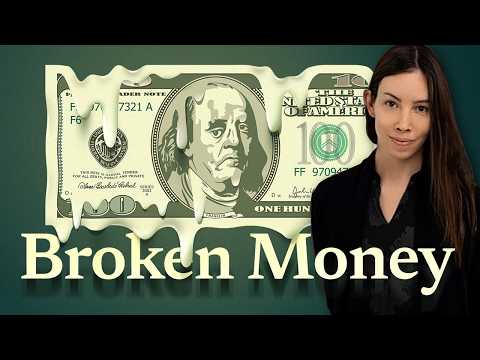
In this 30-minute explainer video, Lyn Alden takes a step back through history and looks into the intricacies of money and banking, offering an answer to an overlooked but extremely important question: What is money?
This video takes core ideas from Lyn's recent book "Broken Money: Why Our Financial System is Failing Us and How We Can Make it Better" and distills them into an easy to consume format.
Read Lyn's Book "Broken Money" here: https://www.lynalden.com/broken-money/
More info & research: https://www.lynalden.com
Video produced by: https://www.tranches.com
Chapter Timestamps: 00:00 - Broken Money Intro 02:35 - What is Money? 07:08 - The Rise of Banking 12:45 - The Global Financial System 20:03 - Centralization & Abstraction 25:40 - Open-Source Money
Source description (no synthesized summary yet).
Len Alden argues that centralized fiat currency systems are fundamentally broken due to hidden dilution and control, and that decentralized open-source cryptocurrencies like Bitcoin offer a viable technological fix by enabling peer-to-peer settlements without intermediaries or inflation.
- Fractional reserve banking and central bank money printing persistently dilute savings and wages while channeling value opaquely to those closest to money creation
- The speed gap between transactions and settlements since the telegraph has required credit abstraction, consolidating power in banks and central banks
- Bitcoin closes the settlement speed gap and enables bearer asset finality without centralized intermediaries, offering the first workable decentralized currency
This asset isn't compiled yet
You're seeing its claims, ranked. Compile it to build the argument threads, weight them, and check each claim against your library — the full view.
Double-entry bookkeeping invented during the Renaissance facilitated increasingly intricate credit arrangements and enabled the emergence of well-known financial institutions.
“with the Advent of the Renaissance in Europe the development of Double Entry bookkeeping facilitated increasingly intricate credit arrangements and the emergence of well-known financial institutions”
The telegraph, completed as a trans-Atlantic cable in the 1860s, revolutionized international communication by enabling instant communication across continents, allowing transactions at the speed of light while physical monetary settlements remained constrained by material transport speeds.
“by the 1860s the telegraph revolutionized communication with the completion of the first cross-atlantic cable enabling instant communication across continents a feat previously unimaginable”
William Stanley Jevons' 1875 book 'Money and the Mechanism of Exchange' recognized that thanks to the telegraph and other rapid communication methods, transactions could occur with minimal reliance on physical metal, showing the financial system was gravitating toward centralization around London.
“in 1875 William Stanley Jans published a book titled money and the mechanism of exchange similar to my 2023 book broken money jevans explored the history of money and the technological advancements surrounding it he highlighted that thanks to to the Telegraph and other rapid communication methods transactions could frequently occur with minimal Reliance on physical metal the Global Financial system was gravitating towards centralization particularly around London where Bankers could efficiently transact through a centralized Clearing House”
William Stanley Jevons recognized that there were approximately 20 times more claims for gold than actual gold reserves existed, cautioning that bankers should never forget these fractionally-reserved claims represented promises that were rarely redeemed.
“jbans also recognized the substantial risks accompanying this growing efficiency he emphasizes that there are approximately 20 times more claims for gold than actual gold reserves he caution that Bankers should never forget that these fractionally reserved claims essentially represented promises for gold even though they were rarely redeemed as such even if just 5% of people simultaneously demanded their gold the system would crumble”
Governments historically prefer currency dilution and other less transparent methods to pay for wars over taxation because taxation is unpopular and can lead to revolts and revolutions.
“taxing for Wars is unpopular and can lead to revolts and revolutions by the people so governments often turn to currency dilution and other less transparent methods to pay for them”
The dollar's central position in global finance greatly benefits the United States geopolitically—allowing it to devalue the dollar through softer monetary policy to diminish purchasing power of creditor nations' reserves, or strengthen the dollar through tighter policy to increase liabilities owed by debtor nations and send them into crisis.
“this greatly benefits the United States geopolitically even though it doesn't necessarily benefit all Americans for instance the United States can devalue the dollar through softer monetary policies thereby diminishing the purching power of currency reserves held by creditor Nations or the United States can strengthen the dollar through tighter monetary policies increasing the value of liabilities owed by dettor Nations and sending them into financial crisis”
Over the past 50 years, very few developing countries have attained developed status, with currency instability forcing them to rely on external currency financing, which ironically contributes significantly to their currency instability, creating a destructive and nearly inescapable cycle.
“over the past 50 years very few develop ing countries have attained developed status the absence of currency stability forces them to rely on external currency financing which ironically contribut significantly to their currency instability creating a destructive and nearly inescapable cycle”
The hawala system in the Middle East and North Africa used paper-based credit instruments and partnerships between money changers (hawaladars) in different cities to enable long-distance value transfers without physically transporting gold, functioning as a precursor to modern banking.
“a popular paper-based Financial instrument in the Middle East and North Africa was the suaga playing a pivotal role in the development of a system known as haala under this Arrangement a hawaladar money changer operated in one city while their business part partner worked at another to transfer money between cities an individual could deposit gold with their local hallar and either they or their recipient could redeem the same amount of gold from a hawaladar in another city this system relied on a network of trust and credit among hawaladars”
In wealthy countries, while headline inflation may not be as high, money concentrates toward an increasingly smaller number of hands over time and more debt accumulates on government ledgers.
“while inflation may not be as high the money concentrates toward a smaller and smaller number of hands over time and more and more debt is piled up on the government Ledger”
Capital controls and points of friction are used to keep people trapped within their regional currency jurisdictions, even in wealthy countries.
“Capital controls and other points of friction are often used to keep them in”
The money supply from most of the 160+ currencies in the world increases rapidly, persistently, and invisibly diluting people's savings and wages while siphoning that value toward others closer to the source of money creation.
“there are over 160 currencies in the world today and the money supply from most of them increases rapidly which persistently and invisibly dilutes people's savings and wages and siphons that value away towards others”
The global financial system has undergone three major structural transformations since 1871: the international gold standard (1871 - early 20th century), the Bretton Woods system (post-WWII to 1971), and the petrodollar system (1970s - present).
“since 1871 this system has undergone three structural transformations after the First Transformation the modern Financial era began with the international gold standard which spanned from 1871 until the early 20th century”
Gold and silver coins dominated all other forms of commodity money for three primary reasons: (1) gold and silver are harder to increase in supply relative to other commodities, (2) coinage with guaranteed size and purity makes them easier to use in transactions than raw metal, and (3) domestically issued coins have higher acceptance and liquidity than foreign coins.
“coins establish dominance over all other forms of commodity money for three primary reasons first gold and silver are harder to INE increase the supply of relative to other Commodities due to their unique properties second coinage with guaranteed size and Purity makes gold and silver easier to use in transactions than raw bits of metal third the acceptance and liquidity of coins issued domestically would generally be higher than that of foreign coins”
Commodity money emerged as a solution to credit and barter, using portable, divisible, durable, scarce, and widely-desired goods like shell jewelry, which served as a universal medium of exchange among hunter-gatherers.
“another solution is to use a commodity as money rather than finding a person who has what you specifically need and where you also have what they specifically need people can use a portable divisible durable scarce and widely desired Universal good as one side of every transaction among hunter gatherers shell jewelry beads served as a common form of money”
The foundational issue with banking is that it requires customers to trust banks to effectively manage reserves, but in gold-based banking systems customers expected on-demand redemption while bankers frequently betrayed that trust by lending out gold reserves.
“the foundational issue with banking lies in the necessity for customers to Trust Banks to effectively manage their reserves in the gold-based banking systems of past centuries customers expected that their deposits and Bank notes could be redeemed on demand however Bankers frequently betrayed that trust as they recognized that most individuals did not redeem all their gold at once which allowed Bankers to lend out some of their gold while maintaining only a fraction for customer redemptions”
When money is borrowed from a bank, it creates additional fractionally-reserved deposits that can be placed in another bank and lent out again, creating a cascade of multiple counting of the same base money—double counting, triple counting, quadruple counting, etc.—burdening the system with many times more claims on gold than actual gold exists.
“when money is borrowed from a bank it leads to the creation of additional fractionally reserved deposits these deposits can then be placed in another bank where they're once again subject to fractural reserve practices and can be lent out immediately repeating the process this cycle results in the double counting triple counting quadruple counting and so on for base money causing the system to be burdened with many times more gold claims than there is actual gold”
Central banks were established to mitigate the impact of fractional reserve banking crises and provide financial support to governments during conflict.
“central banks were established to mitigate the impact of fractional Reserve banking crises and to provide financial support to governments during times of conflict”
The European peace ended with World War I, leading to money printing for wartime purposes and widespread defaults on gold redemption within the heavily leveraged financial system.
“fast forward four decades and this scenario unfolded during World War I the era of European peace came to an end leading to money printing for wartime purposes and widespread defaults on gold Redemption within a heavily leverag Financial system”
Under the Bretton Woods system, it remained illegal for Americans to own gold and they couldn't redeem dollars for gold, but foreign central banks had that privilege, creating an asymmetry that benefited the United States.
“under this system it remained illegal for Americans to own gold and they couldn't redeem dollars for gold but foreign central banks had that privilege”
Since the development of the internet, cryptographers have sought methods for creating decentralized digital currency, with David Chaum publishing a 1982 research paper on how mutually distrustful groups could use cryptography to maintain a shared database or ledger.
“since the development of the internet cryptographers have sought methods for creating decentralized digital currency in 1982 David cha published a research paper on how mutually distrustful groups could use cryptography to maintain a shared database or Ledger”
During the 1990s and 2000s, figures like Adam Back, Nick Szabo, and Hal Finney explored ways to create digital tokens supported by electricity and processing power through a concept known as proof of work.
“during the 1990s and early 2000s figures like Adam back Nick Zabo and Hal fny explored ways to create digital tokens supported by electricity and processing power a concept known as proof of work”
During the early years of Bitcoin's network, no individual entity including the network's creator could change the rules, dilute people's coins, or censor transactions, because the protocol is governed by open-source developers with consensus from node operators and miners.
“during the early years of the network no individual entity including the network Net's Creator can change the rules dilute people's coins or censor transactions the network can however be updated over time in a backwards compatible Way by a revolving set of contributing open source developers Whenever there is enough consensus by the node operators and the miners to do so”
Commodity money provided value storage independence because holders could store value in their own possession without relying on anyone else's memory or liability, while credit agreements required reliance on shared authority and trust.
“holding commodity money in one's own possession also served as a way to store value independently without relying on anyone else's ongoing memory or liability meanwhile various credit agreements represent a shared LED governed by humans either orally or in writing”
A baker can create bread credits as promises redeemable for future bread; if a butcher trusts these credits will hold their promise, a transaction can occur, but the butcher assumes the risk that the baker will remain solvent.
“the baker can create quote bread credits where each credit is a promise that could be exchanged for bread in the future if the butcher trusts these bread credits will hold that promise they make a transaction still the butcher takes on some risks in this case trusting that the baker will remain in business”
In 2016 and 2022, Egypt (with over 100 million people) drastically devalued its currency by half relative to the dollar at the bidding of the IMF, forcing people to see both their savings and ongoing wages (denominated in local currency) lose value.
“in 2016 Egypt home to over 100 million people drastically devalued its currency by half relative to the dollar and repeated this devaluation again in 2022 both actions taken at the bidding of the international monetary fund when such devaluations occur not only do people see their savings lose value but their ongoing wages denominated in local currency units also suffer”
At the 1944 Bretton Woods conference, Britain advocated for a system centered around a neutral reserve asset (the Bancor), while the United States pushed for pegging all currencies to the dollar with the dollar itself tied to gold, and the US proposal prevailed.
“in 1944 as the Allied Forces neared Victory representatives from 44 countries convened in Bretton Woods New Hampshire to design the future Global Financial system Britain advocated for a system centered around a neutral Reserve asset called a banker while the United States pushed for pegging all currencies to the dollar with the dollar itself tied to Gold the US proposal prevailed”
Full reserve banking requires that all demand deposits be fully backed by liquid reserves and that loans be funded by time deposits of equal or longer duration, matching deposit duration to loan duration to maintain stability.
“one way around this problem is with full Reserve banking in this approach all demand deposits which can be Redeemed by depositors at any time must be fully backed by liquid reserves and any loans that a bank makes must instead be funded by time deposits with an equal or longer duration so if a bank offers a 2-year loan it should be supported by certificates of deposit with at least 2 years of duration this practice of M matching durations leads to a more stable system because it avoids making commitments about liquidity that cannot always be fulfilled”
When a central bank is established with monopoly status, all banks are required to deposit reserves with it, creating a centralized fractional reserve system even at the central bank level, which perpetuates the same instability problem.
“when a central bank is established and granted Monopoly status by the government all banks are required to deposit their reserves with the central bank which holds the gold on their behalf this setup involves fractional Reserve practices even within the central bank that manages the reserves”
Despite being largely unbacked by anything material, the United States still held the world's largest economy, military power, and global dollar network effects from the Bretton Woods era, which enabled the petrodollar system.
“during this period the United States still held the world's largest economy military power and Global dollar Network effects from the Breton Woods era”
This technology helps pierce the 160 different fiat currency bubbles that people are trapped in: cash and gold can be blocked at airports and bank transfers are tightly controlled, but people can send bitcoins directly to others across borders or bring their bitcoins with them by writing down or memorizing their 12-word private key.
“this technology is helping to pierce the 160 different fiat currency bubbles that people are trapped in cash and gold can be blocked in airports and Bank transfers are tightly controlled but people can send Bitcoins directly to other across Borders or bring their Bitcoins with them as they move around the world just by writing down or memorizing 12 words representing their private key”
The third stage of negotiability requires the existence of large and widely recognized institutions, otherwise merchants would not accept these bank notes.
“this third form relies on the existence of large and widely recognized Institution otherwise Merchants would not accept these Bank notes”
Central banks' inflation mandates ensure that prices continually increase instead of declining despite improving technology that should make things cheaper over time.
“improving technology should make things cheaper over time but Central bank's inflation mandates are to ensure that prices continually increase instead by continually expanding the amount of money in the system”
By the late 1960s it became evident that the Bretton Woods system was destined to fail, prompting President Nixon to terminate gold redeemability in 1971, ending the gold standard entirely.
“by the late 1960s it became evident that the system was destined to fail prompting President Nixon to terminate gold redeemability in 1971”
The petrodollar practice extended to other OPEC countries, with the result that for a substantial period almost all global energy trade was denominated in dollars.
“this practice extended to other OPEC countries giving rise to the Petra dollar system and for a substantial period almost all Global energy trade was denominated in dollars”
In 2009, Satoshi Nakamoto released the open source application implementing Bitcoin, and the Bitcoin time chain was born, enabling for the first time peer-to-peer digital value transfer without intermediaries.
“in 2009 Nakamoto released the open source application to implement his design and thus the Bitcoin time chain was born”
In barter systems, the number of unique trading pairs grows combinatorially: with 5 products there are 10 trading pairs, with 20 products there are 190 trading pairs, and with 100 products there are 4,950 trading pairs, making direct barter inefficient at scale.
“when this barter system scales to an economy that produces five different products it results in 10 unique trading pairs with 20 different products there are 190 trading Pairs and with 100 different products that number of trading pairs grows to 4,950”
In 1974, the Nixon Administration struck a deal with Saudi Arabia requiring it to exclusively sell oil in dollars, accumulate dollar surpluses, and invest them in US government bonds in exchange for lucrative arms deals and military protection, establishing the petrodollar system.
“in 1974 the Nixon Administration struck a deal with the Kingdom of Saudi Arabia requiring that Saudi Arabia would exclusively sell its oil in dollars accumulate dollar surpluses and invest those surpluses in US government bonds as reserves in return the US would offer lucrative arms deals and Military protection”
While fractional reserve banking functions well most of the time, it occasionally experiences catastrophic failures due to excessive claims on money compared to available reserves.
“while this system functions well most of the time it occasionally experiences catastrophic failures”
The failure rate for currencies around the world is very high, with severe hyperinflation impacting Brazil (1990s), Argentina, Yugoslavia, Zimbabwe, Venezuela, Poland, Kazakhstan, Peru, Bulgaria, Ukraine, Lebanon, and several others since the 1980s.
“the failure failure rate for currencies around the world is very high in the 1990s Brazil at the time the fifth most populous country in the world experienced severe hyperinflation since the 1980s or later hyperinflation has impacted other nations such as Argentina Yugoslavia Zimbabwe Venezuela Poland Kazakhstan Peru Bulgaria Ukraine Lebanon and several others”
Nigeria, with over 200 million people, experienced 133% annualized price inflation over the past decade, and Turkey and Argentina (combined population 130+ million and G20 members) have struggled with runaway inflation for years.
“Nigeria with a population of over 200 million people has witnessed an annualized price inflation rate of 133% over the past decade turkey and Argentina both esteemed members of the G20 nations with a combined population exceeding 130 million people have struggled with runaway inflation for years”
The global inflation surge following negative yielding bonds greatly eroded the purchasing power for bondholders, creating a situation where central banks' inverted incentive structure caused substantial losses for savers.
“this upheaval in the financial system inverted incentives and a global inflation surge in the ensuing years greatly eroded the purching power for those Bond holders”
Even in wealthy countries, monetary policy doesn't make sense: from 2016 to 2021, Europe and Japan grappled with negative-yielding bonds valued at over $18 trillion, where lenders had to pay for the privilege of lending to governments and major corporations.
“even in wealthy countries money often doesn't make sense from 2016 to 2021 Europe and Japan grappled with negative yielding bonds valued at over 18 trillion instead of earning interest for Lending to governments and major corporations individuals had to pay for this privilege”
Between 2020 and 2022, the United States increased its public debt by over $8 trillion, a significant portion of which was effectively printed by the central bank, equating to more than $60,000 per American household, but the average American family received far less stimulus.
“between 2020 and 2022 the United States increased its public debt by over $8 trillion a significant portion of which was effectively printed by the country's Central Bank this equates to more than $60,000 per American household however the average American family has not received anywhere near this amount of stimulus”
Bitcoin works because anyone can run an open node on a simple device like a laptop, all nodes store the full history of the ledger, users possess private keys enabling them to sign transactions, and miners contribute electricity and processing power in exchange for transaction fees and newly generated coins.
“Bitcoin works because anyone can run an open node on a simple device such as a laptop and these nodes all store the full history of The Ledger users possess private Keys enabling them to sign transactions and pay fees to move coins or fractional coins between addresses miners contribute electricity and processing power to add new transaction blocks to The Ledger in exchange for receiving transaction fees and new coins that are generated in each new block”
Following World War II, most countries faced severe devastation except the United States, which represented over 40% of global GDP and assumed a central role in designing a new international financial system.
“following the war most countries except the United States faced severe Devastation so the United States representing over 40% of the global economy assumed a central role in a new International Financial system”
For the past 15 years, Bitcoin has been refined in various ways, tested for robustness against attacks, and copied by competitors to see if there's a better way, but it has continuously remained the largest, most liquid, most decentralized, and most secure cryptocurrency.
“for the past 15 years Bitcoin has been refined in various ways tested to see how robust it issue attacks and copied by competitors to see if there's any way to do it better so far it has continuously remained the largest most liquid most decentralized and most secure cryptocurrency”
To fix money in the digital age, a powerful method would be to make it more decentralized, open, and transparent so that it strengthens people as individuals while shattering the financial silos that separate them.
“if we're going to fix it in the digital age a powerful method would be to make it more decentralized open and transparent so that it can strengthen people as individuals while at the same time shattering the financial silos that separate us”
What is needed is an entirely new system that cannot be changed at the flip of a switch, is decentralized, permissionless, and open source.
“perhaps what is needed is an entirely new system one that cannot be changed at the flip of a switch one that is decentralized ized one that is permissionless one that is open source”
Money is fundamentally a ledger for payments and savings, not a specific physical object or medium.
“ultimately the answer to the question of what is money is that money is a ledger for payments and savings”
In a world where half of the population lives under varying shades of authoritarianism and billions of people live with persistently high inflation, the ability to fracture the 160 currency silos and connect them together should not be underestimated.
“in a world where half of the population lives under varying shades of authoritarianism and billions of people live with persistently High inflation the ability to fracture these 160 currency silos and connect them together should not be underestimated”
In earlier centuries, currency debasement unfolded slowly because there was no swift method to diminish the value of coins held by people; it required taxation, melting, recasting, and re-introducing lower quality coins into the economy. However, when individuals predominantly held deposits and paper claims backed by gold in central bank vaults, governments could sever gold redemption by a stroke of a pen, enabling rapid printing of vast amounts of money.
“in earlier centuries when governments aimed to De base their currency for war financing the process unfolded slowly there is no Swift method to diminish the value of coins held by people instead it requireed taxation melting renting and re introducing lower quality coins into the economy however in a scenario where individuals predominantly hold deposits and paper claims backed by gold stored in Central Bank faults the ability to sever gold Redemption becomes a matter of a stroke of a pen allowing for the rapid printing of vast amounts of money”
After 1971, the challenge for the unbacked monetary system was that while governments could compel their citizens to use currency for domestic transactions, they could not force other governments to trust unbackedledgers for global trade, creating a legitimacy crisis for the dollar system that required geopolitical justification.
“after 1971 the world found itself in an entirely unbacked monetary system marking a significant departure from previous eras while governments could compel their citizens to use currency for domestic transactions the challenge lay in trusting other government's unback ledgers for global trade”
This shift from direct material settlement to credit abstraction granted banks and central banks significant power because they effectively monopolized fast long-distance value transfers, and eventually they could drop material transfer from the system altogether.
“this shift granted Banks and central banks significant power as they effectively monopolize fast longdistance value transfers eventually they could just drop material transfer from the system altogether and to find money entirely around Central Bank ledgers”
Bitcoin has been volatile, reaching higher highs and higher lows in market value and adoption cycle after cycle, but this volatility is expected during the adoption phase of a new monetary standard.
“although it has been volatile Bitcoin has reached higher highs and higher lows of market value and adoption cycle after cycle”
The emergence of private stablecoins that enable collateralized dollar tokens to trade on multiple blockchains provide people in highly inflationary countries easier access to US dollars for savings, though this is more centralized than Bitcoin.
“however this te technology has also catalyzed the development of more centralized digital currencies private stable coins for instance enable collateralized dollar tokens to trade on multiple blockchains providing people in numerous highly inflationary countries easier access to US dollars for savings”
The current era marks a fork in the road offering two distinct paths: one toward Central Bank Digital Currencies representing ever more centralized systems with precise control and authority, and another toward Bitcoin and open-source cryptographic technologies enabling rapid digital settlements without credit.
“this era marks a fork in the road offering two distinct paths going forward over the past Century and a half within the telecommunication age the Global Financial system has gravitated toward increased centralization abstraction and inflation driven by the Gap and speed between transactions and settlements and relying on ever expanding credit to bridge this Gap most Technologies in the past that made money more efficient have come at the cost of making it more centralized and controlled on One path going forward Central Bank digital currencies can continue the prior trend of ever more centralized systems that enable precise control and authority and dilution by nation states over their citizens on the other path the emergence of Bitcoin and other open- source cryptographic Technologies facilitating rapid digital settlements without the need for credit in a peer-to-peer manner charts a course that diverges from this trend leading toward a more decentralized streamlined and deflationary monetary system”
The important point is not who is taking advantage of the system or maintaining it, but that the system itself is fundamentally broken and outdated by design.
“the details vary by country and although there is plenty of blame to go around the important point is that the incentives themselves are corrupt the heart of the problem does not lie with specific individuals taking advantage of the system or even those maintaining the system the problem is that the system itself is simply broken and outdated”
Money is a shared ledger, prompting the central question of who governs this ledger—early credit systems were governed by local communities, commodity money by natural laws, fiat currencies by banks and nation states, and open-source decentralized money like Bitcoin is governed by its users and selected by market forces.
“money is a shared Ledger prompting the central question of who governs this Ledger early Credit Systems were governed by local communities commodity money abided by natural laws Fiat currencies came under the jurisdiction of Banks and nation states and open- Source decentralized money like Bitcoin is governed by its users and selected by market forces”
Central banks took on the role of managing ledgers for their respective countries, with the Bank of England historically and the US Federal Reserve in the present serving as global ledgers that bound international trade together.
“central banks took on the role of managing the ledgers for their respective countries and notably the bank of England in the past and the US Federal Reserve in the present have also served as the global ledgers that bound International Trade together”
The World Bank and International Monetary Fund were created following the Bretton Woods conference as key components for enticing, enforcing, and regulating the post-war international monetary system.
“the creation of the World Bank and international monetary fund followed the Bretton Woods conference serving as key components for enticing enforcing and regulating the system”
In modern times, money has been broken because it is centralized, closed, and corrupted in 160 different ways, with each currency jurisdiction having its own control and dilution mechanisms.
“in modern times our money has been broken because it has been centralized closed and corrupted in 160 different ways”
Flexible social credit—where transactions can be deferred with unspecified future repayment expectations—emerges when barter timing becomes a constraint, particularly in family and friend networks.
“suppose you have extra Spears and are short on Furs while I have extra Spears and Furs but I don't need anything from you if you ask me for refers I could give you some in exchange for an unspecified favor at a later date this is called flexible social Credit in settings with family and friends gifts are exchanged as a form of social credit with no specific expectation of repayment”
Bitcoin is the first workable way to quickly send money long distances without relying on centralized intermediaries and credit, and it comes with its own finite unit of account that cannot be diluted.
“in other words it's the first workable way to quickly send money long distances without relying on centralized intermediaries and credit and it comes with its own finite unit of account that cannot be diluted”
In larger communities, credit systems formalize into systems where a borrower must promise to repay a specific value at a specific time, with a local authority enforcing the rules.
“in larger settings credit systems adhere to a more formal type of credit in these systems a person can borrow some value in the present but they must promise to repay it later and there's often some local Authority that sets the rules regarding how credit is handled”
In free banking (absence of central bank), banks safeguard their own gold, issue deposits and bank notes redeemable for gold, and must typically follow government regulations on their operations.
“in the absence of a central bank a system is typically referred to as free banking under a free banking Arrangement Banks Safeguard their own gold issue deposits and distribute Bank notes redeemable for gold although they still normally have to follow regulations placed on them by the government”
Many central banks and governments abandoned gold-backed currency to create a new global financial system based on fiat money rather than commodity backing.
“eventually many central banks and governments abandoned gold back currency alog together to create a new type of Global Financial system”
At its core, the global financial system facilitates international trade settlement and external financing between different countries.
“at its core the Global Financial system facilitates international trade settlement and external financing between different countries”
Negotiability is the financial property that allows a financial instrument to be transferred to another party, making it more broadly applicable and liquid.
“in financial jargon negotiability means that a financial instrument can be transferred to another party which makes it more broadly applicable and liquid”
Non-negotiable financial instruments can only be redeemed by the specific party named at issuance, limiting their utility and requiring trusted relationships.
“in the initial stage a simplistic non-negotiable paper instrument can only be Redeemed by the specific party as specified in its original Creation”
The global financial system's rail structure for moving money and credit is highly intricate and evolves over time due to technological advancement and geopolitical shifts.
“the rails that move money and credit are highly intricate and their structure evolves over time due to technological Advan ments and shifts in geopolitical Dynamics”
The speaker approaches understanding money as she would any complex system—by taking it apart and understanding how it works—drawing on her background as an engineer.
“before that I was an engineer building taking apart and understanding complex systems I view money as another system I must take apart to understand”
To understand the monetary system from the top down, one must start at the bottom and work upward, building from fundamental principles.
“for us to understand our monetary system from the top down we must start at the bottom and work our way up”
The speaker grew up in poverty, which gave her a strong interest in saving and investing, and now analyzes and invests in the global financial system professionally while being able to observe monetary problems both in the United States and Egypt.
“I grew up in poverty which from a young age gave me a strong interest in Saving and investing in my adult life my husband and I split our time each year between the United States and Egypt since our shared Roots families and friends are in both places so I see firsthand the troubles that broken money can cause both subtly in a developed country and more overtly in a developing one”