Fundamentals of HVAC - Basics of HVAC
What this covers
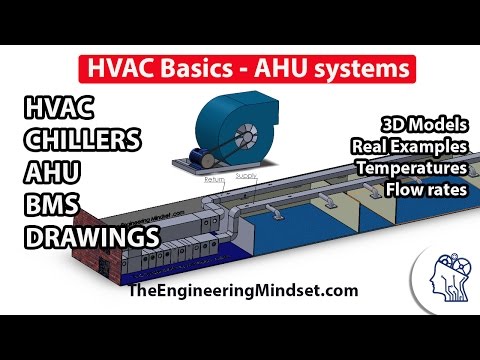
In this video we look at the basics of a HVAC system. Looking at models of a typical system and showing photos and videos of real world examples to build your fundamental understanding of building services engineering.
LEARN MORE HERE: https://theengineeringmindset.com/hvacr/
⚡🛠️ TOOLS YOU NEED 🛠️⚡ ************************************** Get this HVACR book ➡️ https://amzn.to/3XFCaKC Professional Multimeter -➡️ https://amzn.to/3xu2Vaw Good multimeter -➡️ https://amzn.to/3xrbuTd Professional clamp meter ➡️ https://amzn.to/4140FnK Good Clamp meter ➡️ https://amzn.to/3xqt2is Energy monitoring plug ➡️ https://amzn.to/3SkfPl7 Battery tester -➡️ https://amzn.to/3S3fHWI Basic electronics kit ➡️ https://amzn.to/3xuLiqS
MY FAVOURITE GEAR 🎥 My camera - https://amzn.to/3YCZ7Q9 🎤 My Microphone - https://amzn.to/3YYXsUC ⌨️ My Keyboard - https://amzn.to/3lBsl33 🖥️ My monitor - https://amzn.to/415BGjW 🎧 My headphones - https://amzn.to/3lN7R7u
😎 Get your Engineers T-shirts, Hoodies, Cups & stickers here: ******************************* https://engineeringmindset.store/en-gbp
☕ Buy Paul a coffee to say thanks ******************************* PayPal: https://www.paypal.me/TheEngineerinMindset
🙏 Support us on Patreon ******************************* https://www.patreon.com/theengineeringmindset
🕵️ Check out our website! ******************************* http://TheEngineeringMindset.com
👥 Socialise with us ******************************* FACEBOOK: https://www.facebook.com/theengineeringmindset TWITTER: https://twitter.com/TheEngMindset Instagram: https://www.instagram.com/engineeringmindset/ YouTube: http://www.youtube.com/theengineeringmindset TikTok: https://www.tiktok.com/@theengineeringmindset
👀 Links - MUST WATCH!! 👀 ******************************* How water cooled chiller works Prt1 - https://youtu.be/0rzQhSXVq60 How water cooled chiller works Prt2 - https://youtu.be/3ZpE3vCjNqM How Air cooled chiller works - https://youtu.be/0R84hLprO5s How Absorption Chiller works - https://youtu.be/Ic5a9E2ykjo How Heat Pump works: https://youtu.be/G53tTKoakcY Primary & Secondary system: https://youtu.be/KU_AypZ-BnU Fan Coil Units: https://youtu.be/MqM-U8bftCI VAV Systems: https://youtu.be/HBmOyeWtpHg CAV Systems: https://youtu.be/XgQ3v6lvoZQ VRF Units: https://youtu.be/hzFOCuAho_4 HVAC Basics: https://youtu.be/klggop60vlM Heat Exchangers: https://youtu.be/br3gkrXTmdY Pumps: https://youtu.be/TxqPAPg4nb4 How a Chiller, Cooling Tower and Air Handling Unit work together - https://youtu.be/1cvFlBLo4u0
🔧🔨 Tools you need 🔧🔨 ******************************* VDE Screwdriver set: http://amzn.to/2jd4lQc Ratchet Screwdriver set: http://amzn.to/2iDLRsC Drill bits: http://amzn.to/2hK4BG1 Multi set square: http://amzn.to/2hIpWiY Level: http://amzn.to/2BaHSLJ T handle hex allen key: http://amzn.to/2z9OEjs Digital vernier: http://amzn.to/2hI5K0D Hammer: http://amzn.to/2hJj0lw Calculator: http://amzn.to/2z99yPx Multimeter: http://amzn.to/2Bbq5no Magnetic wristband: http://amzn.to/2iEnA5z Gorilla tape: http://amzn.to/2zqxiTm #HVAC #refrigeration #engineering
Source description (no synthesized summary yet).
This video explains the core components and operation of a basic HVAC system, focusing on how an Air Handling Unit (AHU) conditions and distributes air to building spaces by filtering, heating, cooling, and controlling humidity while managing fresh air intake and return air recirculation.
- AHUs are the central mechanism that supplies heated, ventilated, and air-conditioned air to maintain correct temperature, humidity, and CO2 levels in building spaces
- The system uses layered filtration, coil-based heating and cooling, fans for air movement, and dampers for controlling fresh air vs. recirculation ratios
- Building Management Systems (BMS) automate all controls in real-time, measuring temperature, humidity, pressure, and other parameters to optimize system performance
This asset isn't compiled yet
You're seeing its claims, ranked. Compile it to build the argument threads, weight them, and check each claim against your library — the full view.
An intake mesh grill on the outside of an AHU prevents large debris, animals, and other foreign material from entering the system, protecting fans and internal components from damage; this grill must be cleaned periodically as it accumulates debris.
“We've got some Sumi if you [imagine], this is the outside of the building so we've got two grills just on here and This is just a mess and all that's really doing is stopping [7:43] any any material coming into the ahu and I'll just show you an example there of one of these grills catching a lot of rubbish, so this was intake was positioned near [the] bins of the building and If this mesh hadn't have been there Then this could have potentially [been] sucked into the fans”
Filter material thickness determines how much dirt and germs it captures; thicker filter material captures more contaminants, but requires the fan to work harder, increasing electricity costs.
“the thickness [of] of this filter material is what's going to? capture the the most dirt and germs ETc that's going through there”
Pressure differential sensors are installed on filter panels to measure the pressure drop across the filter, indicating how dirty it has become; marking clean and dirty reference points on these gauges allows maintenance staff to determine when filter replacement is needed during walk-around inspections.
“One way to monitor how dirty the filters are becoming is to install these Pressure differential sensors onto the sides [and] the panels this is just the manual reading so you can see here [32:37] It's reading in Pascal's on the bottom and and into the water on [the] top and This will change as the the pressure increases across there”
Drain lines under coils must be installed on an incline and include a bend (trap) to prevent water from flowing backward and air from being sucked in; water condensing from the air on cooling coils drains through these lines into the building's drainage system.
“[underneath] the coils, you're probably going to find that there is drain and drain lines coming out And I haven't drawn it on this example here, but I will show you what they look like in the real world so they're going to look a bit like this with the drains coming out and You go into you bend there to stop the flow coming back And that just comes down this pipe which is on an incline and heads down to the drain”
Belt drives connecting motors to fans wear out and can break over time; a properly functioning BMS system will detect a sudden loss in motor speed and stop the motor, though preventative maintenance should be planned to avoid belt failure.
“I mentioned the belt drive there These belts also need to be replaced periodically they will break And they will wear down in fact I've got an example here so this is a broken [V] belt used on them one of the pages and You can see there. It's just completely snapped and this has had to be replaced If you've got the good control system in the on the BMS system. It will pick up that Sudden [46:54] Loss that step and and it will activate act on that, and it will stop the motor from running obviously, you should have a good maintenance regime in place to Plan preventative maintenance to actually stop this occurring, but it will happen from time to time”
A frost protection sensor detects if incoming air temperature drops to around 5°C and triggers electric heating to warm the air; this prevents pipes within coils from freezing and bursting, which would leak fluid into the air stream.
“We've got a frost sensor here, so this is a temperature sensor, and that's detecting if the Air coming in is Probably around [five] degrees Celsius that that's the typical kind of alarm setting So if it drops below that then this heating valve here will open and that will [54:35] Heat the Air it will supply heat to it So here is a frost temperature sensor. You can see there. It's set at Five degrees, so if it temperature gets to that point it will kick this on this is an electrical one So it's just going to add Heat the electrical elements inside and that will warm that air up in there and bring it above five degrees because if it got too cold, and it hit the pipes and that could Cause your the the pipes within the coils to burst [55:09]”
Air inlet and outlet ducts in an HVAC system should not be positioned too close together to avoid recirculation, where rejected air is immediately sucked back into the fresh air intake.
“It's obviously Important not to have these two [ducts] too close together Because you just get recirculation So the ideally these would not be positioned so close, but you know for example, and you can see how this is working I've left it so close in the real world. Do not do this. Yeah, don't put it as close [as] that”
Damper control is based on outside air temperature and CO2 levels in the room or return air; when conditions are favorable (appropriate outside temperature, CO2 levels not too high), dampers modulate to recirculate some air back into the system, reducing the load on heating and cooling coils and saving energy.
“if the conditions are right Then it will channel some of that back in and that means that [21:52] The heating coil will not need to do as much work, or maybe the cooling coil Maybe the humidifier Will not need to work So you'll save money by by returning some of that air Back into the system obviously there will be some fresh air. It's usually about 10 percent of the [all] the air coming in the going around the system has to be fresh”
Induction motors powering HVAC fans have data plates listing electrical specifications (kilowatts, amps); variable frequency drives (VFDs) or variable speed drives (VSDs) can control motor speed by changing the frequency (e.g., from 50/60 Hz down to 40 Hz), which reduces fan revolutions and volume of air delivered to the space.
“You'll notice that this one [has] got Some vFDs on its and vSTS variable speed drives or variable frequency drive and they control the speed of the induction motor which is connected to the fan and [15:29] fans obviously pushing that so if you change the speed of the induction motor if you change the frequency that it's operating at from 50 or 60 Hertz down to 40 Hertz maybe then you'll slow the revolutions of the induction motor down, and that's directly connected [to] the to the fan or maybe not directly coupled it it might be on a belt drive, ETC, but You can change the flow the volume of flow volume of air into the space through these here”
Air intake contains surprising amounts of dirt and muck including pollen, skin debris, tire rubber from roads, and automotive emissions that must be filtered before reaching building coils and occupants.
“There is a surprising amount of dirt, and just muck that comes in with the air and you want to get rid of that filter out Before it hits the coils”
Chilled water produced by the evaporator in a chiller is pumped through a riser system to enter the AHU, where it passes through a coil that cools the air; the water then returns through the riser, having absorbed heat from the warm return air, and eventually cycles back to the chiller's evaporator to repeat the process.
“Here we've got the evaporator on the bottom of the chiller [3:53] And that's where the chilled or the cool cold water is Produced so that chilled water is then pumped up through the riser and then enters taps off of there enters the floor and then enters into the ahu and we're going to be looking at how that and that gives off It's cool there so that cool water called water chilled water will be entering into our coil inside there and [4:27] And the water then returns through that into the riser there”
Bag filters are the second line of defense in an AHU after panel filters; they have jagged/pleated edges extending back a certain distance that increase surface area for capturing dirt that passes through panel filters.
“The second line of defense there is your panel your bag filters evil and [30:55] These actually kind of these jagged edges, so the bags go back a certain distance [and] that they will change that and that changes if you imagine the surface area that it can capture”
Chilled water should enter cooling coils at the base and exit at the top (counterflow to gravity) to maximize heat transfer efficiency, because gravity assists the water's rise and gives it extra time to shed heat; if water enters from the top, gravity's momentum causes it to move too quickly through the coil without giving up all its heat.
“it's good to have this connected so that the flow The coldest water is coming in and the height is water going in And it's entering through the base of the coil and passing through you'll get much greater efficiency [out] [of] this because it's going against The Force of Gravity so it gives a little bit extra time and just to give off its heat if you can think the other way then it's got that extra momentum of Gravity, so [36:33] It will pass through there and not all of it will give up all of its heat [but] this is maybe a step Advanced step and we don't need to worry so much [about] it yet”
Some cooling coils use refrigerant systems with thermal expansion valves instead of chilled water; refrigerant lines split and branch to multiple coils with thermal bulbs at the bottom to meter refrigerant flow and control cooling.
“The cooling cause might also be provided Cooling cool by a refrigerant system, and they were going to look something like this [41:27] These are just the thermal expansion valves. They're running down with the thermal bulb down at the bottom here and these are just running into the coil on the inside and The core on that one will look a bit like this with the branches coming in And separating off as a few [thins] on this one instead but Just going back there you can see the refrigerant lines coming in and splitting off and going to each of the [42:00] The coils that are coming and looping around there”
HVAC systems include electrical isolator switches that can cut power to fans and motors; these isolators must be switched off before entering or working on an AHU because rotating fans can cause serious injury (loss of arm or finger).
“It's obviously important to switch off any fan. That's inside here first Cut the power because it's obviously very dangerous and you might get sucked in and potentially lose an arm or a finger or something, so Please make sure you was to do that”
100% fresh air (no recirculation) requires full conditioning of all supply air through heating, cooling, and humidification coils, making it energy-intensive compared to recirculation strategies.
“it's really expensive to do that, so if you imagine if you if you didn't have this connection here then All that air that you bought in brought in would have to be filtered heated and then cooled And then you've spent all that money in the in in the heating and the cooling Remember that the cooling is coming from that chiller and the chiller costs a lot of money to actually produce that cold water”
Minimum fresh air intake is typically around 10% of total air supply, required by building standards to maintain occupant health and indoor air quality despite energy costs.
“obviously there will be some fresh air. It's usually about 10 percent of the [all] the air coming in the going around the system has to be fresh, but [there] will be Some set points in the BMs the building management system. Which will control all that”
Simple HVAC models and examples are appropriate for beginners learning building services, while acknowledging that real systems can be far more complex than introductory explanations.
“but you know it's important that we start off with the More simpler systems they can get far more complex than this, but this would be a great video just to get your Understanding your level of knowledge built up, so you can move on to those ones”
Multiple AHU configurations exist in real buildings (single per floor, roof-mounted serving multiple floors, basement-mounted serving above) adapted to building geometry and tenant requirements.
“This could potentially be Positioned on the roof and these could be supplying all the floors below this could be in the basement it could be Feeding all the floors above up to a certain height [or] it could be in this example way. You've got one ahu per floor”
An induction motor bolted to a frame is connected via belt drive (rubber belt on pulleys) to a fan inside the AHU; as the motor spins, it rotates the fan blades, which draws air in from the sides and back and compresses it into the ductwork, creating a pressure difference that drives air through the system.
“we've got an induction motor and [that's] bolted down usually to a frame because these are pre-built systems and That's going [roll] off to the pulley and then this is put onto a belt drive and the end of the belt. This is a rubber Wire frame mesh belt and that goes off to another pulley which is connected to [44:10] the fan blades inside here”
BMS systems log fan run hours, enabling facilities managers to schedule replacement and maintenance based on equipment service life rather than guesswork, improving value-for-money.
“We also got some run hours here for the fan. So you know? How how long they've [been] running for and then you can do [your] proper maintenance and also do some energy analysis ETC? And know your time value of money for your plant equipment. So you know that every? [56:14] X amount of hours these fans will need to be replaced or maintenance will be carried out of them”
In schematic diagrams of AHU operation, a plus sign on a component indicates it is adding energy (heat), while a negative sign indicates it is removing energy (cooling)
“it's going through the filters the fan is pulling that in You've got the bag filters there And then it passes into the heating coil you can see that because it's a plus because it's adding energy Into that stream of air next will pass directly into the cooling coil and you see that because it's got a negative because it's taking energy out of that system”
Panel filter packaging includes information on size, product description, manufacturer name, and critically, airflow direction, which must be installed correctly so air passes through in the proper direction
“You'll also find some information on the side of most Er panels So you can see the size there you've got the product description and the company who makes it But you've got the size of the filter there... But more importantly you've got the direction of airflow. So you know how to install that within the ahu How to slide that in so that the air will be passing through this way and out off Into the supply duct it's important to get that round the right way”
Fins on heating and cooling coils dramatically increase effective surface area compared to bare pipes, allowing air rushing across the coil to absorb or release thermal energy instead of bypassing gaps between pipes.
“So to improve the heat transfer [38:36] of this heating or cooling coil we put these fins all the way across the pipes, and that allows the heat in there to To transfer and and conduct through the these fin sheets of aluminium May be stainless steel or something but that travels across and that allows that air That's passing through to capture that heating or cooling energy Thermal energy off of [these] things”
Coil fins are very delicate and can be dented if struck, and damaged fins reduce heat transfer efficiency, but combs can be used to straighten bent fins to restore performance
“they really are very fine sheets of metal very delicate as well if you knock them it will dent them and it will damage them You can get some combs to bring those out as well”
Manual maintenance tracking without BMS logging cannot provide value-for-money estimates because maintenance timing is guesswork rather than based on objective service hour data.
“and if you're doing it manually then you have to guess you might not get value for money like that”
An HVAC system's primary function is to supply heated, ventilated, and air-conditioned air to building spaces while ensuring correct temperature, humidity, CO2 levels, and freshness of air to keep occupants comfortable.
“it supplies the heated ventilated and [air-conditioned] air To to the space and it ensures that it is the correct temperature the Correct humidity and also the correct Level of Co2 the correct freshness of air in that room to keep the occupants”
Temperature sensors are mounted on the outside or top of AHU units with rods extending inside the unit to measure air temperature at various points (e.g., at heating coil inlet); these measurements are sent to control systems to dictate how coils should operate.
“Just show an [example] of a temperature sensor here, so this is bolted to the side of the unit maybe onto the top of it and this would be various ones, and there's a [57:20] Rod coming Inside the unit they're taking measurements of the temperature of the air And you may have noticed at the top here this tube sticking out? Sticking through the top that is your temperature sensor right there that's taking the measurement going on [onto] this heating coil here And will dictate through the controls. How that should operate in response to that”
The plant room in a building contains all mechanical and electrical assets that control power and air conditioning, and is typically an area where occupants in offices never go or have knowledge of its existence.
“We've got an area within the building known as a plant room and Within there is where all the mechanical and electrical? assets are kept so this is where all the engineers will be and usually people who are in the offices in these areas here and Will never see this and they'll have no idea that This is actually in in their building and well their power and air conditioning ETc is all controlled from [7:10]”
Humidifiers in AHUs add moisture to air by spraying fine water mist (or in some systems using steam) to increase the water content of the air, maintaining indoor humidity levels for comfort and to control static electricity in offices.
“this is a Humidifier here, so it's got water coming in and it's just spraying this out these small induction motors here, I Just spraying that water [out] the very very fine mist [51:47] And and as that sprays out, and it creates the mists of that then goes off, and that's what hugh? hugh millet II to the air increases the water content of the air”
Fresh air velocity can be measured and converted to volume flow rate if ductwork size is known, allowing BMS systems to calculate and monitor the volume of fresh air being supplied to the building.
“So you can measure? how many here is meters per second are coming in if you know the [the] size of the Ductwork then you can obviously calculate the volume flow [rate] coming in”
AHU access panels are equipped with handles or keys that allow technicians to open them for inspection, maintenance, and repairs including filter changes and belt replacement.
“on the Edge uses on the on the pounds you can access you'll see These handles here you might have [handle] so it might just be a panel key fitting in this instance here they've [got] the panel keys there to run do these and just lift those off and In this case you would just turn these and that one the hook and that will allow the entire panel to come off”
AHU designers may bring in filter specialists who advise on what filter material should be used based on industry standards for the specific application
“The age you designer may even even bring filter specialist in and they will advise you what? What filter material you should use there's some standards which you can look up and read as well”
Backwards curved fan blades are a common AHU fan design that is fairly efficient compared to other fan types, and blade design affects airflow visualization and performance characteristics
“You'll notice that this fan here has backwards Curved fans there are a lot of different designs. You can have this is fairly efficient There's a new type of fan out. Which is actually much more efficient than this, but I like this one Just because you can you can really? Visualize what's happening”