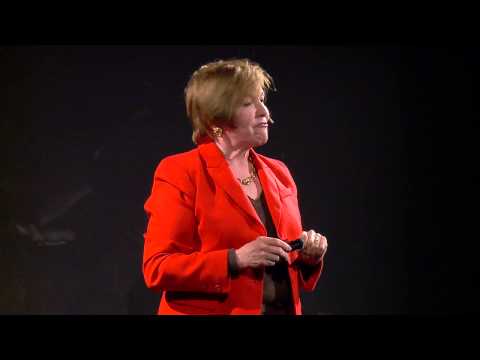
Improving early child development with words: Dr. Brenda Fitzgerald at TEDxAtlanta
What this covers
Dr. Brenda Fitzgerald is leveraging the simple practice of talking to babies and toddlers to nourish their brains and set them up for better performance in school and life.
About TEDx, x = independently organized event In the spirit of ideas worth spreading, TEDx is a program of local, self-organized events that bring people together to share a TED-like experience. At a TEDx event, TEDTalks video and live speakers combine to spark deep discussion and connection in a small group. These local, self-organized events are branded TEDx, where x = independently organized TED event. The TED Conference provides general guidance for the TEDx program, but individual TEDx events are self-organized.* (*Subject to certain rules and regulations)
Source description (no synthesized summary yet).
Language exposure in early childhood is a fundamental determinant of lifelong health and economic outcomes, rivaling public health achievements like vaccinations and sanitation in its transformative potential, and must be prioritized through systematic interventions like the 'Talk with Me Baby' program.
- The Hart and Risley study demonstrated that by age 3, children from professional families had heard 30 million more words than children in poverty, predicting vocabulary gaps, reading ability, high school graduation rates, and lifetime socioeconomic outcomes
- Language exposure drives neurological brain development through repeated neural stimulation; without it, neurons prune and die, decreasing learning capacity irreversibly
- Reading at grade level by third grade is the critical pivot point: children not reading on level are 4-6 times more likely to not graduate high school, directly linking early language to poverty, health insurance access, and employment outcomes
This asset isn't compiled yet
You're seeing its claims, ranked. Compile it to build the argument threads, weight them, and check each claim against your library — the full view.
By the end of age three, children from professional families had heard 30 million more words than children in poverty, with professional families speaking over 2,000 words per hour to their children compared to approximately 600 words per hour for families in poverty.
“there were 30 million more words that those families that were identified as professional families...those mamas and daddies, said to their children than the children in poverty. For those families in poverty, those parents were only saying about 600 words an hour. For the professional families, it was over 2000 words an hour.”
Third grade reading ability is a critical pivot point in education: up to third grade, children 'learn to read,' and after third grade, children 'read to learn.' If a child cannot read at grade level by third grade, they cannot read the texts used in subsequent grades and may never catch up.
“Third grade is important in the whole part of human learning because up to third grade you learn to read. After third grade, you read to learn. If you cannot read on level by third grade, you can't read the text, so you can't keep up. You may never catch up.”
Language is a profound predictor of health and wealth that can be determined by three years of age, making it a more fundamental indicator than other early markers.
“There is a profound predictor of health and wealth that can be determined by three years of age. And that predictor is language.”
Deaf children can learn language through sign language, which is symbolic language requiring interaction, proving that language learning depends on interactive engagement with symbols, not auditory hearing per se.
“And children who are deaf can learn language. 'Thank you,' in sign language is language, it is symbols that mean something. It's language. So it's not the hearing, but it's the interaction that is most important.”
The 'Still Face Experiment' from the Harvard Child Development Center demonstrates that babies are hard-wired to engage with caregivers and respond negatively when that engagement is withheld, progressing from attempts to elicit response, to frustration, to hopeless crying.
“This is called the 'Still Face Experiment.' What happened is the mothers are instructed to turn away and then turn back to the child and have a still face...first, she tries to engage. 'Ah-ah,' smiles, coos, points...And all of a sudden, she starts to get frustrated, nothing is catching attention, there is this screech, 'Ahhhhh.'...And then she dissolves into hopeless crying. It's hard-wired.”
The third grade reading problem in Georgia is NOT caused by neighborhood, income, genetics, or lack of other resources, but rather by insufficient early exposure to language—a modifiable, solvable problem.
“it is not the neighborhood, it's not the income, it's not the genetics, it's the exposure to language, the early exposure to language.”
Language learning requires interactive engagement with a caregiver; babies placed in front of televisions do not learn language even if they hear words, because it is the interaction—not merely hearing—that is essential.
“it's not just hearing the words. Because babies put in front of televisions, it's like the Still Face Experiment, they don't learn. They don't learn, because it is the interaction.”
The Hart and Risley study found long-term effects lasting beyond the initial three years: five years later (at approximately age 8), the vocabulary gap had expanded from the original 500 vs 1,000 words at age 3 to a gap in standardized test performance at third grade.
“They looked at these same children five years later, and they found that they could tell that the gap had increased between those children. It'd gone from 500 to 1000 words to the ability to pass standardized tests at third grade.”
The speaker's core message as a state health officer of Georgia is simple but important: 'Talk with your baby.'
“My message to you as a state health officer of Georgia today is really simple, but I think it is important. And my message to you is: talk with your baby.”
Modern advances like bypass surgery and CAT scans, while valuable, may add only a year or two to life expectancy compared to the transformational gains from basic public health measures like clean water, effective sewers, vaccinations, and antibiotics.
“Bypass surgery and CAT scans are great; they may add a year or two. But those transformational changes are from more basic, primary, primitive public health initiatives.”
Babies learn language through interaction with their caretakers (mothers and primary caregivers), making this dyadic interaction the fundamental mechanism of language acquisition.
“how we learn language is from our caretakers. That means mothers and babies have this unique experience.”
In Georgia, 70 percent of children do not read at third grade level, a statistic that has profound implications for the state and individuals involved in terms of educational attainment and lifetime outcomes.
“Now, the problem in Georgia is that 70 percent of Georgia's children do not read on third grade level. 70 percent. That has profound implications for the state and profound implications for the individuals that are involved.”
Babies are hard-wired to learn different languages, with a huge growth spurt in brain capacity (increase of at least a third) occurring in the last part of pregnancy right before birth.
“There is a huge growth spurt, a huge increase in capacity in the brain by at least a third that occurs in the last part of pregnancy, right before babies come into this world. And I can tell you that babies are hard-wired to learn different languages.”
Children not reading at grade level by third grade are four times more likely to not graduate from high school; children severely behind in reading are six times more likely not to graduate.
“For those children who are not reading on level by third grade, they are four times more likely not to be able to graduate from high school...If you are really behind in reading, there's a six times greater chance that you won't graduate from high school.”
The Office of the Budget for the House of Representatives conducted a study of the War on Poverty that started in the 1960s and found that the United States spent approximately five trillion dollars on it, yet the poverty rate only decreased from 17.3 percent in 1965 to 15 percent in 2012.
“The Office of the Budget for the House of Representatives recently did a study, and they looked at the evaluation of the war on poverty that was started back in the '60s, and according to our budget office, we've spent five trillion dollars on it. And here's what's happened to the poverty rate. In 1965, when it started, the poverty rate was 17.3. In 2012, after five trillion dollars, it is 15.”
Georgia is at the very bottom of the pack (lowest tenth of the country) in the 'American's National Health Rankings' cluster related to literacy at third grade, with associated problems including high numbers of children in poverty, high failure to graduate from high school, income disparity, lack of health insurance, underemployment, and unemployment.
“The other cluster where they were at the very bottom of the pack, where we are at the lowest tenth of the country, has to do with this whole business about literacy at third grace. We have high numbers of children in poverty, high numbers of failure to graduate from high school, high numbers of income disparity, lack of health insurance, underemployment, unemployment. All of this caused by our lack of ability to read on level at third grade.”
Hart and Risley conducted intensive observational research on 42 families for one hour per month from when children were seven months old until age three, discovering differences in children were NOT due to physical care, race, gender, or financial resources, but rather to the quantity and quality of language interaction with parents.
“Their work was an extreme, involved, deep observation of family life. They went into the homes of 42 families, and they had an intense observation of those families...from the time their children were seven months of age until the end of the third year...First of all, the children were all well-cared-for...it was not about race, it was not about gender. And here's the key: it was not about money...It was determined by the interaction of the parents with the child.”
At the end of three years, babies born to welfare parents had learned 500 words, while babies in professional families knew over 1,000 words—a doubling of vocabulary that corresponds to the 30 million word exposure gap.
“At the end of the three years, those babies that were born to welfare parents knew 500 words, while those babies in the 'professional' families knew over a thousand words.”
If words are not repeated in a child's environment, the opposite neurological process occurs: neurons shrink and die away in a process called 'pruning,' which decreases the ability to learn.
“if those words are not repeated, the opposite occurs. Those neurons shrink and die and go away. The scientific word is pruning. But what it means is, it decreases the ability to learn.”
Language drives neurological brain development: each time a word is said, it stimulates a neuron; when that word is repeated, the same neural pathway is stimulated again, strengthening it and creating branching capability for learning.
“Each time a word is said, it shoots up the neuron, it stimulates the neuron. And when that word is repeated, that same path is stimulated again, and it'd get stronger and stronger and stronger, and it branches out so there's capability of learning.”
We are on the precipice of the next transformational change in public health, which is the deep understanding of the importance of language development and the determination to ensure absolutely universal, effective early language development.
“I believe that we are on the precipice of the next transformational change in public health. That transformational change, I truly believe, is the deep understanding of the importance of language development, and the determination that we have absolutely universal, effective, early language development.”
In Georgia, 50-60 percent of babies qualify for and are enrolled in WIC, and with 159 WIC offices across Georgia's 159 counties, there is geographic reach to every part of the state.
“50 to 60 percent of Georgia's babies qualify and are in WIC. 50 to 60 percent...and WIC is everywhere, there are 159 counties in Georgia, and we have 159 or more WIC offices in Georgia...There is not a single place in Georgia that you can't get to a WIC office.”
The lack of progress against poverty despite five trillion dollars in spending is not because poverty-alleviation efforts were unsuccessful, but because the interventions did not identify and address the root cause of poverty early enough, and they did not include language as a critical factor.
“I present to you, I think the problem is we didn't look for the answer to the problem early enough, and we weren't including language. We have to include language. Language is the very basis of solving the problem of poverty.”
'Language nutrition' is the concept that the development of neurons and brain capacity is biologically dependent on language exposure, directly leading to the ability to read, which in turn leads to high school graduation and college education.
“This whole process is language nutrition. And what it means is that language is absolutely important for the development of the brain. Language is absolutely the basis from which all human learning occurs...the development of neurons, the development of the brain, is absolutely, biologically dependent on language, which leads directly to the ability to read, which leads directly to graduation from high school, which leads directly to college education, or high school education.”
Professional families engage in constant, interactive talking with their babies using descriptive, affectionate language ('Oh, your diaper needs to be changed. Oh, bless your heart, I'll take care of that.' 'Oh, look at those toes. Aren't those toes wonderful!'), whereas this level of verbal engagement is absent in families in poverty.
“For the professional families were having constant talking with their baby. 'Oh, your diaper needs to be changed. Oh, bless your heart, I'll take care of that.' 'Oh, look at those toes. Aren't those toes wonderful! Oh, and look at that belly button. That is the cutest thing I've ever seen. You are my beloved child.'”
The Women, Infant and Child Nutrition Program (WIC) is different from food stamps because it requires participants to visit a nutritionist every three months and only allows purchases of specific foods, making it a point of contact where language nutrition education can be integrated with food nutrition education.
“Now, WIC is different from a regular food stamp program. In WIC, you don't just get a little plastic card and go to the grocery store and do whatever you want. In WIC, you have to come to see us, every three months to see a nutritionist. And you can only purchase certain foods with your WIC card.”
The 'Talk with Me Baby' program includes evaluation components to measure effectiveness: Georgia is evaluating the average number of words children in WIC clinics know, then implementing videos coupled with nutritionist reinforcement at every three-month visit emphasizing that language nutrition may be even more important than food nutrition.
“So we have evaluated the average number of words that the children in our WIC clinic know. And we are going to start the videos, and we are going to couple it with the reinforcement - remember those every-three-month visits for pregnant women and children? We are going to reinforce that with the nutrition saying to them, 'Food nutrition is important, but language nutrition may be even more important for your baby.'”
In 1900, the three leading causes of human death were pneumonia, tuberculosis (TB), and diarrhea, and the interventions that dramatically reduced these causes—clean water, sewers, vaccinations, and antibiotics—were responsible for the transformational increase in life expectancy.
“in 1900, the things that were killing us, the three killers of human beings in 1900, was pneumonia, TB, and diarrhea. And I can also tell you that the things I mentioned - clean water, sewers, vaccinations, antibiotics - those are responsible for the expected change in life expectancy.”
The 'Talk with Me Baby' initiative is producing videos for WIC clinics to teach mothers about early language development, including specific guidance that babies are born recognizing their mother's voice and that language engagement should begin in utero.
“We hired the Marcus Foundation to come up with some videos, and these videos will be played in the WIC clinics. And they'll tell these young mothers...It'll tell them such things as a baby is born recognizing its mother's voice, therefore when you start talking to your baby, it's when your baby is still in the womb.”
Georgia is implementing a public-private partnership called 'Talk with Me Baby' involving United Way, The Anne E. Casey Foundation, Public Health, the Department of Early Child Care and Learning, and The Marcus Foundation, designed to change the paradigm around early language development.
“So we are involved in a public-private partnership called 'Talk with me baby.' And this is to solve this problem that we have here in Georgia. This is a public-private partnership. It involves United Way, it involves The Anne E. Casey Foundation, it involves Public Health, it involves the Department of Early Child Care and Learning.”
The Marcus Foundation is involved in developing tools to teach healthcare providers (nurses, hospitals, doctors) how to communicate to patients about the importance of early language learning and how to implement it.
“The Marcus Foundation, which is one of our partners, they are involved in developing the tools to teach healthcare providers, to teach nurses, hospitals, and doctors how to tell their patients about this, the importance of early learning, and also how to tell their patients how to do it.”
Language is the essence of what it means to be human, distinguishing humans from animals which have only noises or gestures for communication.
“Language is the essence of what it means to be human. Now, animals may have noises or gestures that they can communicate with, I can assure you my cat can get me up out of the bed at five o'clock in the morning because he is hungry, but human beings are much more adept and much more facile at language.”
Life expectancy at the time of Christ was 20-30 years, remained at 20-30 years one thousand years later, but is now 80+ years today—a transformational change driven not by modern medicine (bypass surgery, CAT scans) but by basic public health initiatives.
“Life expectancy at the time of Christ was 20 to 30 years. Life expectancy for human beings a thousand years later was 20 to 30 years. Today, you people sitting out there, your life expectancy is 80 years or more.”
The Oxford Unabridged English Dictionary contains 600,000 different words that English-speaking people can know, demonstrating the vast capacity for human language acquisition.
“I can tell you that language in the Oxford Unabridged English Dictionary, there are 600,000 different words that American, that English people can know.”
During her own pregnancy, the speaker experienced an acute awareness of her unborn daughter and a shift in attention, where she became concentrated on her pregnant belly and was not interested in anything more than ten feet away—a firsthand experience of the mother-baby bond.
“all of a sudden, I was acutely aware of my unborn daughter. All of a sudden, this woman that had been interested in the outside world was only concentrated on my pregnant belly. I wasn't really interested in anything more than ten feet away from me.”
When mothers leave WIC clinics as part of the 'Talk with Me Baby' initiative, they will take home a book, which the speaker believes will 'change the dynamics here in Georgia.'
“And when that mama goes home from the WIC clinic, she's going to be taking a book. I really think that ... this will change the dynamics here in Georgia.”