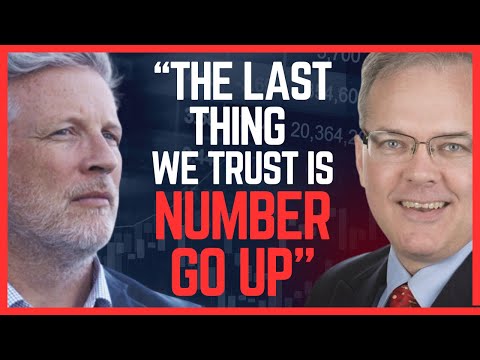
Making Sense of Markets in a Post Election World | Grant Wiliams and Ben Hunt
What this covers
In this episode of Excess Returns, Matt Zeigler is joined by Ben Hunt and Grant Williams for a candid discussion of the 2024 post-election landscape and its implications for markets. The guests explore how trust, or lack thereof, shapes both political and market narratives, examining the transformation of capital markets into what they describe as a "political utility" where "number go up" has become the prevailing faith.
Key topics include:
Analysis of shifting market dynamics and investment philosophies The challenges of maintaining long-term perspective in a speculation-driven environment How inflation and institutional trust impact market behavior The distinction between investment and speculation in modern markets Practical considerations for navigating uncertain economic conditions
This wide-ranging conversation offers valuable insights for investors trying to understand the intersection of politics, markets, and human behavior in today's complex financial landscape.
0:00 Intro 02:17 Discussion of 2024 election predictions and analysis begins 20:45 Post-election market analysis begins ("number went up") 30:22 Inflation discussion begins 39:30 Global markets and international perspective discussion begins 43:47 Capital markets transformation discussion - "The business is the stock price" 47:09 Discussion of what could "break" the current market system 54:47 Trust in markets vs trust in institutions discussion 58:09 Practical implications and advice for investors 1:04:11 Ben Hunt's three key investments: children's education, home, and business 1:08:00 Closing thoughts and summary
MORE INFO ABOUT GRANT https://www.grant-williams.com/
MORE INFO ABOUT BEN https://www.epsilontheory.com/
SEE LATEST EPISODES https://excessreturnspod.com
FIND OUT MORE ABOUT SUNPOINTE INVESTMENTS https://sunpointeinvestments.com/
FOLLOW MATT Twitter: https://twitter.com/cultishcreative LinkedIn: https://www.linkedin.com/in/matt-zeigler-a58a0a60/
Source description (no synthesized summary yet).
Markets have been transformed into political utilities since 2008, and while 'number goes up' as long as political stability holds, individual investors must recognize this reality, extend their time horizon beyond daily trading, and shift from speculation to genuine investing in resilient businesses and personal expertise rather than trusting in perpetual central bank support.
- Capital markets function as political utilities where the state ensures 'number goes up' for social fabric stability, not based on fundamentals
- Individual trust in institutions, government, and neighbors has collapsed, leaving only blind faith in market appreciation as the final plank of trust
- Shifting from speculation to investing requires choosing resilience and longevity over growth, extending time horizons to 5-10 years, and investing in expertise and personal assets rather than chasing daily gains
This asset isn't compiled yet
You're seeing its claims, ranked. Compile it to build the argument threads, weight them, and check each claim against your library — the full view.
After the Lehman Brothers collapse in September 2008, Ben Hunt's portfolio was up 5% the day Lehman failed because he had correctly positioned with credit default swaps, but then realized the critical question: 'who's going to pay me?' when counterparties are disappearing.
“it was in September of 08 it was the day that uh Leman uh went out so um I was sitting there in my office uh I was short everything had credit default swaps the right places Leman was no longer a counterparty for me so and um you know my portfolio we were up... 5% that day when Leman went out and I remember you know four o00 ding ding ding sitting there I was say was a good day that was a good day... it hit me like a ton of bricks which was that um who's going to pay me”
Rick Rule's insight: 'Don't confuse brains with a bull market'—success in a rising market does not indicate skill or intelligence, only that you benefited from favorable conditions.
“and we always you my friend Rick rule always says this great lines don't don't confuse brains with the full Market he's absolutely right”
Markets have been transformed into political utilities since the 2008 financial crisis, meaning central banks and governments will take whatever actions necessary to prevent sustained equity market declines, making market appreciation a proxy for political stability rather than economic fundamentals.
“Capital markets have been transformed into a political utility since the great financial crisis right and and what that means is that so long as we have political I'll call it stability right the number will go up”
Donald Trump received 81% of the vote from American charismatic Pentecostal church voters, representing approximately 22% of the electorate or 70 million Americans, a voting bloc with its own media ecosystem that is largely invisible to mainstream media observers.
“this voting block and it's like 22% of the electorate it's like 70 million Americans... they voted 81% for Trump... they have their own crowd watching the crowd media Network that I am totally oblivious to”
The primary debate performance in which Biden's cognitive limitations became publicly undeniable served as the inflection point that shifted the entire 2024 election narrative, having far more impact on outcome than most observers initially recognized.
“after that first debate you know it was say people you have no idea what an enormous shift this is... that event had legs far beyond what even I thought existed so I I I really think that was the whole Tipping Point for all of this”
Ben Hunt's personal investment allocation does not include a personal trading account and is concentrated in three areas: children's education, principal residence, and his own business—deliberately excluding financial markets despite having retirement holdings.
“I don't have a personal account you know I'm not involved you know doing the the market I have retirement account which is in the political utility but my not just wealth what little there is but my attention my energy my heart is in three Investments right I I am levered long to my children's education my home my principal residence and my business”
The Congressional Budget Office projects 7-8% deficits for the foreseeable future; the question is not if but when these deficits will matter economically, and treasury yields have been rising (with the market 'repudiating' the Fed's rate cuts), signaling that the market anticipates higher rates ahead.
“the CBO report a couple of months ago sees 7 8 % deficits as far as the I can see um you know we we can see where this is going the question is when will it matter if it ever matters I think the movement in treasury yields has been interesting particularly after that after that cut you know the market is kind of repudiating that and they may play along here and there but the market is very much repudiating that and and telling you that we see where this is going and it's it's going to mean higher rates”
The Harris campaign collapse after Biden's debate performance was a tipping point with legs far beyond what even sophisticated observers expected; the debate event and its aftermath marked the whole turning point for the election.
“the third piece and it gets back to your point quite mad about how after that first debate you know it was say people you have no idea what an enormous shift this is in what we all know that we all know about the Biden presidency which is that it's over it's done and that was that event had legs far beyond what even I thought existed so I I I really think that was the whole Tipping Point for all of this”
The Democratic narrative response to Trump's victory will involve introspection and examination, while the Republican narrative will involve celebration and confidence in forward movement, but structurally the underlying problems both parties face remain identical and intractable.
“the interesting thing to me is the problems are the same now that they were on November the 4th um we would have seen uh we would have seen a very different response from uh a Democrat Administration... both were like to result in more inflationary pressure and more uh pressure on unemployment”
When a 'everything bubble' bursts (as opposed to contained bubbles like tech in 2000 or housing in 2007), there is no hedging strategy that works because there is nowhere to be positioned that is safe; this is the fundamental crisis Ben is trying to anticipate.
“when you've changed the whole system when it's a when it's an everything bubble which basically we have it's an everything bubble when that bubble bursts that's different from oh the commercial banking system there's a bubble that bursts there and uh you know us home prices there's a bubble that burst there those are contained bubbles those aren't bubbles of everything what do you do and I I don't know how you prepare for the bursting of the bubble of everything I don't know”
There are three events that could break the core belief that central banks will bail out markets: (1) a major war, particularly with China, (2) a major pandemic, for which institutional trust is already destroyed and public resistance will be active and organized, and (3) interest rates hitting 6% on their way to 8-10%, which would break the system entirely.
“I think there are three things that can happen where that may not be true so you ask kind of when what you know waiting for the story to break I I think one is a um War uh that can break it and by War I mean like with China yeah I think that can break it I think another plague could do it I I think because I look our trust in our institutions of Public Health is broken it's gone absolutely gone and that was absolutely and you know I'm a big believer in science and the vaccines and masks and everything else Tony fouchy he he ruined I mean the destruction of trust in public health it's it's something we never get over it's something we never get over because the next plague and there will be another plague we will not respond and we will not respond well because these very serious functions that we all need have been politicized past the point of cartoon so you know is inflation coming back absolutely inflation is coming back because that's what we humans do will there be a response to it I mean there'll be a cartoon response to it but I don't know this is what I call the great Ravine we're we're going we we're going down into a a a period of time that's going to be no fun but that's just that's just where we are right now that's yeah it just is is what is I think that that that idea of a cartoon response band is so true right we're in we're it's Road running W kyot making all these grand gestures you know cooking up all these cockamamy schemes and spending all this time thinking of this lever and that button and I push this and I pull that rope and when he crosses that I'll get him and it's great entertainment but it never actually works but this you know this this the inflation thing I saw um Jim banog posted something on on Twitter the other day which uh I I just couldn't have approved it loud enough you know it's this idea that inflation um is is two very different lines you know the line that the FED looks at when they think about inflation is this right it's a rate of change and they're trying to get the Peaks lower and they're trying to avoid the the ones below the line and they're trying to keep it very contained but to to everybody else who's infected by inflation it's a horizontal line it's in a line of affordability and once that 2% a year creeps up and if wages don't keep with them you cross this line that's horizontal of affordability and once you go past that line and a lot of people have now yeah it doesn't matter if it's 2% or 20% I can't afford it I can't afford 2% more I can't afford 20% more but I can't afford 2% more and that that changes people's approach and I think for a lot of people we we're pass that line now”
Capital markets have been transformed into a political utility since the 2008 financial crisis, meaning the state recognizes that 'number go up' is necessary for social fabric stability; as long as political stability holds, the number will go up, but this is not based on fundamentals or genuine productive returns.
“Capital markets have been transformed into a political utility since the great financial crisis right and and what that means is that so long as we have political I'll call it stability right the number will go up that's that's what it means to be a political utility it means that the state recognizes that the number must continue to go up for social the social fabric to remain intact”
Inflation will come back not because of specific policy tools like tariffs, but because of behavioral 'Animal Spirits'—when the stock market and crypto are open season for gains, 'people raise prices because they can and so they will' as a function of confidence and available opportunities.
“so it's Katie Bar the Door in terms of whatever you need from a regulatory perspective to make money and so people are so people are anyway that's that's my take on it...but specifically on inflation and this gets to to Grant's point about you know it's already baked in the cake so inflation is not some government CPI number it's not inflation is is the actual pricing and decision making of households and businesses and I got to tell you when it's KY bar the door on the stock market and crypto and everything like that this is that phrase Animal Spirits right people raise prices people raise prices they they because they can and so they will and people will pay higher prices so is inflation coming back of course inflation is coming back”
Individual investors should extend their time horizon beyond daily/weekly market noise to 5-10 years, as most narrative shifts and policy changes don't affect the long-term outcomes of resilient businesses.
“you know all the things that have happened to them that have been great and they've made a lot of money... don't don't confuse brains with the full Market he's absolutely right um there's a fundamental shift that has to happen here if you're going to survive for the long term... give yourself the time and the space to be thoughtful and not get caught up in the noise... okay what are my objectives for the next five years 10 years”
The inflation crisis 'genie' released during pandemic stimulus can never be fully returned to the bottle; aggregate price levels have reset to a permanently higher baseline, and meaningful deflation to previous price levels would require severe economic contraction.
“the genie was never stuffed back into the bottle... the genie is out... the fastest rate hiking session in history to make up for it and that at least got it to stop going back up but we're at a much higher Baseline level inflation the genie is out”
Chuck Prince (former Citigroup CEO) said 'when the music's playing you got to get up and dance,' and this is still valid advice; even though the system is unsustainable and will eventually break, the music is still playing now, so speculators can continue to make money—the question is when and how to get out before the door closes.
“my advice is like Chuck Prince said before the GFC When the Music's playing you got to get up and dance and brothers the music is playing the music is playing but like you grant I the the my faith it is like a Rel it's like a the the stories I would tell but what are the purpose of markets yeah to get Capital into the hands of real world companies doing real world things that story it doesn't exist anymore I think then the question is okay when does it stop when does it end when does this store when does the story break”
Post-election regulatory capture and arbitrage opportunities have expanded dramatically, with Trump administration appointments enabling favorable treatment across crypto, banking deregulation, financial institution capital rules, Fannie Mae and Freddie Mac privatization, and other industries seeking regulatory relief.
“the ability for regulatory Arbitrage and capture which is always there that ability has just ballooned a millionfold... any merger you want to do go for it... you're a financial institution you think there's too much regulation or Capital restriction on you going away right... I see it most predominantly in crypto... Howard lutnick is you know huge in tether Jeff yass is the sponsor for the djt... you want Fanny and Freddy privatized sure why not”
Leading up to the election, every policy announcement and statement from Washington, including from the Fed, was designed to keep stock prices elevated because maintaining stock market performance was the primary lever available to improve the political fortunes of the Biden-Harris administration.
“leading up into the election I I think that we had every every policy every announcement all the talk was designed to keep the number up because that's the sin quanon to have for for for Harris to you know to have a puncher's chance here right you can't do anything about the inflation that has already occurred what you can do is keep the number up keep unemployment down you just do everything to to make the numbers so that you know people got a job and so the stock market is up”
The problems America is inheriting post-2024 election are 'intractable at this point'—the economy is past the point where tax cuts or stimulus can solve structural problems; it is now a matter of triage: choosing how to administer inevitable pain.
“the sad thing for me is which whichever side won this I think the problems they are inheriting are intractable at this point and it's a question of triage and you know how would you like your pain sir would you like it slowly would you like it quickly would you like to believe you have control over how it's administered or would you want to give into it and and see how the chips fall because because I just think we're past the point where cutting taxes is going to solve these problems”
The destruction of trust in public health institutions by figures like Dr. Anthony Fauci is something 'we never get over,' and when the next plague comes (and it will), people will actively resist public health measures because institutional trust is permanently broken.
“I think another plague could do it I I think because I look our trust in our institutions of Public Health is broken it's gone absolutely gone and that was absolutely and you know I'm a big believer in science and the vaccines and masks and everything else Tony fouchy he he ruined I mean the destruction of trust in public health it's it's something we never get over it's something we never get over because the next plague and there will be another plague we will not respond and we will not respond well because these very serious functions that we all need have been politicized past the point of cartoon so you know is inflation coming back absolutely inflation is coming back because that's what we humans do will there be a response to it I mean there'll be a cartoon response to it but I don't know this is what I call the great Ravine we're we're going we we're going down into a a a period of time that's going to be no fun”
An 'everything bubble'—where all asset classes are simultaneously inflated—is fundamentally different from contained bubbles in specific sectors, and when it bursts there is no investment strategy that can 'invest through' the aftermath because the systemic failure is not localized.
“when you've when you've changed the whole system when it's a when it's an everything bubble which basically we have it's an everything bubble when that bubble bursts that's different from oh the commercial banking system there's a bubble that bursts there... those are contained bubbles those aren't bubbles of everything what do you do... I don't know how you prepare for the bursting of the bubble of everything”
Both Democratic and Republican administrations face the same structural fiscal and inflationary pressures regardless of policy choices—Democrats choose spending/inflation, Republicans choose tax cuts/inflation—so the outcome (inflationary pressure) is predetermined by system dynamics rather than policy preference.
“the problems are the same now that they were on November the 4th um we would have seen uh we would have seen a very different response from uh a Democrat Administration we would have seen I suspect a lot more laress a lot more you know spending a lot more deficit spending... Trump is a very root wung low taxes growth die... both were like to result in more inflationary pressure”
A political utility is not where you want to put your heart or your wealth—it is a tool, not a foundation; the actual foundation should be in personal expertise, education of children, your principal residence, and your own business.
“a political utility is not where you want to put either your heart and it's certainly not where you want to put honestly your wealth it's a tool it's a tool it's not the foundation”
Public health institutions' trust has been destroyed beyond repair by pandemic policy failures, making future pandemic response impossible and guaranteeing poor outcomes from the next infectious disease crisis.
“our trust in our institutions of Public Health is broken it's gone absolutely gone... Tony fouchy he he ruined I mean the destruction of trust in public health it's it's something we never get over it's something we never get over because the next plague and there will be another plague we will not respond and we will not respond well because these very serious functions”
The mainstream US media demonstrated overt partisan alignment with Kamala Harris during the 2024 campaign, as evidenced by Time Magazine's Mount Rushmore-styled cover imagery and coordinated messaging, which was so pronounced that even deeply entrenched Democratic insiders failed to perceive or acknowledge it.
“I was shocked at just how in the tank for Cala the media was once it was clear that Biden was out and she was the candidate... I talked about the the Time Magazine illustration coverer you know kind of looking like this looking almost like she she was posing for a place on Mount Rushmore... he said I don't know what you're talking about”
Kamala Harris's campaign messaging lacked substantive policy content—Grant Williams observed that his social media feed was filled with clips of Harris but contained no instance of her saying anything of substantive value, which he identifies as a decisive factor in voter disengagement relative to Trump.
“I had seen so many clips of carela my social media F was filled with clips of Cara and I realized that I had not heard her say a single thing of substance nothing I I didn't hear any substantive commentary about anything”
The Federal Reserve's September 2024 decision to cut rates by 50 basis points was politically motivated, designed to support the Biden-Harris administration's electoral prospects by keeping asset markets elevated ahead of the election.
“everyone in Washington and that includes the press that also includes the Federal Reserve was in the bag for the Biden Harris Administration meaning that we got a 50 basis point rate cut... was the fed's decision in what it was September politically motivated to to cut 50 basis points of course it was of course it was”
The mainstream U.S. media went 'in the tank for Kamala' with explicit, overt bias once Biden withdrew and she became the presumptive nominee, as evidenced by Time Magazine cover illustrations that made her look 'like she was posing for a place on Mount Rushmore,' and this represents an unusually compressed campaign cycle that reflected institutional desperation.
“I was shocked at just how and I used the words in the tank for Cala the media was once it was clear that Biden was out and she was the candidate you could sense that it was like okay shoulders to the wheel we got some work to do here guys we really need to give give her a push and I I talked about the the Time Magazine illustration coverer you know kind of looking like this looking almost like she she was posing for a place on Mount Rushmore”
The Federal Reserve's September 2024 decision to cut rates by 50 basis points was politically motivated to support the Biden-Harris administration's chances in the election, reflecting the reality that monetary policy has become a tool of political utility rather than a neutral economic instrument.
“everyone in Washington and that includes the press that also includes the Federal Reserve was in the bag for the Biden Harris Administration meaning that we got a 50 basis point rate cut uh meaning that the and and that matters I mean I I my my strong view as markets have turned into a political utility is that and we all know feel this we all know this is that monetary policy takes on this enormously outside impact on whether the number goes up or not so you know was was the fed's decision in what it was September politically motivated to to cut 50 basis points of course it was of course it was”
Three systemic risks could break the market-supporting 'story' that central banks will always bail out asset markets: (1) a major war, particularly with China; (2) another pandemic to which institutions will not respond effectively due to destroyed trust in public health; and (3) interest rates rising to 6-8% on 10-year Treasury bonds.
“there are three things that can break it... one is a um War uh that can break it and by War I mean like with China yeah I think that can break it I think another plague could do it... the third thing that breaks the world is interest rates hit 6% on their way to 8% yep 8% 10year the world ends”
The Bank of England simultaneously cutting rates while warning of sticky inflation demonstrates the impossible policy position central banks are in: trying to support financial stability while confronting persistent inflation that rate cuts will worsen.
“I saw a tremendous headline in the I think it was the Wall Street Journal last week um just a news flash that came out says you know Bank of England Cuts rates comma warns of sticky than the expected inflation and that's right right right right right that's kind that's kind of where we are now that's where we are right”
The purpose and story of capital markets as capital allocation mechanisms for productive enterprise has been replaced by a pure speculative extraction narrative, where success is measured by stock price movement rather than business fundamentals, fundamentally changing incentive structures.
“the stories we used to tell each other about the meaning of markets yeah those stories are gone... the the old stories they're they're just gone... My reaction is to withdraw... if you think you're an investor but you're a Speculator or vice versa ultimately you're setting yourself up for failure because what you're trying to do and the methods which you're using to try and Achieve that aim are in congruous”
Inflation is not fundamentally a government CPI measurement or statistical phenomenon but reflects the actual pricing and wage-setting decisions of households and businesses responding to market conditions and confidence, so 'animal spirits' and willingness to raise prices determines actual inflation regardless of official statistics.
“inflation is is the actual pricing and decision making of households and businesses... Animal Spirits right people raise prices people raise prices they they because they can and so they will and people will pay higher prices... what people require for their labor for their work and for what people decide that they can charge for their products and services that's what inflation is”
Everyone globally is in 'all in but ready to get out at the drop of a hat' mode—they're not seeing the signal they need to exit, but they're positioned for sudden reversal.
“everything I hear in those conversations screams that people are all in but ready to get out of the chop of a hat I just don't think they've seen whatever it is they need to get out”
In late 2021, when interest rates started rising, anyone stepping back could immediately recognize that 'everything that has worked for 40 years is probably not going to work for however long this next part of the cycle works'—a fundamental shift that is difficult for people to accept because it means giving up the confidence that has served them well.
“if we go back to uh late 21 uh when interest rates started to go up yeah at that point if you could take a step back far enough and just think about that in isolation not what it meant for your portfolio the next day but this idea that we are now in a rising rate environment where the pressure is on rates to go higher if you could step back and look at that as a construct you immediately were faced with the realization that everything that has worked for 40 years is probably not going to work for however long this next part of the cycle works and that's a really difficult thing for people to face because it means that you know all the things that have happened to them that have been great and they've made a lot of money and things have worked and we always you my friend Rick rule always says this great lines don't don't confuse brains with the full Market he's absolutely right um there's a fundamental shift that has to happen here if you're going to survive for the long term”
Trust in politics is essentially gone, trust in institutions is gone, and trust in neighbors has been eroded away by political contention—leaving only blind trust in 'number go up' as the last remaining trust substrate in society.
“I keep coming back to this idea of trust um you know the the the importance of trust in society as a whole but particularly in financial markets is it's it's so underappreciated because we reach these extremes where everybody just trusts everything naturally and what I've watched happen I two years ago I I put together a presentation about about this about this idea of trust and how trust was being eroded and and what's amazing to me to see is is we have this situation where trust in politics is gone essentially that's that's it's broken and with it has gone trust in institutions that's gone and because of the the political contention for a lot of people trust in their neighbors has gone people just don't trust anymore that's it Grant that's it and yet and yet the thing that amazes me the one place it seems people are still willing to trust blindly is number go up”
The politicization of government functions (defense appointments based on ideology, threats to remove the Fed chair for independence, treating government as a meme through the Department of Government Efficiency) means that serious institutional functions have been politicized 'past the point of cartoon,' leaving no meaningful response capacity for future crises like inflation, war, or pandemic.
“the real issue for me is whether um the politicization of all of government now because that's the theme that that runs through all of this it runs through the appointing his defense secretary a guy whose main thing is oh how woke the generals are or you know oh we you know we're going to have a fight because we got to get rid of J Powell because we need the the FED to be like the Turkish Central Bank you know just to do whatever the President says um or you know we're going to treat government basically as a meme and you know we're going to have a doge Outside Agency that's going to cut all the you know waste and fat and fraud it's it's the politicization of all of government it's the unseriousness of all of government and there will come a time because it is baked in the cake to Grant's Point whether it's inflation whether it's real conflict with China uh whether it's another Public Health crisis which will come and we will not respond and we will not respond well because these very serious functions that we all need have been politicized past the point of cartoon”
The trust in government, institutions, and neighbors has been destroyed, yet people paradoxically continue to trust blindly in 'number go up' as the sole remaining anchor of faith—until the number stops going up, at which point all the marbles (in reference to the game Klunk) fall out.
“trust in politics is gone essentially that's that's it's broken and with it has gone trust in institutions that's gone and because of the the political contention for a lot of people trust in their neighbors has gone people just don't trust anymore that's it Grant that's it and yet and yet the thing that amazes me the one place it seems people are still willing to trust blindly is number go up We Trust even though I can't trust my neighbor I can't trust the government I can't trust The Regulators I can't trust the fanks I can't trust anybody or anything because I'm making money I'm willing to put my trust that the number's going to go up and that last piece when the number stops going up it's like pulling then you and I are old enough to remember the game klunk it's like pulling it's like pulling that last straw out and all the marbles that have been just desperately trying to fall to the bottom fall out”
Reclaiming trust in one's neighbors and community—moving away from the political signifiers that destroy interpersonal trust—is necessary in order to fill the void when 'the band stops playing' and the financial system stops providing the dopamine of rising markets.
“it's it's it's reclaiming that trust in our our neighbors and our pack and not having it be replaced with the Trust In number go up”
Trump's public statements about eliminating income taxes and imposing massive tariffs are not serious policy proposals but performative rhetoric designed to appeal to constituencies who want to hear certain things, and will not materialize in actual policy.
“Trump saying oh we're going to you know get rid of income taxes and do massive tariffs on everything it's like so much what Trump does it's just he just he's just making it up he's just making it up because there are some people who actually say oh that's great I don't have to pay income tax it's none of this is going to happen the campaign's over people we don't have to pretend anymore”
Tony Deedon has extracted himself from daily market engagement and built a portfolio of long-term company investments whose business is not the stock price, which is structurally different from American-style stock-price-focused management.
“you might hear it from one or two people who are set up to to to to to make very long time Horizon investment decisions you know I spent a few days um in Switzerland with Tony deedon in the last week or so and talking to Tony who thinks about this very very differently and and is really has extracted himself from markets in terms of having to even bother with what's happening on a daily basis with the Swiss frank or the Yen or the bond market um you know here's someone who has built a collection of investments in companies that go about their business and their their business is not their stock price which is a very uh American uh way to do things but it's also kind of crept into other parts of the world”
Market conversations have shifted from time-horizon investment thinking to purely trade-focused thinking; no one discusses 5-year or 10-year investment horizons anymore—only the next move.
“but when it comes down to markets the thing that's really struck me uh is that everybody wants to talk about markets there is there's no talk of time Horizon here it's all about what's going to happen next it's not okay you know we think over the next five years X and Y is going to happen you just you just don't hear that anymore”
The politicization of government institutions—from Pentagon leadership focused on 'wokeness' to potential efforts to remove Fed Chair Powell and model the Fed after the Turkish Central Bank, to treating government as entertainment via DOGE—means serious institutional functions required for national stability have been rendered cartoonish and non-functional.
“the politicization of all of government now because that's the theme that that runs through all of this it runs through the appointing his defense secretary a guy whose main thing is oh how woke the generals are or you know we're going to have a fight because we got to get rid of J Powell because we need the the FED to be like the Turkish Central Bank... or you know we're going to treat government basically as a meme”
To sustain long-term wealth through the coming transition, investors must shift from optimizing for growth and returns to prioritizing resilience, stability, and longevity, which reverses 40 years of successful market incentives and requires abandoning the dopamine cycle of constant performance monitoring.
“will we need to own companies who are all about the promised they offer for the future well if you understand that the future is going to be very different to the present then companies that are really based on a promise of an extrapolated future are probably not going to be much good to you but business that have been around for a long time... you're going to want to focus on... and invest in a completely different way that that prioritizes resilience and stability and Longevity as opposed to profits and and and growth”
The 'great ravine' is the period ahead where the current unsustainable system deteriorates and a new order must be constructed, and individual investors cannot 'invest through' this transition in conventional ways.
“this is what I call the great Ravine we're we're going we we're going down into a a a period of time that's going to be no fun... if if this current system deteriorates the way I think it inevitably will those aren't things that you kind of invest through right”
The difference between 'flows' (marginal changes in enthusiasm/momentum) and 'levels' (underlying support) is critical to understanding electoral outcomes; crowd watching momentum (flows) is not the same as underlying voter preference (levels).
“the crowd watching the crowd effect is very much a flow thing as opposed to a stock thing which will be familiar to a lot of people on this on on this call”
Once you've recognized that markets are political utilities, neither Ben nor Grant advises getting out—instead they recommend maintaining participation while recognizing what you're participating in and allocating most of your wealth-building and heart to non-market domains.
“we're not saying oh well you know get out of that we're not we're not saying to get out I we're saying to recognize what it is... that you you you know the game you're playing”
The individual voting decision, despite being the smallest act of political participation in terms of aggregate impact (one vote among 160+ million), has become inflated into a powerful personal and social signifier that communicates identity and values in a way that generates visceral emotional responses and relationship consequences.
“we take it as a signifier of that of the person... in a way that's just uness because I we've had these kind of conversations in the past or or where somebody says oh I voted for so and so... but now it becomes this signifier of so much to so many people”
The average person crossing the affordability threshold—where even 2% annual inflation represents an unaffordable burden—is fundamentally different from Fed focus on inflation rate-of-change, creating two incompatible definitions of inflation and diverging policy implications.
“inflation um is is two very different lines you know the line that the FED looks at when they think about inflation is this right it's a rate of change... but to to everybody else who's infected by inflation it's a horizontal line it's in a line of affordability and once that 2% a year creeps up and if wages don't keep with them you cross this line that's horizontal of affordability and once you go past that line and a lot of people have now yeah it doesn't matter if it's 2% or 20%”
The Bank of England cutting rates while warning of 'stickier than expected inflation' exemplifies the global policy contradiction: central banks are cutting rates despite inflationary pressures, because the underlying problems (deficits at 7-8% of GDP, structural wage and price inflation) are intractable regardless of which party is in power.
“I saw a tremendous headline in the I think it was the Wall Street Journal last week um just a news flash that came out says you know Bank of England Cuts rates comma warns of sticky than the expected inflation and that's right right right right right that's kind that's kind of where we are now that's where we are right”
Inflation is not a CPI number but the actual pricing and decision-making of households and businesses; once the inflation genie was let out of the bottle after 2020, it was never stuffed back in, and we achieved at most a temporary pause through aggressive rate hiking, but we're now at a much higher baseline where wages and price expectations remain elevated.
“inflation is is the actual pricing and decision making of households and businesses and I got to tell you when it's KY bar the door on the stock market and crypto and everything like that this is that phrase Animal Spirits right people raise prices people raise prices they they because they can and so they will and people will pay higher prices so is inflation coming back of course inflation is coming back you know the the the genie was never stuffed back into the bottle uh so it's out we had the the the fastest rate hiking session in history to make up for it and that at least got it to stop going back up but we're at a much higher Baseline level”
Political polarization is not simply that the two sides have split and there is no middle ground; it is that each side ascribes great personal and moral importance to a voting preference, treating an individual's vote choice as a fundamental signifier of that person's identity and values.
“when we talk about political polarization it's not just that we're split that there's no middle anymore it's that each side we all ascribe great import on a personal level yeah to a state a personal statement like as a a vote it's just it's amazing to me”
The 'make, protect, teach' framework from Epsilon Dossier is a method for maintaining foundational knowledge and principles during periods of market chaos and meme-world distraction, ensuring that people have access to true north when the current system breaks.
“well Ben you know you the work you and Rusty do um with EPS this idea of make protect teach that that that kind of approach to this because you can set aside the fact that as you say the music's playing you got to get up and dance um but within that within the cacophony of the band and and even if you're standing right next to the speaker and you can't hear anything around you but the music there is still people out there like you and Rusty who who can sit there and say look I get that but you're also going to want to understand this because there there will come a time when the band you know the police show up and they tell you the band they got to stop playing and when the band stops playing and it all goes quiet you need something to fill that void and it better be to kind of knowledge that will help you in the next phase of this which is not number go up it's not number go up”
The fundamental change that has occurred is that 'the business is the stock price' instead of the stock price being a reflection of the business; this inversion of causality has changed 'every incentive that has been developed over hundreds of years of capitalism' about how to build sustainable businesses and reinvest profits.
“the business is the stock price these days and once you do that once you change this business to be about the stock price you change every incentive that has been developed over hundreds of years of capitalism”
Political polarization has progressed beyond ideological disagreement to a point where individual voting choice has become a proxy for overall moral and personal worth, causing social alienation even between formerly close relationships and preventing open political discourse.
“it's not just that we're split that there's no middle anymore it's that each side we all ascribe great import on a personal level yeah to a state a personal statement like as a a vote it's just it's amazing to me... I found it incredibly sad that that that it that it means so much to people and it's such a judgment is made about you just because you happen to think that one poor candidate is better than the other poor candidate”
If you've been invested in markets for the last 10-15 years, you got rich; the next question is how do you stay rich, because we're going to give some of it back and the goal is to retain as much as possible rather than pursuing further gains.
“if you've been invested in markets for the last 10 15 20 years you got rich the next part is how do you stay rich”
Donald Trump's voting bloc, comprising approximately 22% of the electorate or 70 million Americans who self-identify as Charismatic Pentecostal Christians, voted 81% for Trump and operate within their own media ecosystem ('crowd watching the crowd') that is largely invisible to mainstream media observers.
“this voting [4:38] block and it's like 22% of the El it's like 70 million Americans it's a CRA it's it's it's it was unexpected to me how large of a group self-identifies in this in this way and they voted 81% for Trump now why is that important or why is that different from what I was thinking they have their own crowd watching the crowd media Network that I am totally oblivious to”
Grant has not had a single conversation in the last 20-30 years about the purpose of capital markets that is similar to conversations he had 40 years ago; all conversations now center on stock price rather than on how to build sustainable businesses or allocate capital productively.
“I don't recognize it anymore I don't recognize I don't have any of the conversations today that I had 20 years ago 30 years ago 40 none all people want to know about is the stock price and that comes down also to CEOs of companies you that the business is the stock price these days”
The 'only way to win is not to play' (from WarGames)—Grant is withdrawing as much as possible from daily market noise, as the only rational response to a system that has become a meme world.
“I watched war games recently again just happen to be on at some stupid hour in the morning when I was a jet L and you get to the end and you know we all know the end the only way to win is not to play and and I I really do feel that way at the moment”
Global political and social polarization is not uniquely American but reflects a universal Western phenomenon affecting the UK, France, Germany, Australia, and other democracies, each experiencing the same existential moment around political legitimacy and identity-based polarization.
“everybody is going through this existential moment... everybody is going through this existential moment and and nobody feels comfortable in talking about who they're voting for and that's that's more of a commentary on the state of politics than it is the state of society”
When Grant stated hypothetically that he would vote for Trump (as a non-American observer), the room gasped audibly and a woman stood up and booed; afterward, many people 'sidled up' to him privately to say 'you got some balls—I'm a Republican and would never say that in this state,' revealing that political identity claims have become so charged that people fear social consequences for honest expression.
“I've never heard air leave a room before until then but I did there was this there was a gasp and a few people go o like this and one woman bless her stood up went Bo oh my God yeah yeah Ben”
A political utility (the markets as state tool) is not where you want to put your heart or your wealth; it's a tool, not a foundation, and therefore wise allocators should keep only retirement accounts in the political utility and concentrate attention, energy, and heart on three real investments: children's education, principal residence, and their own business.
“a political utility is not where you want to put either your heart and it's certainly not where you want to put honestly your wealth it's a tool it's a tool it's not the foundation... what I'll say is that you know what I I don't have a personal account you know I'm not involved you know doing the the market I have retirement account which is in the political utility but my not just wealth what little there is but my attention my energy my heart is in three Investments right I I am levered long to my children's education my home my principal residence and my business that's it that that's it I'm not I'm not spending any more time and heart and attention on Trading this market”
Over 40 years in markets, Grant has observed a complete disappearance of conversations about long-term investment theses and business fundamentals; today all market discussion is about the stock price and the next trade, not about whether a company is a good long-term hold or will provide steady long-term returns.
“I don't recognize it anymore I don't recognize I don't have any of the conversations today that I had 20 years ago 30 years ago 40 none all people want to know about is the stock price and that comes down also to CEOs of companies you that the business is the stock price these days”
We have deliberately turned investment into speculation, sucked millions of people into an 'orgy of speculation,' and glorified easy money from speculation (e.g., turning $10,000 into $1 million via zero-day options) while mourning the loss of capital markets as mechanisms for long-term productive capital allocation.
“we've turned investment into speculation very deliberately on in in in many cases we've sucked as many people as we can into this orgy of speculation and glorified the kind of numbers you can make from speculation and that in a number gar environment is a very attractive proposition and you can point any one of a number of success stories and say look look how easy it is this guy you know my Twitter feed is inundated these last few days with people who took you know $10,000 and turned it into a million with zero day options on Tesla this last week how Great's that um so I I I kind of mourn the the the change in capital markets as a means to allocate Capital over the long term to productive use that will provide a steady long-term return on Capital and will help grow a business that's what this was all about when I got into it 40 years ago and I don't recognize it anymore”
The only way to win the current market game is not to play; Grant feels this way 'at the moment' and references the ending of the 1983 film WarGames where the computer concludes 'a strange game, the only winning move is not to play.'
“I I watched war games recently again just happen to be on at some stupid hour in the morning when I was a jet L and you get to the end and you know we all know the end the only way to win is not to play and and I I really do feel that way at the moment”
Investors need to extend their time horizon from daily/weekly noise to 5-10 years, accept that what worked for 40 years (in a declining rate environment) will not work in a rising rate environment, and shift from growth-focused to resilience-focused investment in real businesses producing real goods.
“if we go back to uh late 21 uh when interest rates started to go up yeah at that point if you could take a step back far enough and just think about that in isolation not what it meant for your portfolio the next day but this idea that we are now in a rising rate environment where the pressure is on rates to go higher if you could step back and look at that as a construct you immediately were faced with the realization that everything that has worked for 40 years is probably not going to work for however long this next part of the cycle works”
Grant believes that it doesn't matter whether one votes left or right; both sets of policies will result in higher inflation and unemployment, so 'neither them's perfect,' but he can make a reasoned judgment that one approach is less bad than the other without that judgment signifying his entire political identity.
“I I kind of felt from quite a while back that Trump was going to win I used the word handily when I was talking to people I I thought I didn't think it would be the kind of landslide we saw but I thought it was going to be a significant enough win that it would take any arguments any any kind of bitterness off the table about how close it was”
Before the election, everyone on a panel at Epsilon Connect who listed all the policy problems they were scared about nonetheless concluded 'get long S&P, stay long S&P'—demonstrating the cognitive disconnect between bearish analysis and bullish market positioning.
“this is where like this is Preamble is so important to talk about anything else because this thing just happened we're a week on from the event and number one up there was a moment earlier this year when we were we babies in Nashville Ben with a bunch of people on stage at the Epsilon connect conference where everybody listed all the problems with policy all the things to be scared about of this election and everything else and at the end of this panel discussion what do you guys think you should do given all this horror and every single person on the panel was like get long S&P stay long S&P”
A comprehensive election victory (regardless of which party wins) is better for the country than a narrow victory because it establishes a clear mandate, prevents courts from being tied up with recounts and litigation, and creates legitimate authority for difficult decisions.
“the fact that it was a comprehensive Victory is really the only thing that America needed whether it was a blue or a red that we needed a comprehensive victory that couldn't get tied up in courts and couldn't get you know so someone had a mandate whichever team had it and and now we have one and we wait to see”
Everywhere in the world outside the US, the primary obsession is with American politics and what it means globally, yet people are unwilling to have comparable open discussion of their own domestic political divides (in the UK, Australia, France, Germany) where similar polarization patterns are occurring.
“you guys need to understand everywhere in the world gets bombarded with us political news everywhere in the world understands what's going on in this election they know what's at stake they know everything Trump says they everything Harris says you don't see what the conservatives in the labor party talking about or the Liberals in the labor party in Australia or New Zealand or you don't see what's going on in France or Germany but I can assure you it's the same thing in different Shades all around the Western world everybody is going through this existential moment and and nobody feels comfortable in talking about who they're voting for and that's that's more of a commentary on the state of politics than it is the state of society I think”
After the Lehman Brothers collapse on September 15, 2008, Ben Hunt's portfolio was up 5% that day because he was short equities and had credit default swaps positioned correctly, but then realized 'who's going to pay me' when the entire system is collapsing—illustrating the difference between winning within a broken system and surviving system-wide failure.
“it was in September of 08 it was the day that uh Leman uh went out so um I was sitting there in my office uh I was short everything had credit default swaps the right places Leman was no longer a counterparty for me so and um you know my portfolio we were up and we were basically Market neutral maybe even a little net long we were up 5% that day when Leman went out and I remember you know four o00 ding ding ding sitting there I was say was a good day that was a good day and then it kind of hit me like a ton of bricks which was that um who's going to pay me right right so I I mean so Le so what's next what's next”
If you think you're an investor but are actually a speculator, or vice versa, you are 'setting yourself up for failure' because the methods you use and the goals you're pursuing are incongruous.
“if you think you're an investor but you're a Speculator or vice versa ultimately you're setting yourself up for failure because what you're trying to do and the methods which you're using to try and Achieve that aim are in congruous”
Ben Hunt failed to predict Trump's 2024 win because he missed three key factors: the 22% (70 million) voting bloc of American charismatic Pentecostal Christians voting 81% for Trump, the difference between 'flows' (marginal crowd energy) and 'stocks' (underlying electorate composition), and the underestimated impact of the Biden debate on the narrative of his presidency ending.
“Donald Trump has and I should have known this from Reading Rusty my partner Rusty gwyn's magisterial work on uh the American charismatic Pentecostal church right what what you would hear on CNN described as as white Evangelical Christians um although Rusty's term is is a lot more accurate what I didn't take into account or one of the things I didn't take into account was that this voting block and it's like 22% of the El it's like 70 million Americans”
When the stock market stops going up, it will trigger sudden loss of trust in the one remaining institution people still trust (financial markets), pulling out the 'last straw' in the metaphor of the Japanese marble game klunk—all the marbles fall at once.
“and yet the thing that amazes me the one place it seems people are still willing to trust blindly is number go up We Trust even though I can't trust my neighbor I can't trust the government I can't trust The Regulators I can't trust the fanks I can't trust anybody or anything because I'm making money I'm willing to put my trust that the number's going to go up and that last piece when the number stops going up it's like pulling then you and I are old enough to remember the game klunk it's like pulling it's like pulling that last straw out and all the marbles that have been just desperately trying to fall to the bottom fall out”
There is a fundamental tension for people like Ben and Grant who are public-facing critics: inwardly they want to withdraw and can see clearly where things are going, but they are also committed to being out there and dancing while the music plays—they cannot escape that contradiction.
“that's difficult for you and me because we're also out there right we we are we are public facing and so there's a real tension here because inwardly I want I withdraw I I see I see I think I see very clearly where this is all going to to Matt's Point earlier that doesn't mean that I'm saying you know oh my God sell everything and go to go on the contrary you know my advice is like Chuck Prince said before the GFC When the Music's playing you got to get up and dance and brothers the music is playing”
People deeply entrenched in the DNC genuinely cannot perceive mainstream media bias in favor of their candidate the way outsiders can; this is not dishonesty but a genuine difference in perception based on tribal immersion.
“he said I don't know what you're talking about what do you mean and I thought he was kind of pull in my leg and I kind of laughed and and and he said no I don't think that's the case at all I don't think the media's gone to bat for Camala and and I I that was a real wakeup call for me I was I thought to myself okay people who are very deeply entrenched in in the DNC genuinely don't see this the way I do as an outsider”
The distinction between flows and stocks is critical to understanding the impact of crowd effects on elections: crowd-watching-the-crowd effects are primarily flow phenomena (marginal impacts) rather than stock phenomena (underlying levels), which means they have less impact on outcomes than baseline voter alignment.
“something we talked about in stock the stock market we talk about the difference between flows and levels or stocks right so so it's you know you know what's the what's the marginal impact and what's the the underlying level of something and and I think that the crowd watching the crowd effect is very much a flow thing as opposed to a stock thing”
The question of when structural problems will actually 'matter' politically and economically remains open; inflation and deficits have persisted longer than many expected without forcing policy change.
“the question is when will it matter if it ever matters”
A clear, decisive electoral victory for either candidate was necessary for America to move forward without prolonged legal challenges and institutional delegitimization, and Trump's comprehensive victory provides the mandate clarity needed.
“the fact that it was a comprehensive Victory is really the only thing that America needed whether it was a blue or a red that we needed a comprehensive victory that couldn't get tied up in courts and couldn't get you know so someone had a mandate whichever team had it”
The music will continue to play (markets will continue rising) until a system-breaking event occurs, so 'when the music's playing you got to get up and dance,' but investors should position for the inevitable end while still participating.
“the music is playing... my advice is like Chuck Prince said before the GFC When the Music's playing you got to get up and dance and brothers the music is playing the music is playing but like you grant I the the my faith it is like a Rel”
At the Epsilon Connect conference earlier in 2024, every single panelist discussing numerous policy horrors and risks concluded with 'get long S&P 500, stay long S&P 500'—illustrating the absurdity of the current system where bad news coexists with universal bullishness.
“this thing just happened we're a week on from the event and number one up there was a moment earlier this year when we were we babies in Nashville Ben with a bunch of people on stage at the Epsilon connect conference where everybody listed all the problems with policy all the things to be scared about of this election and everything else and at the end of this panel discussion what do you guys think you should do given all this horror and every single person on the panel was like get long S&P stay long S&P”
Trump's easiest political wins would be brokering peace between Russia-Ukraine and Israel-Hamas, which would 'buy him some time' if the economy deteriorates.
“I when I think about possible uh significant moves I can if I put myself in the in in the Trump orbit for me trying to bring Russia and Ukraine to the table trying to bring Israel and Hamas to the table is probably the easiest easiest win for him in terms of to be seen to be doing something meaningful um and that might buy him some time if things go badly in the in the economy”
Post-election, regulatory capture and arbitrage opportunities have expanded exponentially; any industry seeking favorable regulatory treatment, merger approval, or capital relief under a Trump administration will receive it, exemplified by crypto receiving stable coin legislation, the DJT coin sponsor receiving favorable treatment, and speculation about Fannie Mae and Freddie Mac privatization.
“if the ability for regulatory Arbitrage and capture which is always there that ability has just ballooned a millionfold right um you know any merger you want to do go for it you're a financial institution you think that there's too much regulation or Capital restriction on you going away right you're in whatever industry and you're worried about my taxes might be going up or you know I might be getting some regulatory burden put those concerns aside right I mean you see it most predominantly in crypto I get it right because we're going to get stable coin leg ation right I mean Howard lutnick is you know huge in tether Jeff yass is the sponsor for the djt you know mean coin and stock he's a huge investor in Tik Tock whatever you need my friends you're going to get it oh you want Fanny and Freddy privatized sure why not so look it's Katie Bar the Door in terms of whatever you need from a regulatory perspective to make money”
Grant Williams believed Trump would win 'handily' (significantly but not a landslide), and this prediction was driven primarily by observing that Harris offered no substantive policy commentary on any topic—her social media feed was filled with clips of her but with no substantive messaging that could energize either her base or swing voters.
“I I had a pretty dissimilar um uh view of this to been um in fact you know I I kind of felt from quite a while back that Trump was going to win I used the word handily when I was talking to people I I thought I didn't think it would be the kind of landslide we saw but I thought it was going to be a significant enough win that it would take any arguments any any kind of bitterness off the table”
The easiest 'win' for Trump in terms of being seen as accomplishing something meaningful would be bringing Russia and Ukraine to a negotiation table and/or bringing Israel and Hamas to a negotiation table; success here could 'buy him some time' if the economy deteriorates.
“when I think about possible uh significant moves I can if I put myself in the in in the Trump orbit for me trying to bring Russia and Ukraine to the table trying to bring Israel and Hamas to the table is probably the easiest easiest win for him in terms of to be seen to be doing something meaningful um and that might buy him some time if things go badly in the in the economy”
Modern market participants self-identify as 'investors' but are purely speculators, conflating speculation with investment and misleading themselves about the riskiness and purpose of their market participation.
“there are millions of people who call themselves investors who are nothing of the sort they're purely speculators... if you think you're an investor but you're a Speculator... ultimately you're setting yourself up for failure”
Companies like Nestlé that have been in business for a long time and produce consumable goods that will be needed in any future economic regime represent the target allocation for investors preparing for systemic transition.
“companies that that produce things that people consume um uh full disclosure have no position in thisle uh you know those are the things that you're going to want to focus on”
The only person Grant is equanimous with about voting differently is someone who is not deeply embedded in either political tribe; once you're embedded, voting differently triggers visceral rejection and distrust.
“I don't know because I couldn't vote and so because it was purely a hypothetical exercise on my part right that might change the quantum but I I think you know I'm I'm a very simple man at my core um and there is nothing that any of my friends and acquaintances could do in a voting booth that would alienate them from me I I'm I'm reason love to know that hey that's your CH and so I kind of go out into the world that same way sometimes that's a really bad idea um and who knows had had I had I had a dog in this hunt I probably wouldn't have said that because it you're right it just changes”
Both Democratic and Republican policy approaches (the Democratic preference for spending and deficit expansion vs. the Republican preference for tax cuts and growth) will result in more inflationary pressure and unemployment risk, so whichever party won was likely to face the same fundamental economic headwinds.
“we would have seen a very different response from uh a Democrat Administration we would have seen I suspect a lot more laress a lot more you know spending a lot more deficit spending a lot more you know forgiveness of loans etc etc all those kind of democrat programs that they were talking about Tad Trump is a very root wung low taxes growth die I think it's so so I don't think anybody should be surprised about what's happening there would have been I feel a honeymoon period no matter what um as there tends to be after election results the the interesting thing to me is that whichever side one and whichever policies they chose both were like to result in more inflationary pressure and more uh pressure on unemployment”
Treasury yield increases post-election reflect market skepticism about inflationary implications of Trump policies rather than endorsement, suggesting markets perceive higher structural rates ahead regardless of Fed cuts.
“the movement in treasury yields has been interesting particularly after that after that cut you know the market is kind of repudiating that and they may play along here and there but the market is very much repudiating that and and telling you that we see where this is going and it's it's going to mean higher rates”
Federal Reserve Chair Jay Powell may be replaced because the Trump administration wants the Fed to function like the Turkish Central Bank, responding to presidential directives rather than maintaining independence.
“oh we you know we're going to have a fight because we got to get rid of J Powell because we need the the FED to be like the Turkish Central Bank you know just to do whatever the President says”
Trump's policy announcements (massive tariffs, eliminating income taxes, etc.) are largely theater and should not be taken at face value; the campaign is over and pretense can now be abandoned, so don't expect these proposals to be implemented.
“the campaign's over so so so we don't uh what what I think you can expect you know we don't have to keep telling we Rusty you know my partner did a a funny tweet you know that because somebody was talking about oh you know massive tariffs this actually makes economic sense people you got to think about it and of course it doesn't make economic sense to do massive tariffs and the fact is I don't think we're going to have massive tariffs I really don't I really don't I mean it's to my mind Trump saying oh we're going to you know get rid of income taxes and do massive tariffs on everything it's like so much what Trump does it's just he just he's just making it up he's just making it up because there are some people who actually say oh that's great I don't have to pay income tax it's none of this is going to happen the campaign's over people we don't have to pretend anymore we don't have to pretend this this anymore”
Everywhere in the world, everyone understands US political news and stakes because US politics is globally broadcast, but the reverse is not true—international politics is largely invisible to Americans—creating an asymmetry in global political consciousness.
“everywhere in the world gets bombarded with us political news everywhere in the world understands what's going on in this election they know what's at stake they know everything Trump says they everything Harris says you don't see what the conservatives in the labor party talking about or the Liberals in the labor party in Australia or New Zealand or you don't see what's going on in France or Germany but I can assure you it's the same thing in different Shades all around the Western world”
Market volatility and emotional reactivity to political appointments and announcements will likely remain elevated through year-end but should not be confused with actual policy implementation or material market significance.
“we're in the kind of forensic piece of this where every single decision is being is being picked apart and so the volatility that comes with that and the emotional volatility more than anything else I think Ben's right is is emotionally gear to everything going up for the time being and I think it will I think things will scream into year end unless we get some horrendous numbers”
Volatility, especially emotional volatility, in markets will remain elevated in the near term due to continuous announcements and policy changes, but this will likely support stock prices in the short run unless there are horrendous economic data releases.
“the volatility that comes with that and the emotional volatility more than anything else I think Ben's right is is emotionally gear to everything going up for the time being and I think it will I think things will scream into year end unless we get some horrendous numbers”
Trump's appointment announcements and government changes are receiving intense American scrutiny, with some appointments making sense and others being terrible or establishment picks, and Elon Musk's involvement with DOGE (Department of Government Efficiency) represents the level of unseriousness.
“the America are scrutiny over every single appointment that he's making um and some of the appointments I think uh seem to make sense and some of them are awful and some of them are establishment picks that you saw would've steer off and then you know musk is now involved and I do love this idea that the department of government government efficiency is going to co chair I think that's that's just you can't write that sort of stuff”
Ben Hunt felt compelled to make a hypothetical statement that if forced to vote, he would vote Trump, but he has made a deliberate choice never to publicly disclose who he actually votes for, because doing so immediately triggers identity signification and loss of credibility with roughly half the population.
“I've I've never said how I've ever would or did vote personally in any election um I've said I I won't ever vote for Trump I've said that very clearly right but but I've never said who said who I will vote for... because I I find it fascinating that reaction you got because I I haven't said it for exactly that reaction once once you say I would or will you know for vote for someone that's all people here here”
Grant Williams predicted a significant Trump victory weeks in advance, using the language 'handily' rather than 'landslide,' correctly anticipating the scale of the win while acknowledging some moments of doubt after hearing Ben Hunt's crowd-watching crowd thesis.
“I I kind of felt from quite a while back that Trump was going to win I used the word handily when I was talking to people I I thought I didn't think it would be the kind of landslide we saw but I thought it was going to be a significant enough win”
Matt Ziegler is managing director at Sunpoint Investments; Ben Hunt and Grant Williams are both contributors to Epsilon Dossier's analytical work on markets, politics, and culture.
“Matt zler is managing director at sunpoint Investments the opinions expressed in this podcast do not necessarily reflect the opinions of sunpoint Investments”
Grant bought an $8 cappuccino in Tempe this morning, illustrating that people have crossed an affordability line where inflation is experienced as a qualitative shift, not a statistical rate.
“I'm I'm here in Temper I just this morning uh bought my first $8 cappuccino until I signed for it um $8 for cappuccino it's it's it's it's insane um it's unre”
The 'emergency room' framing of the podcast—performing 'triage'—is apt because the system is broken in all directions (political, institutional, social trust, market structure).
“I'm calling this the emergency room this is the ER on excess returns and just like there's no fighting in the War Room you two there's no emergency in this emergency room we're going to perform some triage”