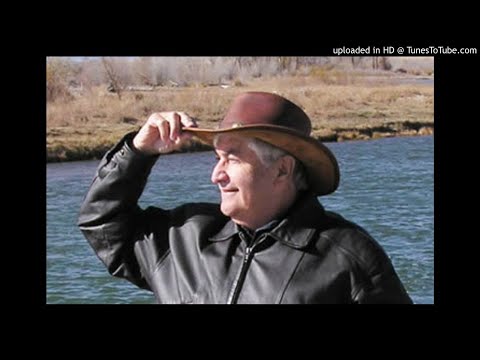
Daniel Botkin on Nature, the Environment and Global Warming 11/26/2007
What this covers
Daniel Botkin, an ecologist and author, joins Russ Roberts on EconTalk to challenge a foundational assumption in environmental thought and policy. The conversation centers on what Botkin calls the "balance of nature"—the widespread cultural belief that nature exists in a perfect, static equilibrium. Botkin argues this view is scientifically groundless and has distorted both ecological management and our interpretation of climate change. Rather than operating in stable equilibrium, he contends, nature is inherently dynamic and constantly changing across all timescales. The discussion moves between ecological data, historical examples, and philosophical inquiry to show how this misconception shapes everything from forest policy to extinction forecasts.
The scope spans Western fire ecology, wildlife management, intellectual history, and climate risk. Botkin uses specific examples—New England forests shaped by Indigenous fire use, California chaparral burning on reliable cycles despite human suppression efforts, and ponderosa pine forests degraded by fire suppression since the 1870s—to demonstrate that valued ecosystems depend on disturbance rather than stability. He traces the "balance of nature" concept through three enduring Western metaphors (perfect world, Mother Nature, mechanical system), each implying a static ideal. On extinction risk, he notes that species survived warming periods as rapid and warm as currently forecast without mass die-offs, making alarmist predictions suspect. He also argues that sound wildlife management should target defensible population ranges rather than fixed targets, and frames climate policy as risk assessment: prioritizing actions beneficial regardless of warming, like transitioning from fossil fuels and protecting habitats.
Botkin argues that the dominant cultural belief in a 'balance of nature'—nature as static, constant, and perfect—is scientifically false; nature is inherently dynamic and ever-changing, and this misconception distorts both ecological policy and the alarmist interpretation of global warming's effects on biodiversity.
- Population and climate data show constant, large-magnitude change rather than equilibrium
- Doomsday extinction forecasts rely on steady-state models that assume a balance of nature
- Species survived prior periods of warming as warm and rapid as those now forecast, so mass extinction is unlikely
This asset isn't compiled yet
You're seeing its claims, ranked. Compile it to build the argument threads, weight them, and check each claim against your library — the full view.
The New England forests that appeared to be pristine primeval nature were actually fire-dependent forests created and maintained by fires deliberately set by American Indians; when European settlers suppressed those fires, the forests changed into forms never seen before.
“the forests of New England and the Atlantic coastal states United States which appeared to be true nature undisturbed by people... turned out to be forests that were fired dependent and fired driven by fires lit by American Indians”
Chaparral in Southern California's Mediterranean climate is adapted to burn every 40–60 years, with plants evolved to produce fuel and ensure neighbors burn; a complete Santa Barbara fire map since WWII showed the entire hillside burned exactly within its natural interval despite both arsonists and suppression efforts—proving fire-prone land will burn on schedule.
“the entire house side Bekaa Santa Barbara had burned once in different fires in exactly the time period that it would naturally so... this stuff is ready to burn it's going to burn and if it isn't ready to burn you can't make it burn”
The seemingly pristine New England forests admired as primeval beauty were actually fire-dependent ecosystems driven by fires lit by American Indians; when European settlers suppressed those fires, the forests changed into forms nobody had ever seen.
“the forests of New England... appeared to be true nature undisturbed by people full of grand trees... turned out to be forests that were fired dependent and fired driven by fires lit by American Indians and when these were retired were removed by the European settlements Europeans suppress fires the forests changed”
Rather than a single target population, one can specify a defensible range for managed species when enough is known—at Isle Royale's 50-year wolf-moose record, a reasonable wolf range is roughly 20 to 100, avoiding both the reproductive risk below 20 and the implausible overpopulation of thousands.
“you can talk about a range of wolf populations that you want and you can do that if you know enough about them... you wouldn't really like that population to drop much below 20... it would be probably between twenty and a hundred wolves is what you would want there”
The very atmosphere humans depend on—free oxygen and low carbon dioxide—is a biological product of billions of years of bacterial, algal, and plant photosynthesis, and oxygen-dependent high-metabolism animals could not evolve until enough photosynthesis had occurred, showing life has shaped Earth's environment at grand scale.
“the presence of free oxygen and the low concentration of carbon dioxide in our atmosphere is a biological product has to do with the photosynthesis of bacteria algae and plants... our existence depends on biology having affected the Earth's environment at a grand scale”
The free oxygen and low carbon dioxide of Earth's atmosphere are biological products of photosynthesis by bacteria, algae, and plants going back over a billion years; high-metabolism animals could not evolve until enough bacterial photosynthesis had oxygenated the atmosphere, so human existence depends on biology having reshaped the planet at a grand scale.
“the presence of free oxygen and the low concentration of carbon dioxide in our atmosphere is a biological product has to do with the photosynthesis of bacteria algae and plants”
Suppressing all fires (the 'Smokey the Bear' approach) in fire-adapted ecosystems like Western ponderosa pine and Southern California chaparral causes dangerous fuel accumulation: ponderosa pine forests became thickets of small stems and deadwood since the 1870s, producing fires so intense they destroy seed trees and soil fertility.
“with Europeans settlement those fires were suppressed and so since the 1870s what used to be beautiful open ponderosa pine has become these thickets of small stems and Deadwood that create very dangerous fires”
Gifford Pinchot and John Muir represent the two extreme poles of American environmentalism—Pinchot (first US Forest Service head) holding that forests are valuable and should be managed for human benefit, and Muir holding that human action only interferes—a conflict that crystallized in their dispute over the Hetch Hetchy dam.
“Pinchot and Muir represents these two extreme views about environment whether people should stay out of it and leave it alone or whether we should be involved and managing as best we can”
Because climate has always changed at every level of time and space over life's three-and-a-half-billion-year history, most species have evolved and adapted to change—and many actually depend on change—so managing nature toward an imagined steady state works against species' actual needs.
“many species probably most species have evolved and adapted to change and many of them depend on change and when we come at them with the idea that it's all in steady state we're actually going against their needs”
The 'balance of nature' concept is scientifically false because all available data—population histories and climate records—show nature is always changing, often by huge magnitudes, and never settles into a single constant perfect state.
“it's wrong because all the data that we have shows that it just isn't true I mean that's what I've been a career studying so if you look at the histories of populations... they never are constant they're always changing”
Because climate is always changing at every timescale and life has existed for three and a half billion years in a constantly changing environment, most species have evolved and adapted to change—many depending on it—so managing nature toward a fixed steady state actually works against species' needs.
“life has been around for three and a half billion years and has existed in an environment that has always been changing”
Across 4000 years of writing, humans have used three great metaphors for nature—the balance of nature (gods made a perfect, balanced world), Mother Nature (nature as a living organic being), and nature as a machine (mechanical system with gears)—and all three lead back to the idea that nature has a single perfect, static state.
“there's been three metaphors for nature but people have always asked the question what is nature like undisturbed by people”
Many valued trees, like white ash used for baseball bats, grow only in early successional stages requiring forest clearings; because nobody maintains white ash plantations, sustainable bat-wood supply would require deliberately clearing forests periodically rather than leaving them static.
“white ash only grows in early stages of ecological succession so you have to have clearings in order to get white ash... you could buy enough land to have plantations in which you would clear in the field often enough that you could have an indefinite sustainable system supply of white ash but it would be only because you cleared forests periodically not because you left them static”
Many valued tree species, like the white ash used for baseball bats, only grow in early stages of ecological succession requiring forest clearings; a sustainable supply could be ensured by periodically clearing plantations—demonstrating that beneficial resources often depend on disturbance rather than leaving forests static.
“white ash only grows in early stages of ecological succession so you have to have clearings in order to get white ash”
Global warming policy should be approached like buying an insurance policy via risk assessment: weigh probability against cost, and prioritize actions that are beneficial anyway—moving away from fossil fuels (which are limited, rising in price, and tied to wars), protecting endangered-species habitats, and improving water use.
“think about it the same way you think about whether to buy an insurance policy... what you want to do is look at global warming in a risk assessment way and then ask what's the equivalent of buying a premium well most of that is actions we should take now that are beneficial anyway”
Ponderosa pine forests are naturally open woodlands maintained by frequent low-intensity fires; since 1870s fire suppression they have become dangerous thickets of small stems and deadwood, so restoration requires labor-intensive removal of excess fuel before reintroducing controlled fire.
“ponderosa pine or beautiful open woodland scattered big trees... if they burn at regular interval... with Europeans settlement those fires were suppressed and so since the 1870s what used to be beautiful open ponderosa pine has become these thickets of small stems and Deadwood that create very dangerous fires”
The contrasting figures John Muir and Gifford Pinchot represent the two extreme environmental philosophies—Muir holding that human action only interferes and nature should be left alone, versus Pinchot (first US Forest Service head) holding that forests are valuable and should be actively managed for human benefit—a conflict crystallized in the Hetch Hetchy dam dispute.
“Pinchot and Muir represents these two extreme views about environment whether people should stay out of it and leave it alone or whether we should be involved and managing as best we can for nature and for ourselves”
A complete map of every Santa Barbara fire since World War II showed that, despite both arsonists trying to ignite fires and firefighters trying to prevent them, the entire chaparral hillside burned once during exactly the 40-to-60-year natural cycle—implying that chaparral will burn when it is ready and cannot be made to burn before then.
“the entire house side Bekaa Santa Barbara had burned once in different fires in exactly the time period that it would naturally”
Rather than seeking a single target population size, sound wildlife management defines an acceptable range; for the well-studied Isle Royale wolves, this means roughly 20 to 100 wolves—not letting the population drop below about 20 (to maintain reproduction probabilities) nor allowing thousands.
“you can talk about a range of wolf populations that you want and you can do that if you know enough about them”
Across recorded human history there have been three enduring metaphors for nature—the balance of nature, mother nature as a living organism, and nature as a machine—each arising from people's need to reconcile a supposedly perfect, god-made world with observed imperfection.
“there's been three metaphors for nature but people have always asked the question what is nature like undisturbed by people”
The idea that nature is best without human beings, and that wilderness is a positive virtue, is only a modern concept; no prior civilization viewed wilderness as desirable, and before the Romantic poets wilderness was hated as dangerous and ugly.
“wilderness was not seen as a positive virtue until the late until the 20th century and a world without people was not considered a desirable world that's only in since the 1980s”
Thoreau's famous line 'in wildness is the preservation of the world' is misread by both pro- and anti-environmentalists; he was a practical inventor and surveyor who disliked actual wilderness, valued 'wildness' as a spiritual state of connectedness rather than wilderness as a place, and believed the richest parts of nature and human civilization flourish best together.
“Thoreau actually wasn't like that at all he was a very practical man... for him wildness is a state of being wilderness is a physical place”
The disaster predictions about species extinction rely on steady-state models that assume a balance of nature and hold naive assumptions about the connections between living things and their environment, making them wrong on many grounds.
“the models that the people are using to make these disastrous predictions... are steady-state models that assume a balance in nature that are very naive in their assumptions about the connections between living things and environment and so they're wrong on many grounds”
In the last two-and-a-half million years, during climate changes understood to be as warm and as rapid as currently forecast, almost nothing went extinct—the exceptions being northern megafauna (saber-toothed tiger, mammoths) and some northwest European trees caught between glaciers—so the data indicate extinction from warming is not likely.
“in the last two-and-a-half million years when there's been climate change now understood to be as warm and as rapidly changing as what is forecast almost nothing when extinct”
The Greeks took perfection to imply static symmetry in space and time—believing the highest mountain must exactly match the deepest ocean—so they could not yet conceive of dynamism because machines were not yet a familiar idea.
“the Greeks believed that beauty lay in symmetry... they said that the height of the highest mountain must match exactly the deepest part of the ocean because there had to be symmetry... they weren't yet ready for a dynamism because machines were not they're familiar idea”
It is only through civilization—down jackets, warmth, weapons—that humans can find wilderness beautiful; without those, the Alps would kill you and dark woods unarmed could be fatal, which explains why the romantic appreciation of nature evolved historically.
“it's only through civilization as my colleague Don Boudreaux likes to point out here that we find nature so so beautiful if you don't have a down jacket the Alps is a you die”
Thoreau, despite being claimed by both pro- and anti-environmentalists, was a practical man (surveyor, inventor, pencil-maker) who distinguished 'wildness' as a spiritual state of being from 'wilderness' as a physical place; after finding Mount Katahdin barren, he concluded he could never live in wilderness and preferred a mixture of the richest parts of nature and civilization.
“for him wildness is a state of being wilderness is a physical place”
Contrary to IPCC alarm, the evidence that global warming will have serious effects on life is thin and most evidence suggests the contrary; in the last 2.5 million years of climate change as warm and rapid as that now forecast, almost nothing went extinct except megafauna like the saber-toothed tiger and hairy mammoth and some trees trapped between Alpine and Arctic glaciers.
“in the last two-and-a-half million years when there's been climate change now understood to be as warm and as rapidly changing as what is forecast almost nothing when extinct”
Calling a 1-or-2-degree rise in temperature 'dangerous' (as in Jim Hansen's 2006 paper) is not a scientific term and can only be justified by a belief in a constancy of nature that shouldn't be changed; thus the balance-of-nature idea underlies much of the global warming alarm.
“they talked about a 1 or 2 degrees rise in temperatures being dangerous now that's not a scientific term and shouldn't appear in a paper in science”
The idea that nature is best without human beings, and that wilderness is a positive virtue, is a purely modern notion that only emerged since the 1980s; no other civilization or culture ever held it, and before the Romantic poets wilderness was hated and seen as dangerous and ugly.
“wilderness was not seen as a positive virtue until the late until the 20th century and a world without people was not considered a desirable world that's only in since the 1980s”
The appreciation of wild nature as beautiful is itself a product of civilization and technology: only with the rise of science and the ability to survive harsh environments (e.g., warm clothing) did the Alps shift from being described as 'horrible' to a 'horrible joy' and then sublime by the Romantic poets.
“in the 18th century with the rise of science and technology and a beginning of ability to survive that kind of environment a traveler crosses the Alps and talks about a horrible joy”
Natural ecological systems are only partially controllable even internally, so human action can only partially influence them—but because humans have demonstrably had major effects, we have an obligation and no choice but to try to manage nature.
“natural ecological systems are only partially controllable even internally partially controllable so they're only going to be partially influenced by what we do”
Because humans are the only sentient, technological species and are unavoidably having big effects on nature, we cannot 'get out of the way'—we are in the driver's seat and obligated to manage nature deliberately, though acting from the wrong (balance-of-nature) mythologies causes more harm than good.
“we're the only sentient creatures the only technological species and we are having big effects on nature so yeah whether we like it or not we're in the driver's seat”
Ecology textbooks still teach the logistic growth curve (invented in 1838 by Verhulst), which produces an S-shaped curve ending in a constant population, along with Lotka-Volterra predator-prey equations giving balanced oscillation—these are explicit mathematical statements of the balance of nature.
“they still teach that populations grow according to what is called the logistic growth curve which was invented in 1838 by a European berholtz”
The balance-of-nature idea persisted because if gods or God made the world, it was assumed to be perfect, and perfection was understood as static and symmetric (the Greeks even believed the highest mountain must match the deepest ocean); thus to claim nature was imperfect was to be irreligious, and the only allowable perfection was a single unchanging state.
“the Greeks believed that beauty lay in symmetry and therefore the world since it had to be perfect... the height of the highest mountain must match exactly the deepest part of the ocean because there had to be symmetry”
The polar bear, which evolved about 500,000 years ago through several periods of very great warming, has demonstrably found ways to survive warming before, so it is very likely to persist in the future—contradicting claims it faces extinction from losing ice habitat.
“the polar bear evolved about 500,000 years ago and there have been erat periods of very very great warming since then... the polar bear not listening to the climatologist today has found ways to survive they have persisted it means they're very likely to persist in the future”
The widely cited 2004 Nature paper (lead author Thomas) claiming 20-30% of species are likely threatened with extinction by century's end—repeated by the IPCC—is methodologically very poor, using steady-state models that assume a balance of nature and naive assumptions about the connections between living things and environment.
“it's one of the worst scientific papers I've ever read”
The false balance-of-nature concept is not merely an intellectual metaphor but remains embedded in current college ecology and environmental-science textbooks and underlies policies and laws for managing natural resources such as fisheries, whales, and endangered species.
“it actually is still in the college textbooks in ecology and an environmental science except for my own and I'm really shocked that I keep finding it there”
Overstated, ideological global-warming alarm risks a long-run cost in lost credibility for science, contributing to a broader rejection of science as predictions fail to materialize.
“my colleagues are doing things that I think are going to do just what you said it's going to lead to a rejection of a lot of science I'm very seriously concerned about it”
The Hudson's Bay Company fur-trading records, used as an index of animal abundance, show wild swings in lynx populations—from hundreds of thousands in some years to mere thousands in others—demonstrating that population variation is huge and not attributable to hunting pressure alone.
“like with the links some years there's hundreds of thousands other years there's only tens of thousands and then there'll be some years where they're only in the thousands so it isn't just a minor variation it's a huge variation”
The economy can be modeled as a giant machine with equations of motion like physics, but in the latter 20th century a rebellion questioned whether such models are accurate, favoring a more organic, dynamic, ecosystem-based approach rooted in the Austrian School.
“there's a great appeal to treat economics as a form of physics going back to your machine metaphor... there's been a bit of a rebellion and suggesting that a more organic more dynamic model is is more accurate... that's certainly at the root of the Austrian School of Economics”
Exaggerated climate disaster claims will impose a future cost in lost scientific credibility: combined with rising religious and ideological opposition to science and declining science education, alarmism that proves inaccurate will lead to broader rejection of science.
“now my colleagues are doing things that I think are going to do just what you said it's going to lead to a rejection of a lot of science I'm very seriously concerned about it”
The primary problem for endangered-species and habitat protection is gross underfunding of agencies like the National Park Service, US Fish and Wildlife Service, and NOAA, combined with a lack of fundamental data—for example, there is no population history of Yellowstone grizzly bears adequate to determine what a 'recovery' target should even be.
“the funding to protect and conserve and manage and danger species is way too little and that's the primary problem”
Global warming policy should be approached like buying insurance via risk assessment: take actions that are beneficial anyway regardless of warming—moving away from limited and increasingly costly fossil fuels (also tied to wars), protecting endangered-species habitats, and improving water use (since water scarcity is a problem with or without climate change).
“think about it the same way you think about whether to buy an insurance policy”
There is a McCarthyism-like 'truth test' surrounding climate science where one must affirm belief in global warming before being heard, those favoring open objective assessment are frightened to speak, and some whose careers depend on promoting global warming cast opponents as morally corrupt—making it no longer an open discussion.
“it's a kind of McCarthyism in that there's a truth test I keep being asked this truth test”
There is an appeal in economics to model the economy as a form of physics—a giant machine with equations of motion—but in the late 20th century a rebellion arose suggesting a more organic, dynamic, ecosystem-based model is more accurate, which is at the root of the Austrian School of Economics.
“there's a great appeal to treat economics as a form of physics going back to your machine metaphor that the economy can be modeled as a as a sort of giant engine”
All available data show that nature is not in balance: populations are always changing by huge magnitudes, as shown by Hudson's Bay Company fur records where species like the lynx swung from hundreds of thousands in some years to only thousands in others—variations far too large to be attributed merely to hunting pressure.
“the longest records that connect it all to the abundance of animals were those collected by the Hudson's Bay fur trading company”
The polar bear evolved about 500,000 years ago and has survived repeated erratic periods of very great warming since then, so the species is very likely to persist in the future—contradicting the assertion that warming-induced ice loss will threaten it with extinction.
“the polar bear evolved about 500,000 years ago and there have been erat periods of very very great warming since then”
A recent NASA-led report found that the current warming of Arctic waters is due to cyclic internal circulation patterns about to reverse, not to global warming—undercutting IPCC predictions of catastrophic Arctic ice loss, especially since the IPCC itself admits its models poorly predict Arctic ice and sea-level rise.
“there was just a report from NASA and a group of major scientists just in the last week that said that the current warming of the Arctic waters is due to internal circulation phenomenon patterns that are cyclic”
Repeating the 20-30% species-extinction assertion across IPCC reports does not make it scientifically sound; describing a 1-2 degree temperature rise as 'dangerous' is not a scientific term but reflects a political-ideological stance rooted in belief in the constancy of nature.
“you can keep saying something over and over again and saying it again and again doesn't make it right... it's actually a political and ideological statement”
The evidence that global warming will have serious effects on life is thin, and most evidence suggests the contrary; rationality has been left behind, shifting from a rational disbelief in global warming to an irrational doomsday belief in it.
“the evidence that global warming will have serious effects on life is thin most evidence suggests the contrary”
Ecology textbooks still teach the logistic growth curve (invented 1838) and Lotka-Volterra predator-prey equations, which are explicit mathematical statements of the balance of nature producing constant or balanced-oscillation populations.
“they still teach that populations grow according to what is called the logistic growth curve which was invented in 1838... it's still in the textbooks mathematically it is an explicit mathematical statement of the balance of nature”
The primary problem in conserving endangered species is gross underfunding of the agencies (national parks, US Fish and Wildlife Service, NOAA) responsible for managing habitats—our mouths are bigger than our actions—compounded by a lack of fundamental data, such as the absence of any usable population history of grizzly bears needed to define a recovery target.
“the funding to protect and conserve and manage and danger species is way too little and that's the primary problem”
The balance-of-nature assumption is not merely an intellectual relic but remains embedded in current college ecology and environmental-science textbooks and underlies real policy and law for managing fisheries, whales, and endangered species.
“it actually is still in the college textbooks in ecology and an environmental science except for my own... it still underlies our policies and laws and our science for managing our natural resources it's right there in fisheries in managing whales endangered species”
We need new metaphors for nature that capture its dynamism—Botkin proposes the wild Missouri River (constantly flooding and shifting) and the moose (which depends on and creates young forests by eating trees), since the deeply entrenched cultural idea of static balance must be displaced at a fundamental level.
“we need new myths for nature and new metaphors... think about the Missouri River because there are these wonderful stories about its flooding”
Ecology lags behind economics because economists treat equilibrium as an analytical convenience they know is unreal (comparative statics), whereas ecologists tend to believe their static models actually are reality.
“the one difference is almost the last thing you said that a economists can say well we know it's not fixed but let's consider a static state... but they tend actually to believe that the models are the reality so I think that we're lagging behind the economists here”
We need new metaphors for nature that capture dynamism—such as the ever-shifting Missouri River or the moose, which both depends on and creates young forests by eating trees—because the static balance metaphor affects us at so many levels that escaping it requires deeply embedded replacements.
“we need new myths for nature and new metaphors... my favorite metaphor is the moose because moose... depends on young forests and also tends to create young forests by eating trees”
Ecology lags behind economics in handling static models: whereas economists use comparative statics knowing equilibrium is a useful fiction (changing one thing to gain insight), ecologists tend to believe their static models actually are reality.
“they tend actually to believe that the models are the reality so I think that we're lagging behind the economists here”
There is a McCarthyism-like 'truth test' in the climate debate ('certainly you believe global warming is happening, don't you?') that forces people into camps, casts opponents as morally corrupt, and frightens those seeking objective open assessment into silence.
“I think it's a kind of McCarthyism in that there's a truth test... the question is well certainly you believe global warming is happening don't you... some of the people whose careers are tied to promoting global warming have tried to cast any opposition as people who are morally corrupted and evil”
The 1838 logistic growth curve is appealing partly because it yields clean analytical (paper-and-pencil) mathematics, whereas the more realistic stochastic-process and game-theory tools that handle uncertainty are unfamiliar to ecologists and possess a different, less elegant aesthetic.
“if you want to use paper and pencil analytical mathematics then this is not some messy however I've worked with people who are experts in what's called the mathematics of stochastic processes and they're comfortable with dealing with risk and uncertainty”
The current Arctic warming may be driven by cyclic internal circulation patterns about to reverse rather than by global warming, per a recent NASA-led report—and even the IPCC concedes its models poorly predict Arctic ice and sea-level rise, revealing a slide from science into speculation.
“there was just a report from NASA and a group of major scientists just in the last week that said that the current warming of the Arctic waters is due to internal circulation phenomenon patterns that are cyclic and are seemed about to reverse and are not due to global warming”
Scientists persist in balance-of-nature models partly because they are creatures of their culture and partly because of a narrow rationalist view that without balance nature would be inexplicable—even though stochastic-process and game-theory mathematics exist that can handle the real risk and uncertainty.
“we are all heavily affected by our cultural belief and so I think there's a very strong cultural desire for this”
Ecologists cling to balance-of-nature models partly because the alternative mathematics (stochastic processes, game theory) is unfamiliar to people entering the field, even though those tools exist and are routinely used in fields dealing with risk and uncertainty such as insurance and finance.
“the mathematical analyses for this go back to random events of stochastic processes and also game theory gets involved... but they're not familiar to the people who go into these fields”
Lucretius's account of nature as a literally aging mother—mountains as her wrinkles, volcanoes as her warts—explained nature's imperfections as the decline of an organic being, and this idea recurs today in the Gaia hypothesis.
“lucretius writes about this... mother nature used to be young and beautiful... the mountains were her wrinkles and the volcanoes were the warts and pimples on her skin... it does reoccur to day in the Gaia hypothesis”
Whether the climate was a degree or two warmer in the past or is now doesn't matter to polar bears, because they respond to large-scale environmental shifts rather than small differences, and they survived prior warm periods.
“I don't think that would have mattered to the polar bears they aren't looking for very small differences you're looking for rather difficut changes in your environment and whatever happened a little bit warmer than it is now or a little less warmer the polar bears managed to survive”
Speculating that there may have been species that went extinct in the past that we never knew about is not science.
“if you say there may have been species that existed that we never knew about that's not science anymore”
Of the substantial email response to Botkin's Wall Street Journal piece (30 pages worth), all but six were positive and sympathetic, with many faculty expressing concern about misuse of science and US science education.
“they took 30 pages and except for six of them they were all very positive and sympathetic and I was very surprised”
Russ Roberts hosts EconTalk, a podcast of the Library of Economics and Liberty, and is affiliated with George Mason University and Stanford's Hoover Institution.
“I'm your host Russ Roberts of George Mason University and Stanford University's Hoover Institution”