What this covers
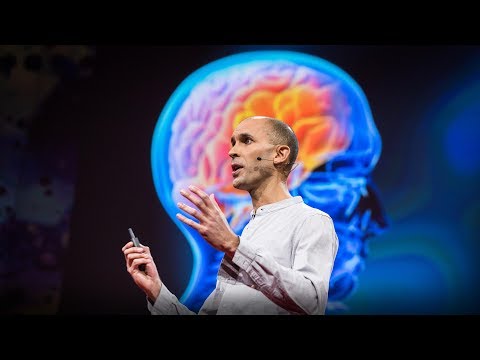
Right now, billions of neurons in your brain are working together to generate a conscious experience — and not just any conscious experience, your experience of the world around you and of yourself within it. How does this happen? According to neuroscientist Anil Seth, we're all hallucinating all the time; when we agree about our hallucinations, we call it "reality." Join Seth for a delightfully disorienting talk that may leave you questioning the very nature of your existence.
If you love watching TED videos like this one, become a TED Member to support our mission of spreading ideas: https://ted.com/membership
Follow TED! X: https://twitter.com/TEDTalks Instagram: https://www.instagram.com/ted Facebook: https://facebook.com/TED LinkedIn: https://www.linkedin.com/company/ted-conferences TikTok: https://www.tiktok.com/@tedtoks
The TED Talks channel features talks, performances and original series from the world's leading thinkers and doers. Subscribe to our channel for videos on Technology, Entertainment and Design — plus science, business, global issues, the arts and more. Visit https://TED.com to get our entire library of TED Talks, transcripts, translations, personalized talk recommendations and more.
https://youtu.be/lyu7v7nWzfo
TED's videos may be used for non-commercial purposes under a Creative Commons License, Attribution–Non Commercial–No Derivatives (or the CC BY – NC – ND 4.0 International) and in accordance with our TED Talks Usage Policy: https://www.ted.com/about/our-organization/our-policies-terms/ted-talks-usage-policy. For more information on using TED for commercial purposes (e.g. employee learning, in a film or online course), please submit a Media Request at https://media-requests.ted.com
#TED #TEDTalks #brain
Source description (no synthesized summary yet).
Consciousness arises from predictive processing mechanisms in the brain that are fundamentally grounded in the biological regulation of living bodies, making it a product of evolution rather than pure computation and fundamentally dependent on embodiment.
- Consciousness depends on interoceptive signals from the body's internal state, not just external sensation or computational sophistication
- All conscious experience—from perceiving the world to experiencing selfhood—emerges from the brain's predictive control mechanisms evolved to maintain physiological survival
- Artificial intelligence cannot generate consciousness through increased computational power alone because consciousness requires the biological mechanisms that keep organisms alive
This asset isn't compiled yet
You're seeing its claims, ranked. Compile it to build the argument threads, weight them, and check each claim against your library — the full view.
We experience our bodies from within through interoceptive signals that convey information about internal organs, heart rate, blood pressure, and other internal states—a critical but often overlooked type of perception
“We don't just experience our bodies as objects in the world from the outside, we also experience them from within. We all experience the sense of being a body from the inside.”
The brain is fundamentally a prediction engine that figures out what is in the world by combining sensory signals with prior expectations and beliefs to form its best guess of what caused those signals
“perception -- figuring out what's there -- has to be a process of informed guesswork in which the brain combines these sensory signals with its prior expectations or beliefs about the way the world is to form its best guess of what caused those signals.”
Consciousness is the most fundamental aspect of human existence because without it there is no world, no self, and nothing at all—making understanding consciousness essential to addressing suffering and well-being
“consciousness for each of us is all there is. Without it there's no world, there's no self, there's nothing at all.”
All conscious experiences are kinds of controlled hallucinations shaped by evolution over millions of years to keep us alive in worlds full of danger and opportunity
“they're kinds of controlled hallucinations that have been shaped over millions of years of evolution to keep us alive in worlds full of danger and opportunity.”
Greater understanding of consciousness through science brings greater wonder and realization that humans are part of nature rather than apart from it, echoing historical shifts from Copernicus (not center of universe) through Darwin (related to other creatures)
“With a greater sense of understanding comes a greater sense of wonder, and a greater realization that we are part of and not apart from the rest of nature.”
We predict ourselves into existence—meaning the unified, continuous self that we experience is generated through predictive processes rather than being a fundamental feature of reality
“We predict ourselves into existence.”
Conscious experiences of the world and of ourselves are controlled hallucinations that happen with, through, and because of our living bodies
“our conscious experiences of the world around us, and of ourselves within it, are kinds of controlled hallucinations that happen with, through and because of our living bodies.”
Perception of internal body state is fundamentally about control and regulation—keeping physiological variables within bounds compatible with survival—not about figuring out what's there
“Perception of the internal state of the body isn't about figuring out what's there, it's about control and regulation -- keeping the physiological variables within the tight bounds that are compatible with survival.”
The brain can rapidly update its perceptual predictions when given new information, dramatically changing what is consciously experienced even when the sensory information itself remains physically identical
“The remarkable thing is the sensory information coming into the brain hasn't changed at all. All that's changed is your brain's best guess of the causes of that sensory information. And that changes what you consciously hear.”
The brain generates the experience of what is and what is not part of one's body by making predictions based on congruence between visual appearance and tactile input, as demonstrated by the rubber hand illusion
“The brain makes its best guess about what is and what is not part of its body.”
Interoceptive signals from the body strongly influence the sense of bodily self, as demonstrated by virtual reality rubber hand illusion where the sense of ownership strengthens when the virtual hand flashes in synchrony with the heartbeat
“people see a virtual reality version of their hand, which flashes red and back either in time or out of time with their heartbeat. And when it's flashing in time with their heartbeat, people have a stronger sense that it's in fact part of their body.”
The strategy for understanding consciousness should parallel the strategy that successfully explained life: instead of proposing mystical forces, explain consciousness properties through mechanisms in brains and bodies, causing the apparent mystery to fade away as it did for life
“I'd like you to think about consciousness in the way that we've come to think about life. At one time, people thought the property of being alive could not be explained by physics and chemistry -- that life had to be more than just mechanism. But people no longer think that.”
There are multiple distinct ways of experiencing being a self—including experiencing having a body, perceiving from first-person point of view, intending to cause things in the world, and experiencing continuity over time through memory and social interactions—and these can all come apart in various psychiatric and neurological conditions
“There are in fact many different ways we experience being a self. There's the experience of having a body and of being a body. There are experiences of perceiving the world from a first person point of view. There are experiences of intending to do things and of being the cause of things that happen in the world. And there are experiences of being a continuous and distinctive person over time, built from a rich set of memories and social interactions.”
Perception depends as much or more on perceptual predictions flowing from the brain outward as on signals coming from the outside world—meaning we actively generate the world we experience as much as we passively receive it
“Instead of perception depending largely on signals coming into the brain from the outside world, it depends as much, if not more, on perceptual predictions flowing in the opposite direction. We don't just passively perceive the world, we actively generate it.”
The prospects for conscious artificial intelligence are remote because consciousness depends more on the nature of living and breathing organisms than on computational intelligence
“I actually think the prospects for a conscious AI are pretty remote. And I think this because my research is telling me that consciousness has less to do with pure intelligence and more to do with our nature as living and breathing organisms.”
Experiences of the body from within are fundamentally different from experiences of the world around us because internal states are not perceived as discrete objects but rather as regulatory states that only become noticeable when things go wrong
“When I look around me, the world seems full of objects -- tables, chairs, rubber hands, people, you lot -- even my own body in the world, I can perceive it as an object from the outside. But my experiences of the body from within, they're not like that at all.”
When the brain uses predictions to control and regulate internal states, conscious experience reflects how well or badly that control is going—not what the internal organs are, but the success or failure of homeostatic regulation
“When the brain uses predictions to figure out what's there, we perceive objects as the causes of sensations. When the brain uses predictions to control and regulate things, we experience how well or how badly that control is going.”
Human consciousness is just one tiny region in a vast space of possible consciousnesses, and each individual's inner universe and way of being conscious is unique, though all human consciousness is grounded in biological mechanisms shared with other living creatures
“Our own individual inner universe, our way of being conscious, is just one possible way of being conscious. And even human consciousness generally -- it's just a tiny region in a vast space of possible consciousnesses.”
When consciousness ends, there is nothing to be afraid of, because there will be no experience—suggesting death of consciousness is like anesthesia, not suffering
“And ... when the end of consciousness comes, there's nothing to be afraid of. Nothing at all.”
Normal perception is a controlled hallucination in which the brain's predictions are reined in by sensory information from the world—meaning we are all hallucinating all the time, and when we agree about our hallucinations we call that reality
“If hallucination is a kind of uncontrolled perception, then perception right here and right now is also a kind of hallucination, but a controlled hallucination in which the brain's predictions are being reined in by sensory information from the world.”
The experience of being a self—the experience of being 'you'—is also a controlled hallucination generated by the brain, despite how unified, continuous, and familiar this experience seems
“Now I'm going to tell you that your experience of being a self, the specific experience of being you, is also a controlled hallucination generated by the brain.”
When perceptual predictions become too strong and are not adequately reined in by sensory information, the result resembles hallucinations, as demonstrated by the DeepDream-processed immersive virtual reality showing dogs superimposed on a normal campus environment
“When perceptual predictions are too strong, as they are here, the result looks very much like the kinds of hallucinations people might report in altered states, or perhaps even in psychosis.”
When mechanisms of prediction go wrong—in conditions like depression and schizophrenia—we misperceive ourselves, opening new opportunities for understanding and treating psychiatric disorders by targeting the mechanisms rather than just symptoms
“just as we can misperceive the world, we can misperceive ourselves when the mechanisms of prediction go wrong. Understanding this opens many new opportunities in psychiatry and neurology, because we can finally get at the mechanisms rather than just treating the symptoms in conditions like depression and schizophrenia.”
In the checker shadow illusion, patches A and B appear to be different shades of gray because the brain uses prior expectations about cast shadows dimming surface appearance to infer that B is lighter than it actually is, even though both patches are the same shade
“the brain is using its prior expectations built deeply into the circuits of the visual cortex that a cast shadow dims the appearance of a surface, so that we see B as lighter than it really is.”
What it means to be 'me' cannot be reduced to or uploaded to a software program running on a robot, however smart or sophisticated, because conscious experience is shaped at all levels by biological mechanisms that keep us alive
“what it means to be me cannot be reduced to or uploaded to a software program running on a robot, however smart or sophisticated. We are biological, flesh-and-blood animals whose conscious experiences are shaped at all levels by the biological mechanisms that keep us alive.”
Anesthesia produces total oblivion—a state where consciousness completely ceases and one has no sense of time passing, unlike normal sleep where there is always a basic sense of continuity between before and after
“I could have been under for five minutes, five hours, five years or even 50 years. I simply wasn't there. It was total oblivion.”
Even the experience of what one's body is appears to be a kind of best guessing or controlled hallucination by the brain, as shown by the rubber hand illusion where the brain's predictions override actual body boundaries
“This means that even experiences of what our body is is a kind of best guessing -- a kind of controlled hallucination by the brain.”
We experience the world and ourselves with, through and because of our living bodies—not as abstract computational processes but as biological organisms evolved to survive
“We experience the world and ourselves with, through and because of our living bodies.”
The most basic experiences of being an embodied self are grounded in biological mechanisms that keep us alive, meaning all conscious experience ultimately stems from the drive to maintain the living organism
“our most basic experiences of being a self, of being an embodied organism, are deeply grounded in the biological mechanisms that keep us alive.”
Making computers smarter is not sufficient to make them conscious or sentient because consciousness depends on biological embodiment and evolutionary mechanisms, not pure computational power
“Just making computers smarter is not going to make them sentient.”
The last 25 years have seen an explosion of scientific work on consciousness, with progress sufficient to suggest the mystery can be solved through understanding brain and body mechanisms rather than requiring non-scientific explanation
“the last 25 years have seen an explosion of scientific work in this area.”